System (2026): Sonakshi Sinha s stands out while the narrative loses grip
A privileged public prosecutor and a modest courtroom stenographer lock eyes across the divide separating law from justice. Sonakshi Sinha and Jyotika anchor Ashwiny Iyer Tiwari’s legal drama, a two-hander built on the friction between women operating inside a system designed to protect power rather than truth.
Sonakshi Sinha’s Neha Rajvansh Carries the Moral Weight
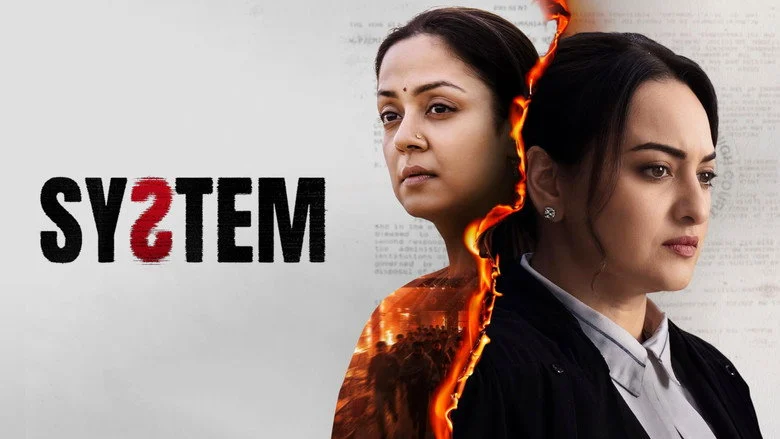
Sinha shoulders the film’s central tension: a prosecutor awakening to the machinery she serves. Her Neha Rajvansh begins as a creature of privilege, protected by the very apparatus she represents in court. The character’s arc depends entirely on Sinha’s ability to register intellectual and emotional discomfort, a shift that requires nuance rather than spectacle, and the performance delivers restraint where overstatement would crater the premise.
Ashwiny Iyer Tiwari Constructs Moral Anatomy, But Hesitates
Tiwari’s direction locks onto the courtroom as a pressure chamber where truth fractures under institutional weight. She builds the film around institutional conflict rather than individual villainy, a formal choice that grounds the drama in systems rather than melodrama. Yet the available evidence suggests the screenplay stops short of the interrogation its premise demands, the framework is sharp, but the execution inside that frame lacks the interrogative ferocity required to justify the thematic ambition.
Legal Drama Hinges on Uncovering What the System Conceals
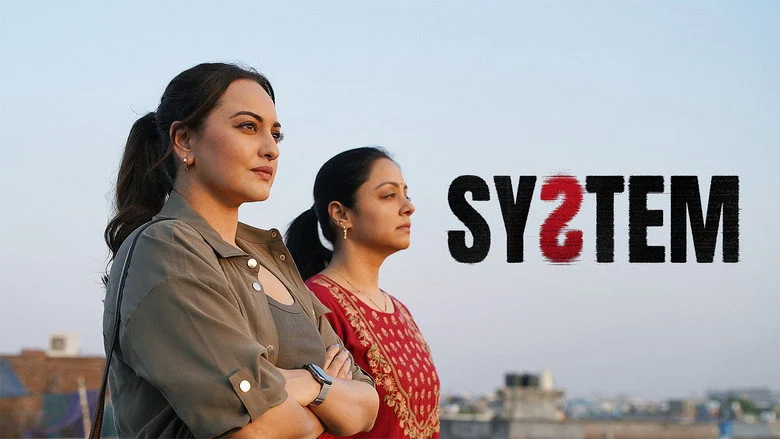
The courtroom thriller machinery depends on testimony becoming weaponized, procedure obscuring truth, and witnesses carrying knowledge the powerful wish silenced. Tiwari positions her two leads as agents of exposure, using Jyotika’s stenographer as a conduit, someone who records but historically remains invisible. The partnership between prosecutor and stenographer inverts typical hierarchy: privilege and access meet observation and documentation.
The drama drives forward by asking what happens when legal procedure and actual justice misalign. Neha and Sarika uncover hidden injustices as the story moves, but the pacing suggests a measured examination rather than thriller propulsion. The 2 hour 3 minute runtime accommodates courtroom procedure without rushing judgment, a structural choice that signals intellectual seriousness.
Where the film succeeds is in framing power as the true antagonist rather than creating a mustache-twirling opposition. The justice system itself becomes the landscape the characters navigate, distort, and challenge. This approach avoids melodrama, but it also requires exceptional writing to sustain dramatic momentum across a legal procedural’s typical architecture.
Fans of legal-drama cinema should explore Hindi Drama reviews for more analysis of courtroom narratives and institutional critique.
Jyotika Anchors the Moral Mirror
Jyotika’s Sarika Rawat operates as the film’s conscience, a stenographer from modest origins watching power perform inside the legal system. Her positioning matters more than scene-specific pyrotechnics; the casting signals that observation itself becomes a form of resistance. The character’s every notation of testimony carries weight precisely because stenographers typically vanish from courtroom drama.
Political Machinery Over Individual Villainy
System positions itself as a critique of institutional corruption rather than a hunt for a named antagonist. This structural choice leans the film toward issue-driven drama, a register that demands sophisticated audience attention. The premise invites viewers comfortable with moral ambiguity and systemic analysis rather than those seeking clear heroes and villains resolved through individual triumph.
If you value legal dramas that examine institutional machinery through intimate character work, this direct-to-Prime release offers the intellectual framework worth engaging with, though the screenplay’s execution may not penetrate as deep as the premise promises. Watch on Amazon Prime Video for the intended format, the OTT setting suits a drama built on close performance and procedural detail rather than spectacle.
Similar thematic DNA runs through Haunted 3D review, another film that examines corruption within institutional spaces.
System works best as a performance-driven legal drama where Sinha’s reckoning with privilege matters more than plot acceleration, a measured 3 out of 5 that asks the right questions even if the answers feel incomplete.
Ashwiny Iyer Tiwari brings the same character-first approach that defines Great Grand verdict, prioritizing internal conflict over external spectacle.

Ankit Jaiswal is the Chief Author, covering Indian cinema and OTT releases with honest, no-filler criticism. An SEO strategist by background, he brings a research-driven approach to film writing, cutting through hype to tell you exactly what's worth your time.