Jawan (2023): Shah Rukh Khan’s Dual Rage Anchors Overambitious Action Spectacle
A jailer orchestrates prison break schemes to target corrupt power brokers across Mumbai, revealing himself as more than a disciplined official, he is a man conducting vigilante justice from behind bars. The opening establishes Shah Rukh Khan’s controlled menace and the film’s anti-corruption framework with the urgency of someone who has waited too long for accountability.
Atlee’s *Jawan* arrives as a collision between Hindi blockbuster ambition and South Indian commercial scale, a film that knows exactly what it wants to be in its first ninety minutes and struggles to hold that vision afterward. For a seasoned viewer, watching Khan navigate dual personas while orchestrating large-scale action feels like witnessing a star recalibrate his own mythology, which is precisely what the film intends, though the execution fractures under its own weight.
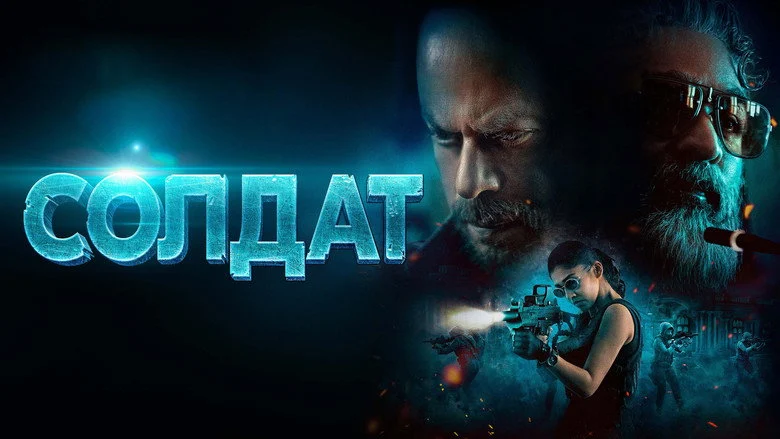
Shah Rukh Khan’s Controlled Intensity Through Prison and Metro Chaos
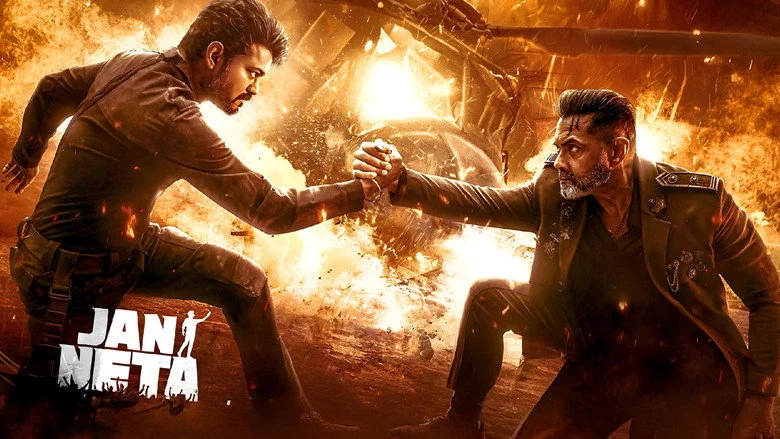
Khan anchors *Jawan* through two distinct public faces: Azad the jailer operates with contained strategic precision during prison sequences, then shifts into emotionally unmoored avenger once his connection to Vikram Rathore surfaces. His performance in the Metro hijacking sequence, where he orchestrates six inmate operatives through urban infrastructure, demonstrates a rare register for Khan: the operative who speaks through action rather than charisma. The father-son reveal asks Khan to fracture this control, and he does, though the film’s narrative machinery strains under the weight of that emotional pivot.
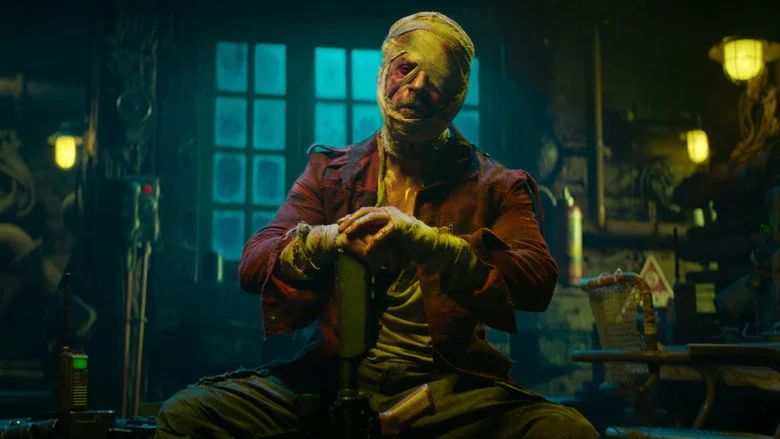
Atlee’s Action Momentum Collapses When Plot Takes Over
The director stages his action with genuine ambition, the Metro sequence builds spatial coherence rare in Hindi cinema, and the choreography sustains mass-scale mayhem without descending into incoherence. Yet Atlee abandons this control the moment exposition arrives. The second half buries momentum under backstory reveals, political subplot mechanics, and character development that feels tacked on rather than woven through the action fabric. Where the first half escalates from covert prison operations to public spectacle, the second half reverses into explanation mode, diluting what made the opening compelling.
The screenplay, credited to Atlee, S. Ramanagirivasan, and Sumit Arora, relies heavily on derivative plotting, the vigilante-leader-with-hidden-past framework has been executed more cleanly elsewhere. Atlee treats his own setup with less precision than the film deserves, allowing supporting characters to drift into underdevelopment rather than function as narrative anchors.
The climax between the Rathore faction and Kalee Gaikwad’s network should land as thematic resolution, yet it reads as an obligatory final assault, kinetic but narratively inevitable. The film has already spent too much time explaining its own stakes rather than letting them accumulate through action.
For those seeking comparable Hindi action cinema, the technical craft across Hindi Action reviews remains a rich field worth exploring beyond this particular execution.
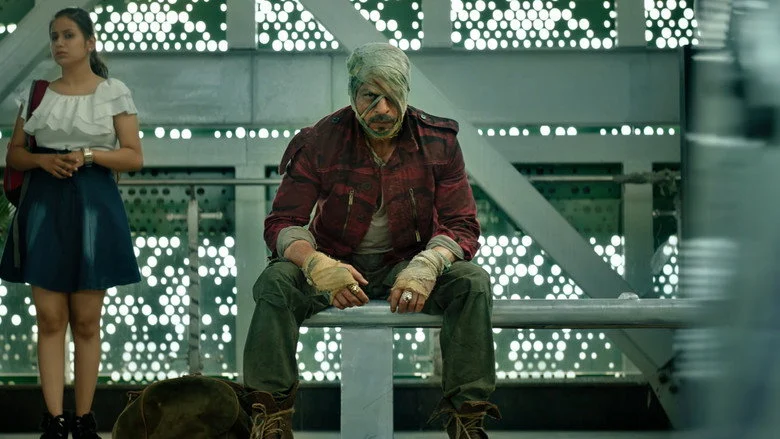
Vijay Sethupathi Reduced to Systemic Embodiment Rather Than Antagonist
Sethupathi’s Kalee Gaikwad functions as corruption incarnate, a figure tied to political and business networks rather than a psychologically complex antagonist. The role demands less nuance and more scale, positioning him as the film’s thematic target rather than its dramatic engine. What results is a villain more symbol than character, which works for mass cinema but leaves the interpersonal conflict undernourished.
Nayanthara and Deepika’s Emotional Scaffolding Never Quite Holds
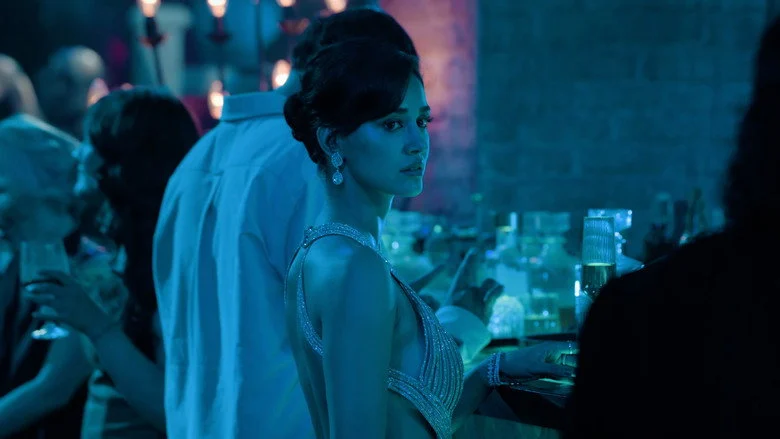
Nayanthara’s Narmada Rai represents the law-and-order counterweight to Azad’s vigilantism, positioning herself as the investigation’s public face. Her scenes establish the conflict’s official dimension, though the role remains constrained by its structural necessity, she supports rather than challenges the film’s momentum. Deepika Padukone carries the emotional origin point as Aishwarya Rathore, the figure whose presence unlocks the generational conflict between father and son. Yet her backstory arrives too late and carries less weight than the film imagines, playing as emotional callback rather than dramatic catalyst.
Audience Hunger for Star-Led Spectacle Met, Not Exceeded
The film became the highest-grossing Indian film of 2023, grossing over ₹1, 100 crore globally, precisely because it delivers what mass audiences anticipated: Khan in action-thriller mode with large-scale set pieces and social-justice framing. Yet critical response split cleanly between those satisfied by spectacle and those aware that the film settles for momentum over narrative architecture. Viewers praised Khan’s dual performance, the action staging, and the anti-corruption messaging while flagging predictability, second-half pacing collapse, and supporting character thinness as legitimate structural failures.
The Mumbai Metro hijacking sequence remains the film’s most discussed moment, a scene that justifies the entire ₹300 crore budget investment through scale and coordination. The Rathore reveal works less as dramatic surprise than as narrative restructuring, asking the audience to reassess Khan’s motivations retroactively rather than deepen them through revelation.
*Jawan* is a film for viewers who prioritize spectacle and star presence over narrative cohesion, which is a legitimate audience appetite. If you approach it as an action-first experience built around Khan’s star machinery, the first half delivers precisely that, the second half asks you to care about plot architecture, which is where it loses ground. Watch it in theater where the action staging and scale land with maximum impact; the home-viewing experience will only magnify the exposition drags.
Khan’s performance proves he can anchor action cinema at scale, yet the film around him never resolves whether it trusts action or plot to carry weight, Mollywood Times review explores similar tensions in how stars navigate commercial and critical expectation.
*Jawan* (2023) is a competent star vehicle with genuine action moments that stumbles under narrative ambition it can’t sustain, a 2.5 out of 5 proposition that works as spectacle but not cinema.
The duality Khan explores here mirrors similar tensions in Vo Ladki verdict, where performance layering sustains emotional weight across fragmented narrative structure.

Ankit Jaiswal is the Chief Author, covering Indian cinema and OTT releases with honest, no-filler criticism. An SEO strategist by background, he brings a research-driven approach to film writing, cutting through hype to tell you exactly what's worth your time.