Satluj (2026): lead performance keeps the film tense but uneven overall
The crematorium in Amritsar is lit not by flames but by the weight of centuries. Jaswant Singh Khalra, a mild-mannered bank employee, peers at the hundreds of unidentified bodies stacked like logs, each one a question mark the state never answered. Within two minutes, Honey Trehan’s directorial debut announces itself as a film that will not flinch, even if you do.
Diljit Dosanjh: The Quiet Core of a Storm
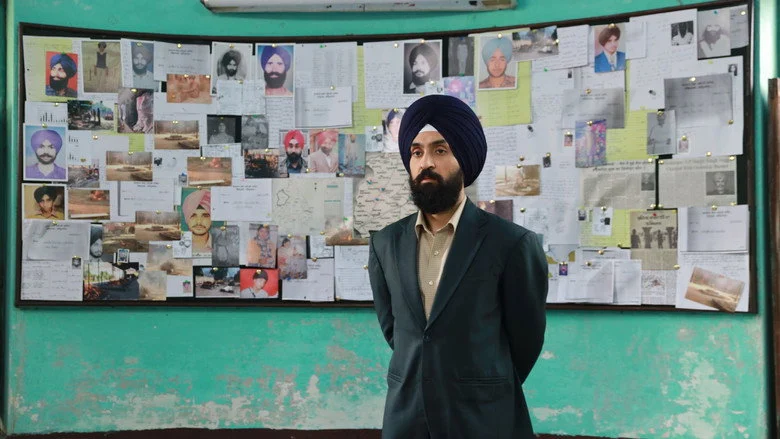
Dosanjh abandons his superstar swagger entirely. In the crematorium discovery scene, his face does not contort into melodrama; it slowly collapses into a blank, unreadable grief. This is a performance built on restraint, every understated glance at a missing-persons poster or a muttered question carries the weight of a man losing his innocence.
Where other actors might have played Khalra’s transformation as a sudden awakening, Dosanjh shows it as a slow, corrosive burn. The torture sequence in the third act is harrowing less for its brutality and more for how his eyes register the extinction of hope.
Honey Trehan’s Direction: Unflinching but Uneven
Trehan, a veteran casting director, clearly understands the architecture of discomfort. He stages the investigative sequences with a procedural clarity that makes the horror feel bureaucratic, and therefore more terrifying. The decision to avoid flashback-heavy biopic conventions keeps the thriller engine humming for most of the first half.
The second half, however, stumbles. Pacing slackens as Trehan lingers on Khalra’s domestic life, and the narrative momentum that drove the early discoveries loses its grip. The unresolved conspiracy, while historically accurate, leaves the screenplay dangling without a satisfying dramatic closure, audiences may feel the film ends, not concludes.
Genre-Core Execution: Social Drama Meets Investigative Thriller
As a social drama, Satluj commits to raw, uncompromising honesty. The crematorium discovery scene is not just a plot point but a thesis statement: this is a film about looking at what has been deliberately hidden. The cinematography mirrors this, dark, oppressive lighting that makes every frame feel like a held breath.
The thriller elements work best when Khalra is trading information with Arjun Rampal’s CBI officer. The investigation feels grounded in shoe-leather detective work, not convenient leaps. But the pacing drags when the film shifts from procedural to personal, creating a tonal mismatch between its two genres.
I wish the thriller had maintained the same edge-of-seat energy throughout; the second half’s reliance on emotional weight over narrative tension suggests indecision about which genre to fully commit to. Still, when the film trusts its investigative bones, it is genuinely gripping.
Supporting Cast: Power in the Margins
Suvinder Vicky plays the Punjab Police officer with a chilling stillness. His confrontation with Khalra, a threat delivered not with a shout but with a quiet, venomous whisper, is the film’s most menacing scene. Vicky understands that true villainy doesn’t require volume; it requires certainty in one’s own cruelty.
Arjun Rampal’s CBI officer adds a welcome layer of institutional complexity. He is neither hero nor corrupt figure; he is a bureaucrat caught between duty and conscience, and Rampal plays him with a weariness that suggests he has seen this story before. Kanwaljit Singh, as Khalra’s wife, grounds the story in personal stakes, her silent worry a counterpoint to Khalra’s vocal outrage. At 2 hours 43 minutes, the film could have used more of her perspective to balance the relentless darkness.
Controversy and Audience Reception: A Film Born From Battle
Satluj spent three years clashing with India’s censor board before finally releasing uncut on ZEE5. That battle is baked into its DNA: every graphic shot of a mutilated body reads as a refusal to sanitize history. Some critics have argued the torture sequence crosses into gratuitous territory, and the criticism is valid, it risks numbing the audience rather than deepening empathy.
Audiences on BookMyShow have rated it 8.2/10, with many praising the boldness of the uncut release. IMDb’s 7.5/10 from over 12, 000 votes suggests a film that divides viewers not on quality but on endurance. Times of India called it “a tense, triggering, and fearlessly honest investigative thriller.”
For those who can handle its weight, Hindi Drama reviews like this one remind us why cinema must sometimes be ugly.
Final Verdict: Watch It, But Brace Yourself
Satluj is not entertainment; it is a 164-minute confrontation with a history most prefer to forget. See it on ZEE5 in a quiet room where no one will interrupt your silence afterward. It will stay with you, not as a masterpiece, but as a scar.
Satluj earns a sturdy, necessary 3.5 out of 5, a flawed, difficult watch that demands your attention, and deserves it.
If Dosanjh’s layered performance interests you, his Satluj review shows similar thematic grit in a shorter frame.
Trehan’s approach shares a bone-deep seriousness with the Alpha verdict arc’s unyielding character work.

Ankit Jaiswal is the Chief Author, covering Indian cinema and OTT releases with honest, no-filler criticism. An SEO strategist by background, he brings a research-driven approach to film writing, cutting through hype to tell you exactly what's worth your time.