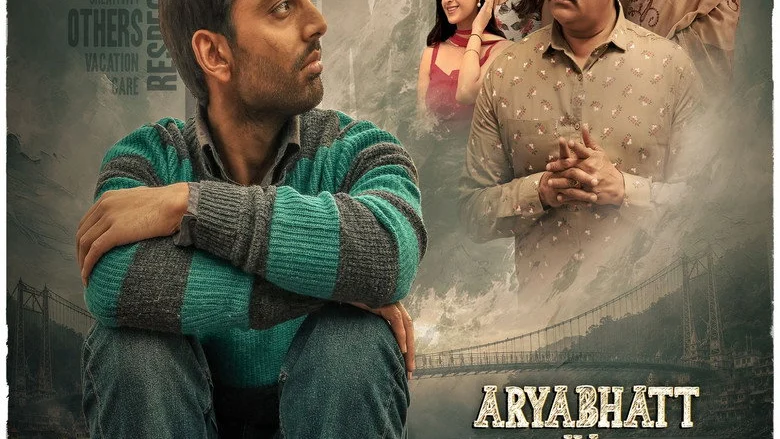
Prem Keetanu (2026): Veer Pahariya Stumbles Through A Remake That Misreads Its Own Genre
Apoorv Singh Karki arrives at his first theatrical comedy with an enviable résumé. The director behind Sirf Ek Banda Kaafi Hai and the series Aspirants has demonstrated a facility for grounded, character-driven storytelling that prioritizes emotional authenticity over spectacle. So why does Prem Keetanu, a Hindi remake of the Malayalam hit Premalu, feel so curiously weightless? The answer lies somewhere in the gap between what Karki knows how to do and what this material demands.
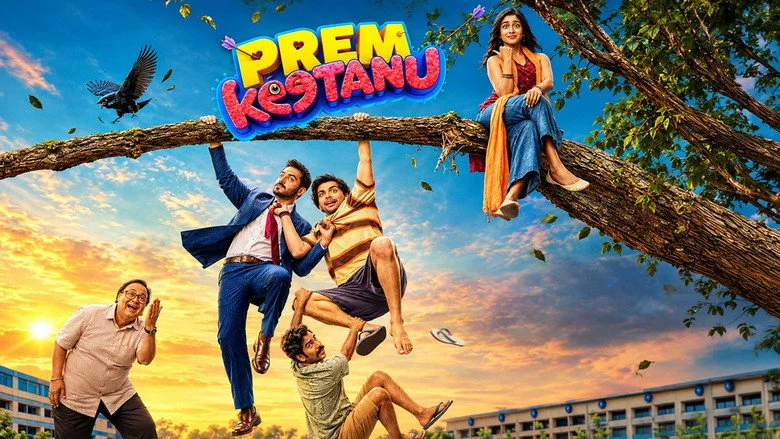
The film positions itself as a college-set romantic comedy tracing young men through the chaotic terrain of UP and NCR, navigating love triangles, heartbreak, family expectations, and the vertigo of post-graduation uncertainty. On paper, this should be fertile ground. In execution, it plays like a film that studied the genre’s surface mechanics without understanding its beating heart.

Veer Pahariya and the Weight of Central Casting
Veer Pahariya’s ascent to leading-man status has been swift, and Prem Keetanu represents his most substantial showcase yet. The promotional machinery has positioned him as the mischievous romantic at the center of a collegiate whirlwind, with the heartbreak track “Tujhse Bichad Ke” designed to reveal his emotional range. But there’s a difference between being photographed well and commanding a frame, and Pahariya’s work here suggests an actor still discovering where his instincts end and directorial instruction begins.
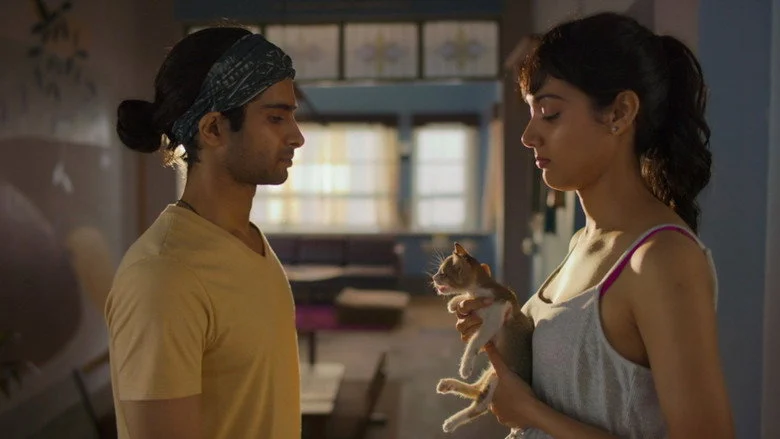
Watch the trailer’s love-triangle sequences closely. The blocking places him at the center of group compositions, yet his reactions frequently arrive a beat late, a half-second delay that reads as uncertainty rather than spontaneity. In comedy, timing is architecture, and Pahariya’s foundations show visible cracks. The chemistry with Aafiya Syed, positioned as the female lead at the romantic conflict’s core, flickers rather than ignites. Their scenes together carry the obligation of romance without its gravitational pull.
Aparshakti Khurana: The Reliable Engine
Thank goodness for Aparshakti Khurana. The actor has spent years building a reputation as Hindi cinema’s most dependable supporting presence, and Prem Keetanu demonstrates why. Where Pahariya struggles to locate his character’s rhythm, Khurana operates with the precision of someone who understands that comic timing is less about delivering punchlines than about inhabiting the pauses between them.
His work in the film’s friendship dynamic provides what the central romance cannot: genuine warmth. In one sequence, the kind of hangout scene that defines college comedies, Khurana’s character responds to a friend’s romantic catastrophe with a gesture rather than a line, a small physical adjustment that communicates both amusement and solidarity. It’s the sort of detail that separates actors who understand camera proximity from those who don’t. The film’s most successful moments are frequently the ones where Khurana is simply allowed to exist in space, reacting rather than performing.
The Soundtrack as Emotional Prosthetic
B Praak’s involvement with “Ishq Ka Ghulaam” and the heartbreak-focused “Tujhse Bichad Ke” has been central to the film’s marketing, with the singer describing the intention to “make you feel heartbreak again with the intention to rekindle the feeling of hope and love all over again.” It’s a noble ambition, but the film’s deployment of its musical assets reveals a troubling dependency.
The songs don’t emerge from the narrative; they’re applied to it. When a romantic montage requires emotional elevation, the soundtrack arrives to do the heavy lifting that the performances and staging cannot. This is a common ailment in contemporary Bollywood, but it’s particularly acute here because the film’s director has demonstrated elsewhere that he understands how to build feeling through accumulation rather than imposition. The music becomes a crutch rather than a tool, and the film limps accordingly.
The Remake Question and Its Discontents
Online backlash greeted the announcement that Prem Keetanu would remake Premalu, with particular frustration directed at the original’s removal from OTT platforms ahead of this release. Some of this is standard remake fatigue, a legitimate grievance in an industry that increasingly treats regional successes as content farms rather than artistic achievements. But the casting skepticism that accompanied early promotional material points to something more specific: a sense that the film’s leads were selected for marketability rather than suitability.
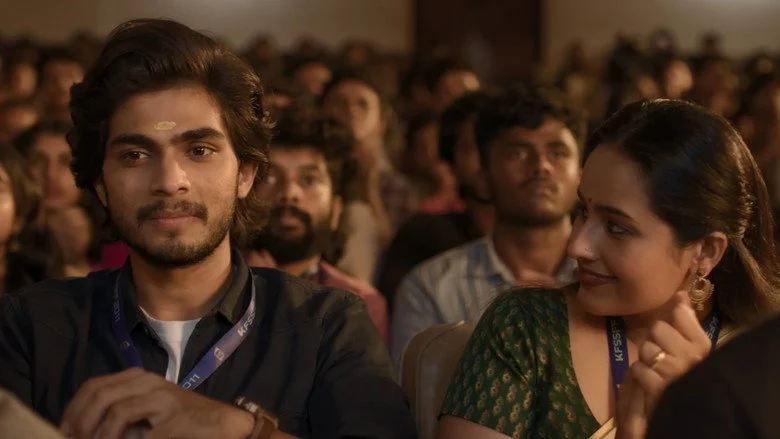
That skepticism has proven partially justified. The film’s ensemble lacks the lived-in quality that made the original resonate, that sense of watching actual friends navigate actual confusion rather than actors hitting predetermined marks. For a different perspective on how ensemble dynamics can succeed or fail, our review of Four Rooms review examined a similar tension between star power and cohesive storytelling.
Craft Without Conviction
Cinematographer Arjun Kukreti brings competent professionalism to the proceedings, but the visual scheme lacks distinction. The college sequences are shot with the standard golden-hour warmth that has become romantic comedy default, while the heartbreak passages retreat into the blue-tinted melancholy that signals sadness as reliably as a traffic light signals stop. There’s no visual idea here that couldn’t have been generated by an algorithm trained on the genre’s last decade.
Karki’s direction shows flashes of the sensitivity that distinguished his previous work. A scene of familial expectation, the kind of pressure that defines post-graduation anxiety for many young Indians, is handled with restraint, allowing the weight of unspoken disappointment to accumulate in silences. But these moments are islands in a sea of tonal inconsistency. The film doesn’t know whether it wants to be a broad comedy, a bittersweet romance, or a coming-of-age drama, and its attempts to be all three result in a film that fully commits to none.
For another perspective on how procedural storytelling can achieve tonal coherence, our analysis of Daayra verdict examined a project that understood its register and maintained it throughout.
The Verdict: A Remake That Forgets What Made the Original Work
Prem Keetanu isn’t a disaster. It’s something potentially more frustrating: a film with enough resources, enough talent, and enough structural advantage to succeed that nonetheless fails to cohere. The romantic comedy genre doesn’t demand innovation, it demands execution, the ability to make familiar beats feel earned. This film treats those beats as obligations rather than opportunities.
Veer Pahariya may yet develop into the leading man his casting suggests, but this film doesn’t make the case. Aparshakti Khurana deserves better material. And audiences deserve remakes that justify their existence beyond market expansion. As we frequently examine across Hindi Comedy reviews, the gap between commercial calculation and artistic achievement remains Bollywood’s most persistent challenge.
Rating: 2.5/5
Prem Keetanu is best suited for undemanding viewers seeking familiar romantic comedy rhythms and those curious about Pahariya’s leading-man trajectory. Those who appreciated Premalu‘s specific charms should approach with managed expectations, or revisit the original instead.

Ankit Jaiswal is the Chief Author, covering Indian cinema and OTT releases with honest, no-filler criticism. An SEO strategist by background, he brings a research-driven approach to film writing, cutting through hype to tell you exactly what's worth your time.