Kalpana Aur Yatharth: Salil Singh’s Reality-Bending Drama Loses Itself in Its Own Maze
Salil Singh’s Kalpana Aur Yatharth arrives with the kind of premise that suggests a filmmaker reaching for the metaphysical, a man named Yatharth spiraling through an “unreal world” after his wife Kalpana walks out. What actually reaches the screen is a film uncertain whether it wants to be a grief drama, a psychological puzzle, or a thriller, and ultimately commits to none of them with conviction.

When The Central Mystery Refuses To Cohere
The screenplay establishes Yatharth’s search as its narrative spine, but the transitions between waking reality and whatever “unreal” register the film intends remain frustratingly opaque. Singh, pulling triple duty as writer, director, and lead, appears to trust atmosphere over architecture, the result is a middle section that drifts rather than builds.
Where a tighter spatial discipline might have clarified the psychological stakes, the film instead layers ambiguity upon ambiguity until the audience loses purchase on what Yatharth is actually pursuing. The mystery becomes not a question to solve but a fog to endure.
Singh’s Performance Anchors What The Script Cannot
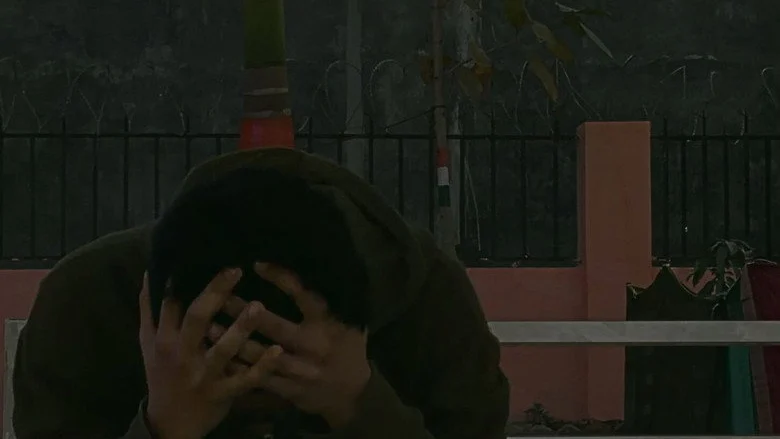
As Yatharth, Singh carries the film’s emotional weight with a physical vocabulary of exhaustion, slumped shoulders, a gaze that keeps drifting past his scene partners, hands that never quite settle. It is a performance built on depletion rather than eruption, and it occasionally achieves a quiet power the screenplay has not earned.
Isha Singh Chauhan’s Kalpana exists primarily as absence, which is thematically apt but dramatically thin. Her few appearances register as memory fragments rather than a fully inhabited character, leaving the film’s central relationship more asserted than felt. The restrained physical exhaustion Singh brings to his character’s quieter moments recalls the psychological weight of a similar turn in Hanuman Ansh, though here the stillness often reads as directorial hesitation rather than deliberate choice.
Supporting Figures Without Dramatic Function
Mohit GGupta’s Dinesh and Govind Bajpai’s Mr. Bhatia occupy screen time without ever clarifying their relationship to Yatharth’s quest. They appear, they speak, they exit, and the film offers no purchase on whether they are allies, obstacles, or simply ambient presences in a world that never fully coheres.
This is not a case of mysterious supporting characters enriching ambiguity. It is a case of underwritten roles that the screenplay has not bothered to integrate into its central mechanism. The result is a film that feels populated rather than inhabited.
The Visual Scheme Betrays Its Own Ambitions
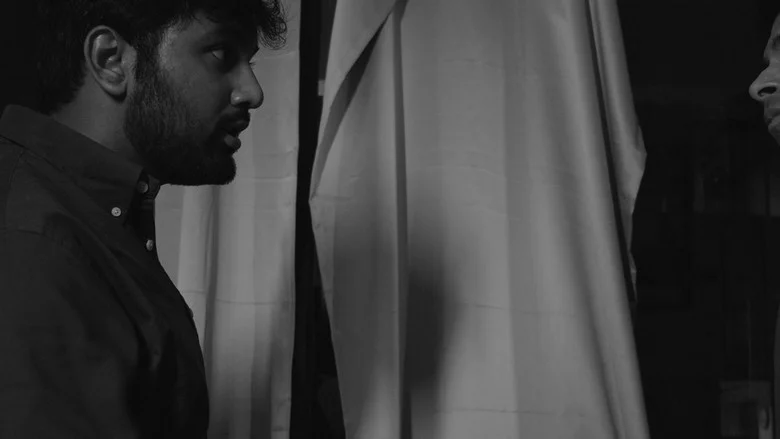
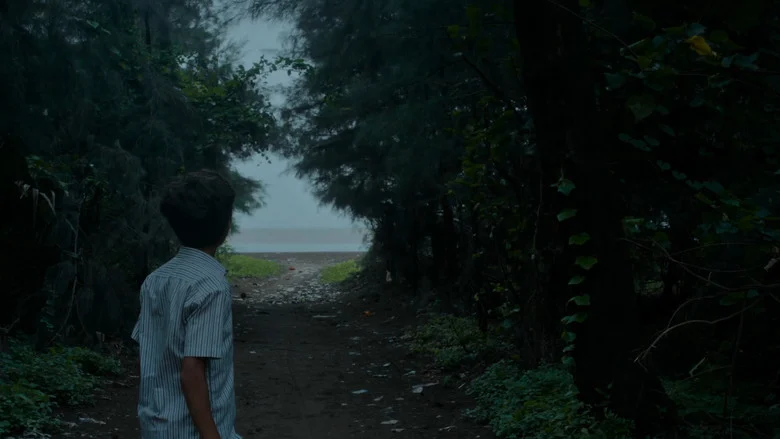
Cinematographically, the film gestures toward a subjective visual language, slightly desaturated interiors, frames that occasionally tilt or hold a beat too long on empty space, but these choices never accumulate into a coherent grammar. The camera seems to be searching for meaning alongside its protagonist, which might be intentional but reads as uncertain.
The score, meanwhile, works overtime to signal emotional gravity the scenes themselves do not generate. When music must tell us what to feel, the images have already failed. Just as a more disciplined approach to tension distinguished Reporting Live, this film demonstrates that ambiguity requires structural rigor to function as anything more than confusion.
What The Film Wants To Be Versus What It Is
The premise carries echoes of narratives that interrogate the boundary between psychological breakdown and external reality, territory that Last Man in Tower navigated with considerably more control over its metaphorical architecture. Here, the metaphor remains unformed, the reality-blurring device more asserted than dramatized.
Singh’s concentrated authorship, writer, director, star, suggests a personal vision, but personal vision without disciplined execution produces exactly this: a film that feels like a rough draft of an idea rather than the idea itself. The emotional climax, when it arrives, lands with the weight of a scene that has been described to us rather than one we have experienced.
The Verdict
Kalpana Aur Yatharth is a film that mistakes opacity for depth and fragmentation for complexity. Its ambitions are legible, a meditation on grief, abandonment, and the instability of perception, but the execution never rises to meet them. Singh’s performance suggests an actor of genuine sensitivity trapped in a screenplay that has not given him a character to play, only a condition to embody.
For audiences drawn to the kind of patient, psychologically rigorous drama that has been emerging across contemporary Hindi dramas, this will register as a missed opportunity rather than a discovery. The film wants to be about the impossibility of knowing another person; it ends up being about the impossibility of knowing what this movie is trying to say.
Rating: 2 / 5
Somewhere in this haze of unreal worlds and unresolved searches, there is a film about the terror of loving someone who has already become a memory. Kalpana Aur Yatharth never finds it.

Ankit Jaiswal is the Chief Author, covering Indian cinema and OTT releases with honest, no-filler criticism. An SEO strategist by background, he brings a research-driven approach to film writing, cutting through hype to tell you exactly what's worth your time.