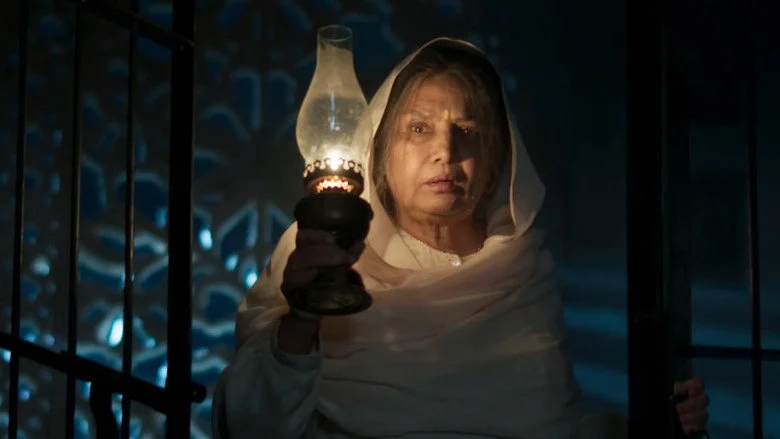
Last Man in Tower (2026): Manoj Bajpayee’s Quiet Holdout Against a Colony’s Greed
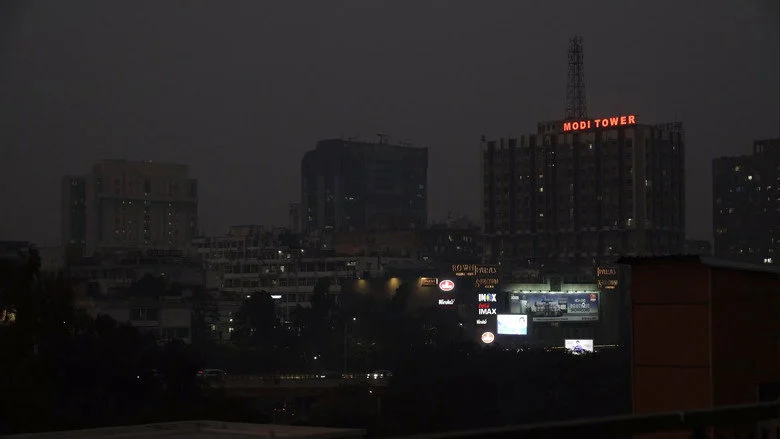
A builder’s slides glow in a cramped Vakola society hall, and by the time tea is poured, decades of neighbourly habit are priced per square foot. Retired teacher Yogesh Mishra says no, and the room he has lived in begins to turn on him.
Manoj Bajpayee Builds Yogesh Out of Tea, Silence and a Locked Gate
Bajpayee plays Yogesh through routine rather than rhetoric: the same chair, the same walk, the same cup of tea, and the quietest presence in every room. His defiance is never fiery; it is fragile and faintly apologetic. Bajpayee’s stillness is the film’s whole argument. That is exactly why the neighbours’ cruelty lands.
There is no big monologue, no courtroom flourish. He resists by simply continuing to live in his flat, and the performance holds that line for ninety-seven minutes. Bhonsle comparisons are inevitable, but this Yogesh is softer, more domesticated. Nobody in this building says anything they cannot later deny.
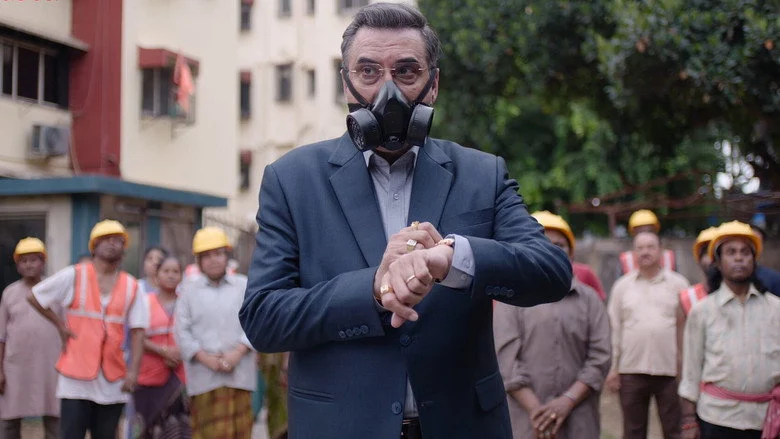
Ben Rekhi Keeps His Camera Too Close to Let the Satire Breathe
Rekhi and screenwriter Sooni Taraporevala keep the camera on faces and doorways, so the pressure never turns theatrical. At 97 minutes the film is brisk, but it also flattens Adiga’s satire into a straight middle-class tragedy. The result is sturdy storytelling that, as Hollywood Reporter India put it, offers no new insight.
Rangarajan Ramabadran’s frames catch the crumbling colony, the shared stairwell, the way a whole building hears one argument. Rekhi’s weakness is urgency; the film observes escalation without ever quite frightening you with it.
Taraporevala’s screenplay stays stubbornly linear, following the novel’s conflict without invention or detour. Juhi Chaturvedi’s Hindi dialogue keeps the neighbours’ barbs small and plausible, which is the film’s best defence. It is efficient writing, and slightly airless writing.
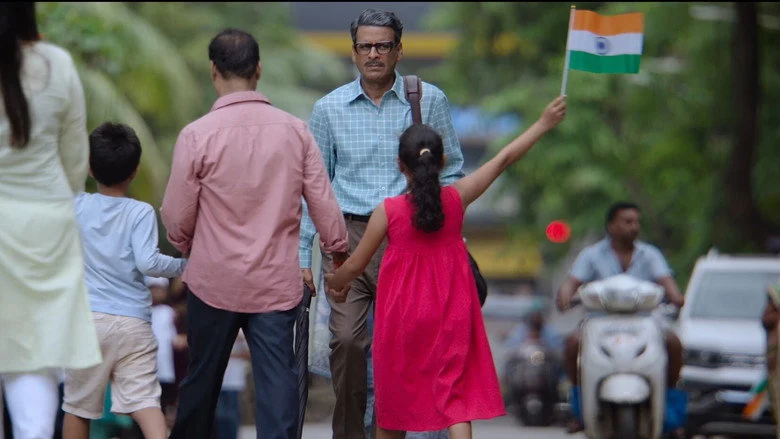
Vishram Society’s Meeting Room Carries the Film’s Whole Argument
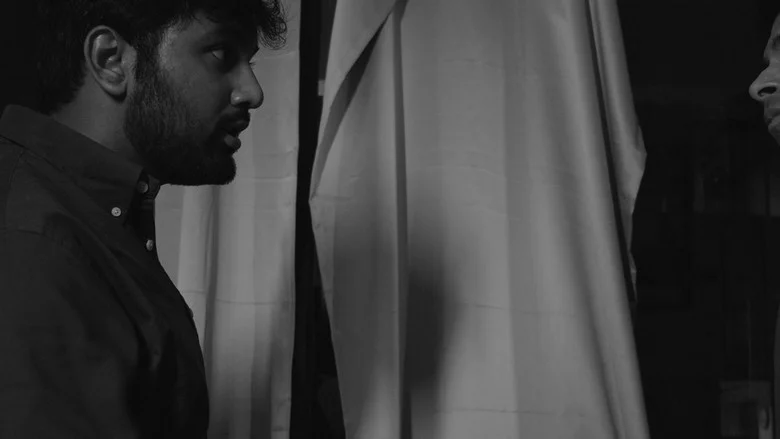
Social realism here runs on ensembles, not monologues. When the society meeting turns hostile, the camera holds on six faces and lets each one negotiate its own price. That one scene argues more about greed than any speech could.
The engine is compromise; neighbours who like Yogesh like the payout more. Over three months persuasion curdles into isolation, and the script tracks that slide with uncomfortable patience. Small cruelties register hardest: a cold shoulder, a withheld signature, a door closed twice.
Where the novel sneered, the film mourns, and the isolated holdout’s daily routine is played straight against the neighbours’ pressure. Critics split on that choice: Hindustan Times offered 3.5 out of 5, Indian Express came in at 2.5. I found the mourning more honest than the satire, but not necessarily more useful.
For more films that keep their arguments inside living rooms, our Hindi Drama reviews are worth your evening.
Divya Dutta’s Mrs Puri Makes Betrayal Feel Like Arithmetic
Divya Dutta gives Mrs Puri the film’s emotional pulse, sliding from desperation into sharp-tongued manipulation without a visible seam. Her confrontations with Yogesh over her special-needs son are the passages most praised, and rightly.
What Dutta understands is that Mrs Puri is not a villain, just a mother doing arithmetic. Boman Irani’s builder Dharmen Shah is slick and ruthless rather than loud, and his first pairing with Bajpayee runs on power dynamics alone.
Irani resists cartoon menace, which makes the offer genuinely hard to refuse. Sukant Goel’s pragmatic son adds a quiet layer of family tension, and the buyers never become a faceless mob.
The wider ensemble never registers as a mob, which is harder than it looks. Every one of them seems to have already spent the money. The building itself is the most consistent supporting presence, hallway by hallway.
Bajpayee and Dutta Earn the Praise; the Ending Earns the Shrug
Early audiences are praising the performances, the redevelopment theme and the community dynamics, then complaining about slack pacing and familiar beats. Opening day brought ₹0.03 crore India net, per Bollywood Hungama, which is about right for a niche 97-minute drama.
The adaptation’s softer ending is the main grievance, and it is a fair one. Book readers have been the loudest, and the loudest to feel short-changed. If you loved the novel’s acid, this version will feel like a polite handshake. What it loses is the book’s willingness to be unkind.
The praise concentrates on the cast and the colony’s texture; the complaints keep returning to pacing and to an ending that loses the book’s bite. Nobody is calling it a discovery, and nobody is calling it a failure either. It will find its audience on a streaming platform rather than in a packed house.
Go for the performances, not for a verdict on greed you have not already reached yourself. It is an intimate character study, and honestly it will sit better on a streaming screen than in a large theatre. Skip it if you need momentum and moral surprise in the same evening.
The cornered-man geometry here echoes Haiwaan review, undone by silence rather than by force.
Last Man in Tower is a well-acted, under-powered adaptation worth 3 out of 5, see it for the faces, not the fight.
Where Transition verdict is assembled from scattered recollection, this film dismantles a life in front of the people who knew it best.

Ankit Jaiswal is the Chief Author, covering Indian cinema and OTT releases with honest, no-filler criticism. An SEO strategist by background, he brings a research-driven approach to film writing, cutting through hype to tell you exactly what's worth your time.