Party Animals (2026): Viraj Ghelani’s Uneven New Year’s Eve Comedy
Somewhere between the mansion and the double-decker bus, Ravi Chhabriya’s New Year’s Eve comedy stops being a reunion and becomes a logistical pileup. The premise is a single night, and the film intends to make that night spiral.
A School PA System Sets A Comic Engine It Never Rebuilds
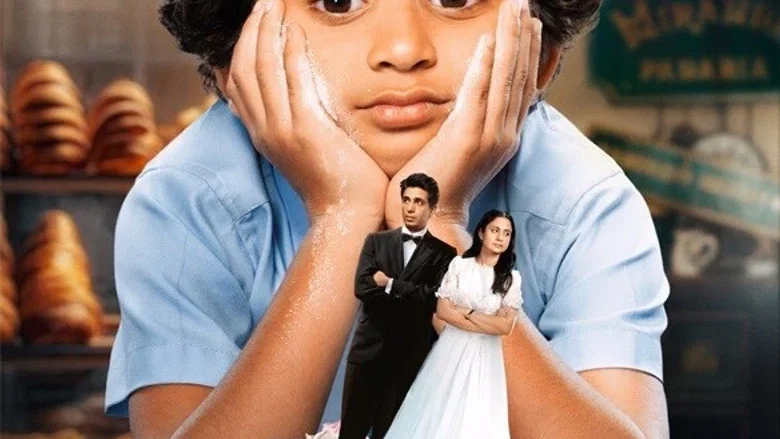
The opening is the film’s sharpest idea: young Armaan seizes a convent school’s public-address system to ask Simran to be his girlfriend. It works because the humiliation is structural, not verbal, one boy, an entire building listening, a microphone he cannot switch off.
Everything after that scene is louder and less precise. Chhabriya’s instinct is to keep moving the characters into bigger rooms, as though scale alone could generate the embarrassment the school corridor produced for free.
The escalation is mapped with real efficiency: nightclub, mansion party, open bus, jail cell. It is a clean comic geography, and it gives the ensemble somewhere new to fail.
Every Fix Makes It Worse, And The Film Knows It Too Early
The screenplay runs on a single mechanism, each attempt to repair the night creates a larger crisis. That is a legitimate farce engine, and for a while the momentum carries it.
The trouble is that the mechanism announces itself early. Once you understand that every solution triggers a worse problem, the film’s reversals stop surprising you and start arriving on a schedule.
Where a tighter comedy might have held one disaster and squeezed it, this one stacks cops, goons, a gangster and a runaway horse into the same evening. The tonal registers do not sit comfortably together.
The comparison to Parivarik ManuRanjan is instructive: that film understood that a party setting rewards stillness and awkward silence, not constant relocation. Here the camera rarely lets a joke breathe before the next location calls.
Ghelani Holds The Centre While The Night Runs Away From Him
Viraj Ghelani plays Mann as a host first and a friend second, which is the right instinct. His performance lives in the small gap between the party he planned and the party happening around him.
Watch his hands when the club turns into a problem, he keeps tidying, adjusting, managing, as if order is a physical object he can straighten. It is the most specific comic choice in the film.
Arjun Tanwar’s Armaan is the more performative creation, a star kid who converts private feeling into public spectacle. The school prologue establishes that, and Tanwar plays the adult version with a similar hunger for an audience.
Tanwar also fronts the “Cha Cha Cha” number, and his ease in that register is real. The film’s romantic and criminal complications, however, leave the pair with little room for the quieter friendship material the premise promises.
The supporting ensemble, romantic interests, party guests, police, assorted muscle, mostly functions as weather. They arrive, complicate the evening, and recede without individual comic identity.
Party Spaces, Institutional Spaces, And A Camera That Rarely Linger
The visual progression from crowded club interiors to a mansion, an open bus and finally a jail cell is the film’s most coherent design choice. Confined institutional space should feel like a punchline after all that movement.
It nearly does. But the cutting keeps pace with the plot rather than the comedy, moving on before a reaction can land. The school scene worked because it held; the later set pieces rarely do.
There is a version of this film that trusts its performers’ faces the way Pratap trusts its silences. Party Animals instead trusts its next location.
Yoodlee Films Bets On A Crowded Comedy Slate
Yoodlee Films, with producers Vikram Mehra and Siddharth Anand Kumar, is placing a wager on ensemble comedy as a theatrical proposition. The A certificate narrows the audience to adults, which is a defensible call for a party-night premise but removes the family crowd that sustains Hindi comedy mid-budget releases.
The film’s commercial logic depends on Ghelani and Tanwar drawing young, internet-native viewers into cinemas on opening weekend. That is a fragile bet in a market where broad comedies increasingly find their audience on streaming.
Against the more disciplined tonal control visible across contemporary Hindi comedy, this one leans hard on volume and incident. Whether that converts into footfalls depends entirely on how much the trailer’s party energy outweighs the film’s uneven payoff.
The Night Ends, The Friendship Doesn’t Quite
By the time the horse bolts and the cell door closes, the film has spent its chaos and has little left to say about the friendship that supposedly anchors it. The reunion is the premise; reconciliation is barely the point.
Mann and Armaan remain likable, and that is not nothing. But a comedy about two friends trying to survive one night should leave you with a sense of what they cost each other, and this one mostly leaves you with a list of places they went.
Chhabriya has a genuine feel for the embarrassment of public performance, the school scene proves it. What he has not yet found is the confidence to let a single joke sit still long enough to hurt.
The party is loud, the night is long, and the morning after feels like something the film forgot to shoot.

Ankit Jaiswal is the Chief Author, covering Indian cinema and OTT releases with honest, no-filler criticism. An SEO strategist by background, he brings a research-driven approach to film writing, cutting through hype to tell you exactly what's worth your time.