Afreet – A Never Ending Night (2026): A Never Ending Night (2026): Dev Bodhare’s Horror-Comedy Short Starts Strong, Ends Nowhere
Three friends, one challenge, and a night that refuses to end. Dev Bodhare’s twenty-three-minute horror-comedy Afreet has the architecture of a campfire story and the follow-through of a shrug.
It is a curious artifact of the YouTube-era Hindi horror boom: confident in its premise, economical in its setup, and utterly unable to land its own ending.
A Campfire Premise That Burns Out Before It Catches
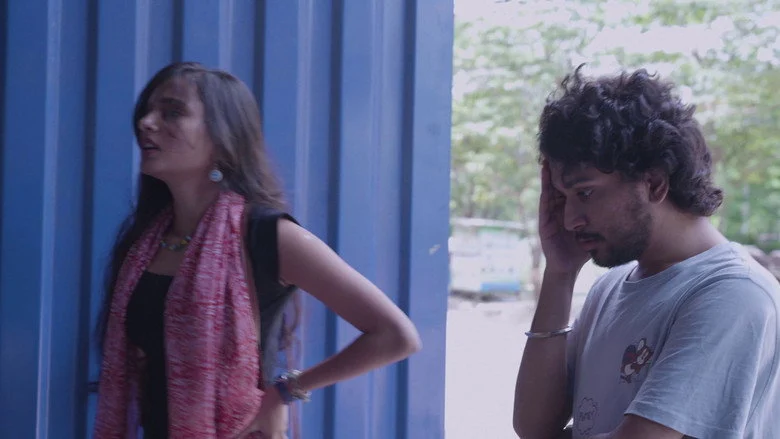
The film opens with the familiar rhythm of friends gathering for an ordinary evening. A challenge is issued, casual, stupid, the kind of dare that exists only in horror films and college hostels, and something older answers.
Bodhare stages this with a certain efficiency. The dialogue is loose, the framing is intimate, and the tonal register sits comfortably in the horror-comedy pocket. There is no pretense of grandeur here, which is its own kind of integrity.
The problem is that the film mistakes a premise for a screenplay. A challenge that unleashes an ancient presence is a trigger, not a story. What follows should be escalation, but what we get is repetition dressed as dread.
Twenty-Three Minutes Is Not an Excuse for a Missing Third Act
Short-form horror lives and dies by compression. Every beat must carry weight, every cut must tighten the noose. Afreet understands this in its first half and forgets it entirely in its second.
Strange events accumulate. Reality blurs. The friends become trapped in a night that no longer obeys ordinary rules. And then, nothing. The film ends not with a resolution but with an ellipsis, as if the title itself were a permission slip for narrative abdication.
The comparison to The Paradise is instructive. That film, for all its uneven social critique, at least understood that a story requires a destination. Bodhare’s short confuses atmosphere with arrival.
Performances That Never Get Room to Breathe
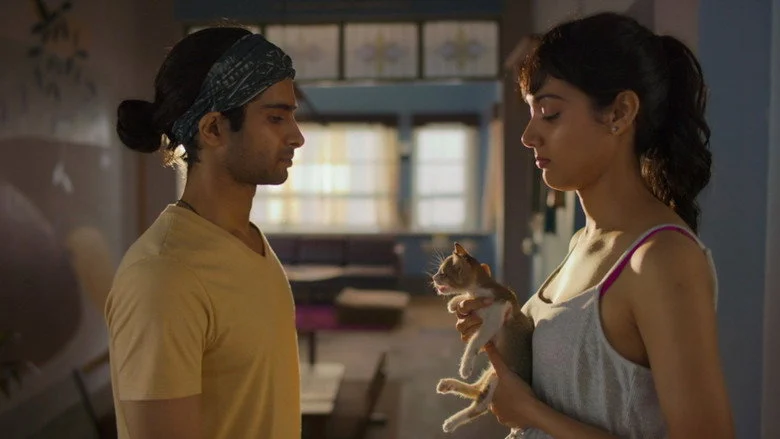
The principal trio, Bodhare himself, Dhaval Joshi, and Palguna Dharani, are given the impossible task of establishing friendship, fear, and comic timing within a runtime that barely allows for a proper introduction. They manage the first two with some grace.
What they cannot manage is the third. The horror-comedy balance requires a performer who can pivot from a laugh to a scream without losing the audience. Here, the comedy feels like a reflex rather than a choice, a tonal tic that undercuts the very dread the film is trying to build.
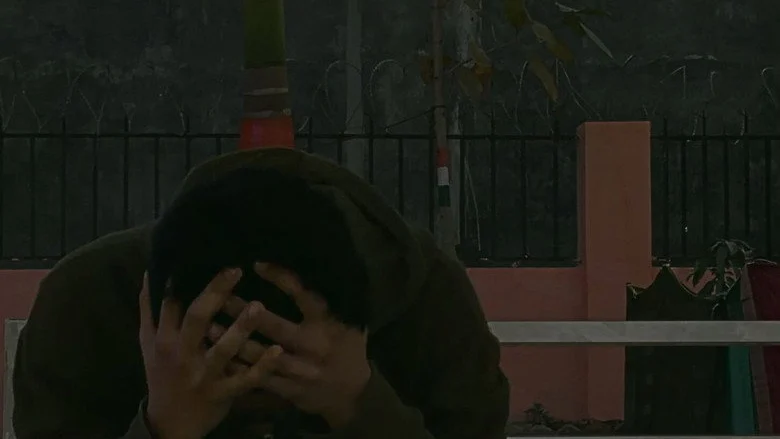
There is a moment late in the film where one of the friends simply stares at something off-screen. The camera holds. The score drops. It is the closest Afreet comes to genuine terror, and it lasts perhaps four seconds before a joke deflates it.
The restraint that Kay Salil Singh brought to Kalpana Aur Yatharth, that willingness to let silence do the work, is precisely what this film lacks. Every beat here is over-sold, as if the filmmakers do not trust their own material to land.
The Visual Grammar of a Film That Doesn’t Know What It Wants to Be
Bodhare’s camera work is functional but never expressive. The night exteriors are lit with a flat, even wash that eliminates shadow as a tool. The interior scenes rely on the same mid-range coverage, with no attempt to use spatial restriction to amplify claustrophobia.
This is a film about being trapped, yet the frame never feels trapped. The camera moves when it should hold, cuts when it should linger, and fills silence with score when it should let the quiet do the work.
The editing tells the same story. The first half moves with a certain purpose, establishing the gathering and the challenge with economy. The second half accelerates without direction, cutting faster and faster as if speed could substitute for suspense.
Where Haunted 3D at least attempted to build a coherent supernatural mythology, however hollow, Afreet offers no rules, no logic, and no payoff. The entity is never defined. The night is never explained. The ending is never earned.
A Verdict on Ambition Without Execution
There is something admirable about a twenty-three-minute independent Hindi horror-comedy that tries to do something with a single night and a single premise. The ambition is real. The execution is not.
What we have here is a film that understands the shape of horror but not its mechanics, that knows how to start a story but not how to finish one. The YouTube release model allows for this kind of experiment, and that is a good thing. But experiment is not the same as achievement.
Audiences looking for a quick, low-commitment supernatural short may find something here. Audiences looking for a film that respects their time and intelligence will find themselves staring at the credits, wondering where the last act went.
Rating: 2 / 5
In the end, Afreet is a film about a night that never ends, and a story that never quite begins. It is not frightening, not funny, and not finished. It is simply there, a ghost of a better film haunting the space where a real one should have been.

Ankit Jaiswal is the Chief Author, covering Indian cinema and OTT releases with honest, no-filler criticism. An SEO strategist by background, he brings a research-driven approach to film writing, cutting through hype to tell you exactly what's worth your time.