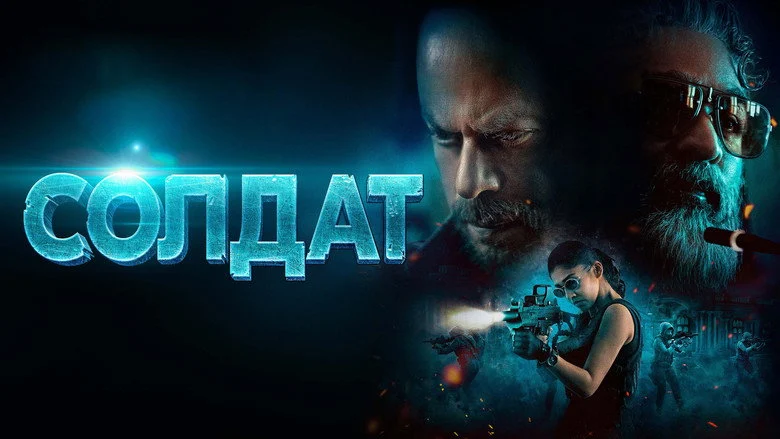
The Paradise (2026): Nani’s Ferocious Physicality Can’t Redeem Srikanth Odela’s Uneven Social Epic
The tattoo needle hovers over a child’s hand. In that suspended second, Srikanth Odela locates the entire architecture of his film: power as a permanent mark, humiliation as inheritance.
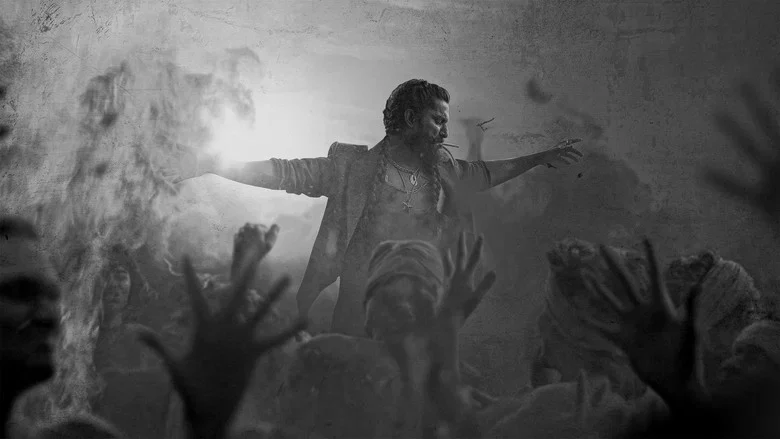
Jadal is a boy who steals biryani. Shikanja Malik is a ruler who responds by ordering men to carve an abusive word into flesh. The Paradise understands that violence is most devastating when it becomes legible, when it remains.
The Biryani Theft That Brands A Childhood
The film opens in 1980s Secunderabad, within the Savari tribe’s unregistered existence. Odela establishes Malik’s dominion through the geography of Paradise itself: controlled streets, watched bodies, a community whose citizenship papers never materialise.
When young Jadal reaches for food he cannot afford, the punishment is deliberately disproportionate. The tattoo sequence compresses food insecurity, class hierarchy, and punitive authority into a single physical gesture that will echo across nearly three hours.
This early act carries echoes of the reality-bending tonal ambition seen in Kalpana Aur Yatharth, though Odela grounds his social critique in visceral bodily harm rather than metaphysical drift. The tattoo does not merely signify trauma; it becomes the character’s permanent negotiation with his own degradation.
When A Prison Return Becomes The Only Narrative Engine
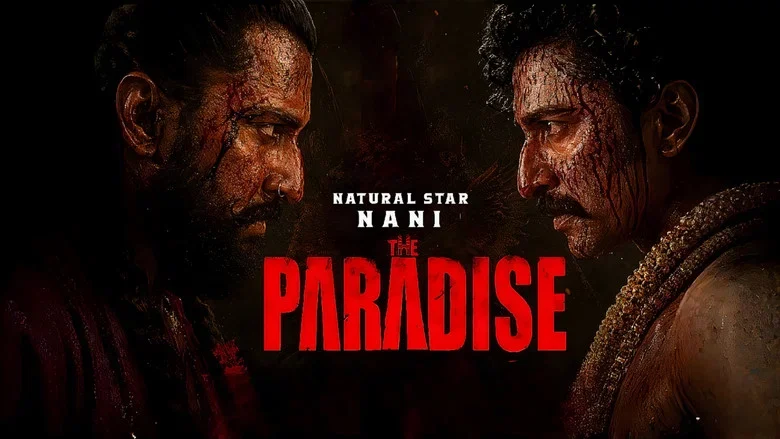
Fourteen years pass. Nani emerges from incarceration with the coiled stillness of a man who has rehearsed his rage in isolation. The screenplay shifts gears here, moving from childhood victimisation to adult confrontation.
His stated mission is revenge against Malik. But the film complicates this clean arc by introducing Jadal’s resentment toward his mother Sammakka, whom he believes was a prostitute. The misogyny embedded in that assumption becomes its own dramatic problem.
Odela positions Subbu, an aspiring actress played by Kayadu Lohar, as Jadal’s romantic counterweight. Her ambitions exist in stark contrast to the restricted social world Malik governs, yet the screenplay never fully integrates her trajectory with the citizenship struggle.
The revelation that Sammakka’s reputation was manufactured by Malik’s system arrives as the film’s emotional pivot. Nani’s physical register shifts here: the jaw unclenches, the shoulders drop, and resentment redirects toward its proper target. It is the performance’s most disciplined moment, reminiscent of the restrained fury evident in Reporting Live, where internalised pressure proved more potent than external release.
Mohan Babu’s Villainy Operates Through Bureaucratic Cruelty
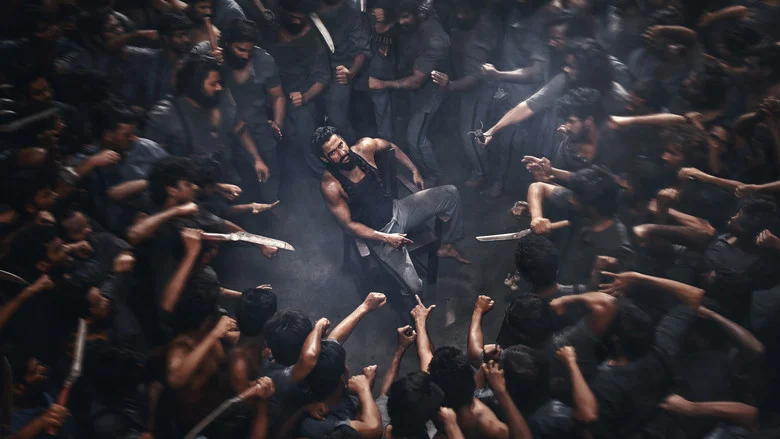
As Shikanja Malik, Mohan Babu does not rely on volume or physical menace. His authority is administrative: he controls through paperwork, through the withholding of recognition, through the casual deployment of subordinates who execute his degradation protocols.
The biryani-tattoo order defines his method. He does not strike Jadal himself. He speaks, and the machinery of his power produces suffering. This indirect violence is more chilling than any raised fist.
Raghav Juyal’s Vikram Malik extends this antagonism into a generational rivalry, though the screenplay underutilises his potential as a mirror to Jadal’s own inherited wounds. The childhood-rival dynamic requires more screen time than it receives.
The Citizenship Struggle Gets Buried Under Melodrama
Here lies the film’s central failure. The Savari tribe’s fight for legal recognition, for papers, for existence itself, should be the spine of this narrative. Instead, it becomes backdrop to a mother-son misunderstanding that resolves too late.
Odela’s direction favours symbolic compression: the marked hand, the controlled settlement, the prison-return structure. These are strong visual anchors. But the screenplay cannot sustain momentum across nearly three hours when the political stakes keep ceding ground to familial revelation.
The final confrontation between Jadal and Malik arrives with considerable force, yet the citizenship question remains dramatically unresolved. The personal revenge achieves closure; the collective struggle does not. This imbalance echoes the thematic ambitions of Peddi, another recent Telugu action drama where physical performance anchored an overstuffed narrative framework.
Nani’s Body Carries What The Script Cannot
The lead performance operates on two distinct registers. Young Jadal is all vulnerability and hunger; adult Jadal is compressed rage seeking outlet. Nani navigates this transition through posture and gaze rather than dialogue.
Watch his hands. The tattooed one remains slightly curled throughout, as if protecting the wound or preparing to weaponise it. This physical consistency gives the character coherence that the screenplay sometimes lacks.
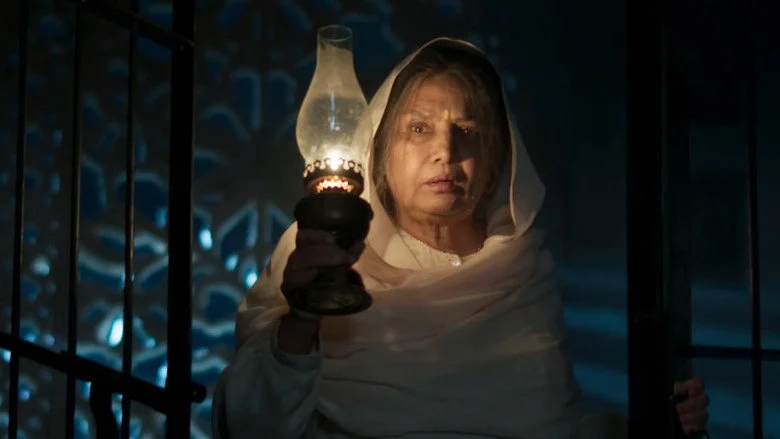
Sonali Kulkarni’s Sammakka exists primarily as narrative function, the misunderstood mother whose truth arrives too late to reshape the film’s emotional architecture. Her screen time is insufficient for the weight the revelation demands.
The supporting ensemble, including Easwari Rao as the friend who delivers the crucial disclosure, performs their roles with efficiency. But the film’s reliance on delayed information rather than organic character development remains its structural weakness.
The Verdict: Ambitious Failure Or Flawed Achievement?
This patient character study signals a welcome tonal maturity across contemporary Telugu actions, proving that mass-oriented cinema can engage with tribal marginalisation and citizenship rights without abandoning commercial grammar.
Yet ambition does not guarantee execution. As regional film critics tracking theatrical reception on i bomma have observed, The Paradise wants to be both intimate family melodrama and sweeping social epic. It succeeds more fully at the former, leaving the latter’s political potential frustratingly unrealised.
Nani’s physical commitment deserves recognition. Mohan Babu’s bureaucratic villainy offers a fresh antagonistic model. The tattoo sequence will linger in memory. But the film’s inability to integrate its personal and political conflicts into a unified dramatic engine prevents it from achieving the greatness its premise promises.
Rating: 2.5 / 5
The needle marks the hand, but the film never fully marks the conscience. What remains is the image of a child’s palm, permanently inscribed with a word he did not choose, in a nation that still refuses to recognise his tribe.

Ankit Jaiswal is the Chief Author, covering Indian cinema and OTT releases with honest, no-filler criticism. An SEO strategist by background, he brings a research-driven approach to film writing, cutting through hype to tell you exactly what's worth your time.