Jana Nayagan (2026): Vijay risks everything in a politically charged action swansong
An ex-police officer cradles a young girl, her trembling silence carrying the weight of trauma he has pledged to heal. The setup is tender, almost quiet, before it sharpens into a reminder: “In the past, they shook the past.” The ideological conflict is framed early, one man fights for people, another prospers through control.
Vijay carries the entire weight of the premise on his shoulders
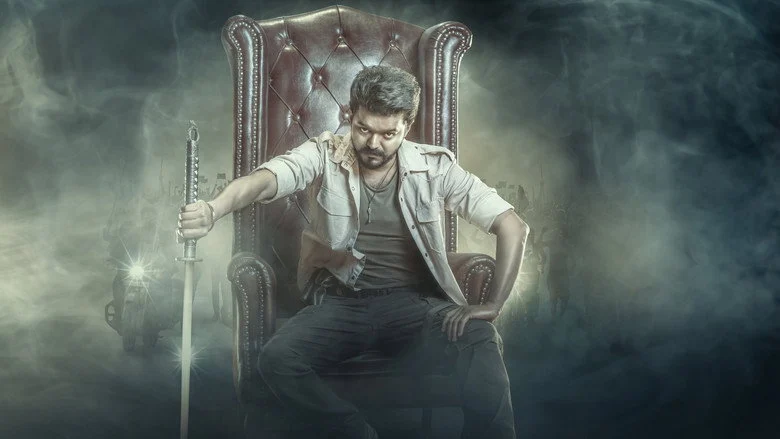
His final on-screen role before entering politics is a former police officer whose moral compass strains against corrupt forces. The emotional caregiving scenes with the child feel grounded, but the transition into political confrontation relies heavily on Vijay’s screen presence rather than layered writing. I found myself wishing the script trusted its quieter moments as much as Vijay trusts his own.
H. Vinoth’s screenplay builds a sturdy but familiar political-action skeleton
The linear structure, personal backstory expanding into a democracy-versus-authority conflict, is efficient but lacks surprise. Vinoth ties the child’s fear to an older ideological war, which gives the narrative a thematic spine that many mass-market thrillers lack. But the missing antagonist character becomes a structural flaw; the “corrupt force” feels generic, never crystallizing into a memorable face or performance.
The direction leans heavily on Vijay’s star power to fill gaps in character depth. The premise is high-concept, but the execution does not always match the ambition. Political-action films live or die by their villains, and here, democracy’s enemy remains a shapeless collection of bad intentions.
The confrontation scenes rely on standard mass-hero tropes rather than tactical innovation. The setup is promising, but the second half lacks the escalation that the first thirty minutes hints at. A tighter edit might have sharpened the political thriller edge.
For fans of high-stakes narratives, browse more Tamil Action reviews to see how the genre is evolving.

Pooja Hegde and Mamitha Baiju are underutilized in thin supporting roles
Pooja Hegde’s unnamed main female role exists largely in the periphery, reacting rather than driving any part of the conflict. Mamitha Baiju’s supporting part suggests the film intended a broader emotional ensemble, but neither actress receives a single scene that justifies their casting beyond star value. Their presence signals the film’s desire for scale, but the script leaves them stranded.
Censorship revisions and a political shadow loom over the release
Reported censorship issues were rectified before the worldwide release, but the delays suggest nervousness around the content. The film’s release coincides with Vijay’s own political transition, making every confrontation scene read as autobiographical statement rather than pure fiction. Audience interest is driven less by plot and more by watching a star walk toward the end of his screen career.
Before the credits roll, the film makes its peace with being a star vehicle wrapped in political-thriller ambitions. Fans will find everything they came for, Vijay commanding every frame, ideological speeches, a child’s trauma folded into mass action. Casual viewers seeking a tight political thriller may find the generic enemy and underwritten supporting cast frustrating. Watch it for Vijay’s final outing as a screen hero, but temper expectations for craft depth. Regular format is adequate; the drama does not demand theatrical scale.
This is Vijay’s film, start to finish, and it delivers exactly what a farewell should: a 3/5 star vehicle that prioritizes the star over the story.
For a more experimental approach to audience division, see how HIRAETH review.
If you prefer a tighter genre exercise, Simulacra verdict but offers a different lesson in screenwriting pitfalls.

Ankit Jaiswal is the Chief Author, covering Indian cinema and OTT releases with honest, no-filler criticism. An SEO strategist by background, he brings a research-driven approach to film writing, cutting through hype to tell you exactly what's worth your time.