Pratap (2026): Amit Sadh’s Fall From Encounter Specialist To Prisoner
A decorated Mumbai encounter specialist with twenty-six sanctioned kills watches his own career die on a six-inch phone screen. Sachin Saraf’s Pratap begins exactly where the police-action genre usually ends.
The Custodial-Death Video Is A Cleaner Trigger Than Most Cop Dramas Earn
Pratap Ranade is introduced as a publicly celebrated operator, his reputation built on the body count rather than the paperwork. Then footage of a custodial death surfaces, and the same institutional machinery that armed him quietly closes around him.
The reversal is blunt and effective. A man who once controlled the interrogation room becomes the subject of its evidence chain. Where lesser crime dramas invent a personal crisis to justify a fall, this screenplay locates the trigger in an act of state violence that cannot be un-seen.
That structural honesty is the film’s most valuable asset. The premise refuses to let Pratap be a misunderstood hero undone by conspiracy; the video implicates him directly, and the film’s moral engine runs on that discomfort.
Once The Handcuffs Click, The Screenplay Loses Its Nerve
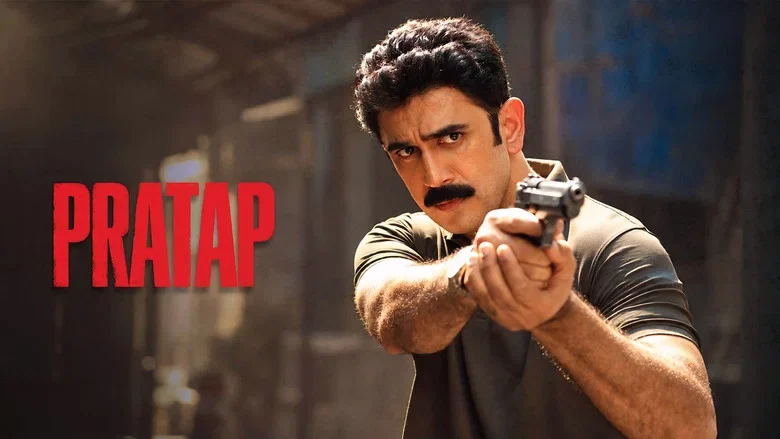
Mumbai Central Prison should be the film’s second act engine, a controlled environment where rank evaporates and survival becomes hourly. Instead, the middle stretch drifts between procedural fragments and prison-yard standoffs without committing to either.
Saraf keeps the storytelling grounded, as promised, but grounding is not the same as specificity. The evidence chain that put Pratap inside is never traced with real investigative rigor, and the institutional forces arrayed against him remain a vague wall of uniforms rather than identifiable adversaries.
Compare the sharper spatial discipline on display in Kidney, where confined geography forces every character into visible friction. Here the prison corridors are atmospherically shot but dramatically underpopulated, and the film’s middle hour coasts on premise rather than escalation.
Amit Sadh Strips The Swagger Away One Physical Beat At A Time
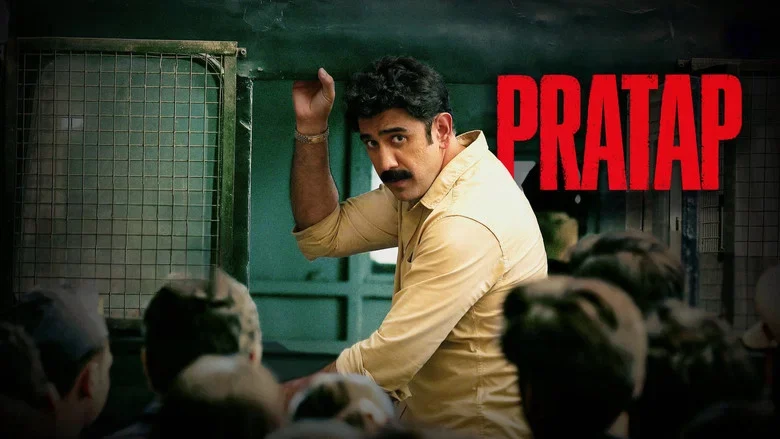
Sadh’s best work has always lived in the body rather than the monologue. His performance here tracks the fall through posture: the squared shoulders of a man accustomed to command slowly collapsing into the guarded hunch of someone who no longer controls a room.
Watch his hands in the early operational scenes, restless and proprietary, then watch them in the cell block, held close and still. The transformation is physical before it is emotional, and Sadh trusts the camera to catch it.
That restraint echoes the psychological weight he carried as a paralysed soldier in Jeet Ki Zid, another study of a man whose authority is stripped by circumstance. The difference is that this role demands a harder confrontation with culpability, and Sadh meets it in the quieter moments rather than the shouting ones.
The Supporting Ensemble Is Cast For Texture, Not Function
Esha Deol and Seema Biswas appear in the principal cast, and both bring a visible gravity to their scenes, but the screenplay gives them little to do beyond registering concern or institutional distance.
Biswas in particular is a performer whose stillness can dominate a frame, and here she is largely asked to hold it in the background.
Tigmanshu Dhulia’s presence adds a familiar weight of authority to the procedural passages, though his relationship to Pratap is sketched rather than dramatized. The film keeps its supporting players at arm’s length, and the emotional stakes thin out accordingly.
This is a structural problem, not a casting one. When the people around your protagonist have no independent agenda, the prison stops feeling like a living ecosystem and starts feeling like a set.
Saraf’s Camera Understands Power, But Not Yet Its Collapse
The visual grammar of the first act is confident: tight framing on Pratap in operational spaces, the camera close enough to read his certainty. The prison sequences adopt a flatter, more observational distance, which is the right instinct.
What the film lacks is a sustained audio-visual idea for the middle stretch. The score pushes tension where the staging should carry it, and several confrontations are cut just before they develop real friction. Silence, deployed more aggressively, might have manufactured the pressure the screenplay keeps promising.
Still, Saraf’s refusal to turn the material into a revenge thriller is a deliberate and respectable choice. The film wants accountability, not catharsis, and that intention survives even when the execution wobbles.
UV Films Is Betting On A Serious Crime Drama In A Crowded Market
Producer Pradeep Rangwani and UV Films are staking their release slate on a mid-budget crime drama with a recognisable lead and no franchise scaffolding. That is a genuine commercial risk in a theatrical market that rewards spectacle and brand familiarity.
The film’s box-office leverage rests almost entirely on Sadh’s following and the officer-to-prisoner hook, which is legible in a trailer but harder to sustain across a two-hour-plus runtime. Without a named antagonist or a clear revenge promise, the film is asking audiences to buy into moral ambiguity at full ticket price.
That ambition deserves credit, even as the marketplace tests it ruthlessly. The appetite for grounded character work across contemporary Hindi dramas is real, but it is currently being satisfied on streaming as often as in theatres.
The Ending Refuses To Hand Pratap An Easy Absolution
What lingers is the film’s unwillingness to convert consequence into triumph. Pratap’s arc is built around confronting what he did rather than defeating someone who wronged him, and the resolution honours that discomfort instead of dissolving it.
The moral fallout here runs parallel to the unresolved tension examined in Dilwali Diwali, another drama where the past refuses to settle quietly into the present. Both films understand that accountability is a process, not a closing scene.
Saraf’s debut feature is uneven, occasionally underpowered, and too coy about its institutional villains. But it is also a film that trusts its lead’s face over its action choreography, and that instinct is worth more than a dozen cleaner, emptier cop thrillers.
A man spends twenty-six kills building a legend, then discovers the only audience that matters is the one reviewing the footage. Pratap knows that sentence is the whole film, and it has the discipline not to look away.

Ankit Jaiswal is the Chief Author, covering Indian cinema and OTT releases with honest, no-filler criticism. An SEO strategist by background, he brings a research-driven approach to film writing, cutting through hype to tell you exactly what's worth your time.