Parivarik ManuRanjan (2026): Pankaj Tripathi Anchors a Mansion of Quiet Manners and Muted Stakes
A forty-year-old bachelor rattles around an ancestral Lucknow mansion, content in his routine, until a Delhi property manager walks through the door and the dust begins to unsettle.
That premise carries the entire weight of Varun V. Sharma’s direct-to-streaming romantic comedy, and the film never quite decides whether that weight is a burden or a blessing.
The Mansion Is the Antagonist, and It Barely Puts Up a Fight
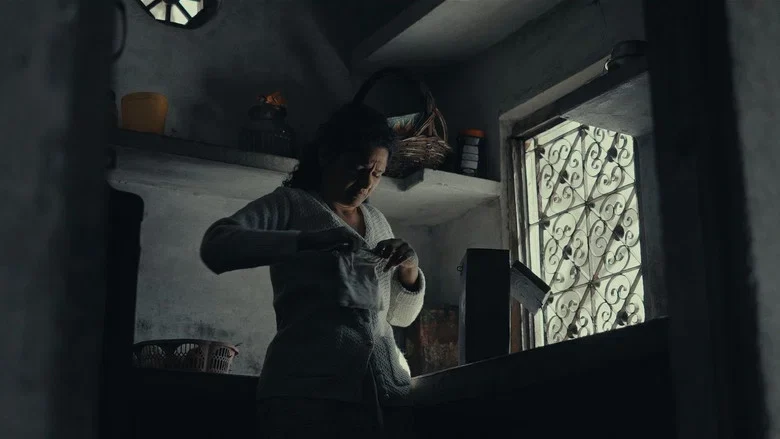
Sharma builds the first act almost entirely on domestic repetition: a morning cup, a corridor walked the same way, a household that runs because one man has arranged it to run.
The failed matchmaking effort staged by Ranjan’s well-wisher arrives early, and it lands not as comedy but as social diagnosis, the community has already decided what a man his age should want.
What the screenplay, co-written with Brijendra Kala and Ali Abbas Zafar, refuses to do is escalate. The ancestral property is a handsome container, but it never becomes a pressure chamber.

When Comfort Becomes the Script’s Only Engine, Drama Stalls
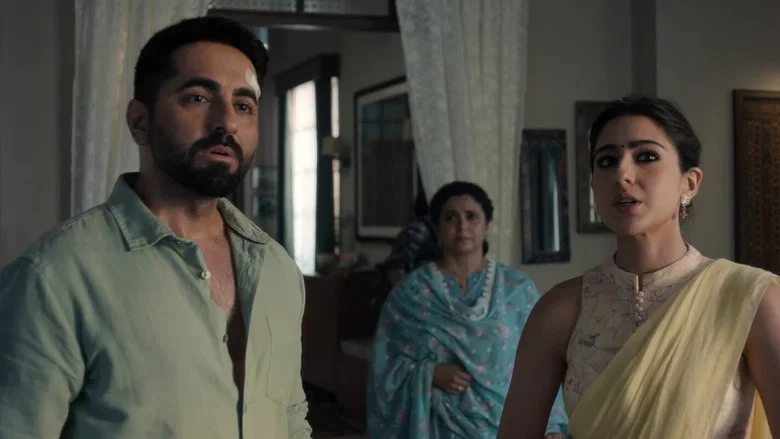
Helen’s arrival is the film’s cleanest structural idea: a working woman from Delhi with a professional objective, dropped into a house that has no professional logic.
The friction should be class, gender and employment all at once. Instead, the film treats the employer–house-manager arrangement as a gentle inconvenience that dissolves into shared tea and soft glances.
That choice is charming for twenty minutes and enervating for the next forty. Without a genuine external antagonist, the romance must generate its own heat, and the writing keeps lowering the thermostat.
The social prejudice that supposedly opposes the couple is real enough as a cultural force, but it is never embodied, no uncle draws a line, no neighbour slams a door, no employer’s family arrives to make Helen feel like staff.
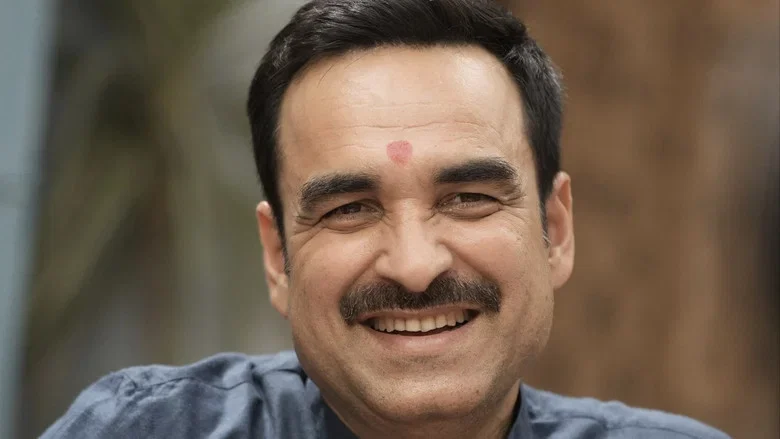
Pankaj Tripathi Finds the Stillness; the Script Forgets to Disturb It
Tripathi plays Ranjan with a deliberately low comic register: a man who answers questions a half-beat late, who fills a silence with a small household task rather than a joke.
Watch his hands in the early mansion scenes, always occupied, always tidying, as if stillness itself were a threat. That physical discipline is the film’s most articulate piece of characterisation.
The turn from comfortable isolation toward emotional dependence is where the performance has to do heavy lifting the script won’t. He manages it in small increments: a longer look, a slower response, a refusal to laugh at his own deflection.
It recalls the domestic menace he located in Mirzapur, but inverted, where that role weaponised stillness, this one uses it as a shield, and the actor knows exactly which muscles to hold.
Aditi Rao Hydari Arrives With Purpose and Is Asked to Soften It
Hydari’s Helen enters with a clipboard’s worth of authority: she assesses the property, sets terms, and treats the household as a job with hours.
The film’s most interesting tension is whether that professional spine survives the romance, and the answer is disappointingly gradual. Her agency is introduced and then politely folded away.
There is a moment where she stands in a doorway, bag still on her shoulder, taking in the scale of the house and the smallness of its sole occupant. It is the film’s best-observed image of two social worlds measuring each other.
Kala, as the well-wisher who shuffles between neighbour, colleague and matchmaker, provides the community’s voice, and his scenes carry a lived-in comic rhythm the rest of the film chases without catching.
A Lucknow Romance That Photographs Its Rooms and Forgets Its People
The visual scheme leans on the mansion’s inherited scale: wide corridors, high ceilings, furniture that outlived its owners. The contrast between that space and one man’s small daily orbit is legible in nearly every frame.
What the camera rarely does is press in. Scenes between Ranjan and Helen are staged at a courteous middle distance, as if the film were afraid of the intimacy it is supposedly building.
The comedy is similarly cautious, situational, reliant on Tripathi’s timing and Kala’s fussing, never risking the sharper edge that a class-conscious romance would need.
Just as the mythological scale of Ramayana demanded a visual grammar equal to its burden, this film needs a domestic grammar equal to its restraint. It settles for pleasant.
The Ending Wants Acceptance Without Ever Staging the Argument
The resolution gestures toward companionship and family acceptance, and the film is sincere about wanting its couple to be permitted rather than punished.
But a story about social prejudice has to show the prejudice doing damage. Here, the opposition is a rumour the characters discuss rather than a force they survive.
What remains is a romance that earns affection through proximity and asks the audience to supply the conflict from memory of other, harder films.
The thematic ambition, the right to define a relationship outside convention, is real, and it sits in the same territory the uneven Pehla Pyaar Doosri Baar tried to occupy. That film at least let its lovers stumble loudly.
Bhanushali Productions and AAZ Films Bet on Streaming Comfort, Not Spectacle
With Bhanushali Productions and Ali Abbas Zafar’s AAZ Films behind a Sony LIV premiere, the commercial logic is clear: a star-led, contained family romance with no theatrical print cost and no opening-weekend exposure.
For Tripathi, this is a low-risk addition to a filmography that now spans streaming prestige and franchise muscle. For Hydari, it is a leading role in a market that rarely hands her one.
The wider question is what this model does to the Hindi romantic comedy. When a film can skip the pressure of a Friday opening, it can also skip the pressure of a second act that has to win a room.
The genre’s health depends on filmmakers who still want the room. This one mostly wants the sofa.
The Verdict: A Courteous Romance That Mistakes Gentleness for Depth
Parivarik ManuRanjan is well acted, gently observed, and almost entirely without friction, a film about a man learning to share his house that never quite lets anyone threaten it.
Tripathi’s quiet craftsmanship and Hydari’s early authority deserve a sharper screenplay than the one that surrounds them.
What lingers is not the romance but the silence: a large house, a small routine, and a story that chose to keep the doors unlocked.

Ankit Jaiswal is the Chief Author, covering Indian cinema and OTT releases with honest, no-filler criticism. An SEO strategist by background, he brings a research-driven approach to film writing, cutting through hype to tell you exactly what's worth your time.