Hanuman Ansh (2026): Shobhinaw Satyaa’s Devotional Restraint Builds a Saint’s Life From Silence
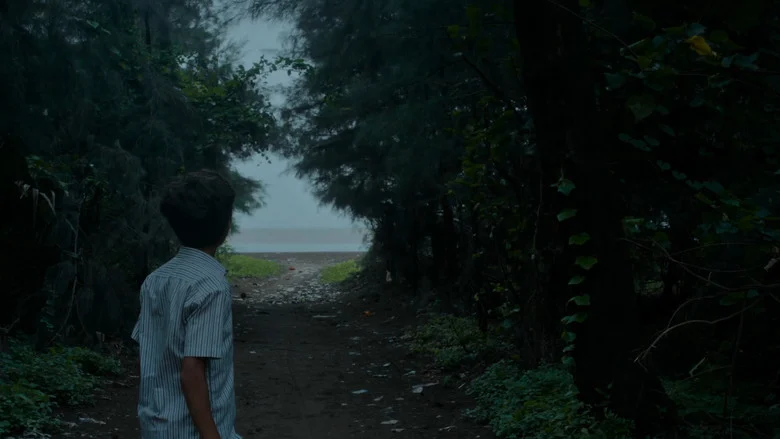
Vishal Chaturvedi opens his film on a boy standing at the edge of a funeral pyre, and for the next two and a half hours he never once lets that boy scream. The mother is dead before the first reel settles. What follows is not a revenge arc, not a rise-and-fall chronicle, but a slow transmutation of private bereavement into public service.
The premise is deceptively simple: a grieving son searches for reunion with his dead mother and discovers that the search itself is the answer. Chaturvedi treats this not as a twist but as an inevitability, which is both the film’s quiet power and its structural risk.
When Reverence Replaces Conflict, Momentum Becomes A Casualty
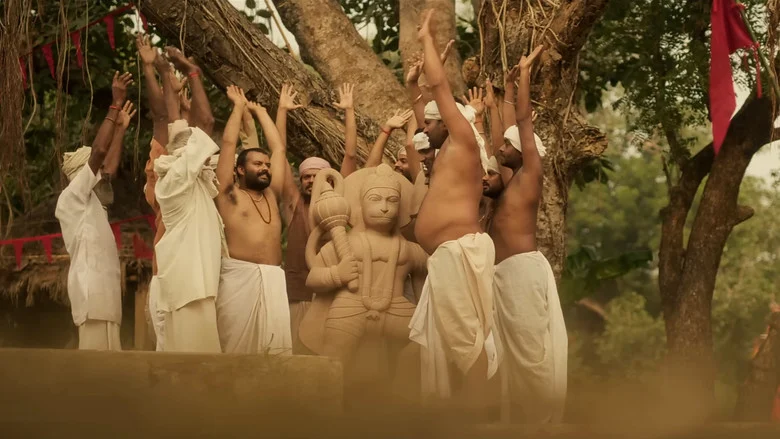
The central problem with Hanuman Ansh is not that it lacks incident. It is that Chaturvedi has mistaken tonal consistency for dramatic architecture. The middle section, which should be the film’s engine room, settles into a repetitive rhythm of feeding the hungry, blessing the silent, and walking away from confrontation. Each sequence is sincere. None of them escalates.
This is a deliberate choice, and it reflects a broader pivot across contemporary Indian cinema toward interiority over spectacle. But interiority without friction becomes liturgy, and liturgy, however beautiful, does not sustain a 150-minute runtime. The film’s ethical conflicts, skepticism from worldly observers, institutional pressure from Inspector Nasir Khan, are gestured at rather than dramatized.
Where a more commercially structured biopic might have weaponized that friction, Chaturvedi lets it dissipate. The result is a film that feels less like a narrative and more like a series of devotional tableaux, each one beautifully composed, none of them building toward a reckoning.
Shobhinaw Satyaa Builds A Saint Through Stillness, Not Declaration
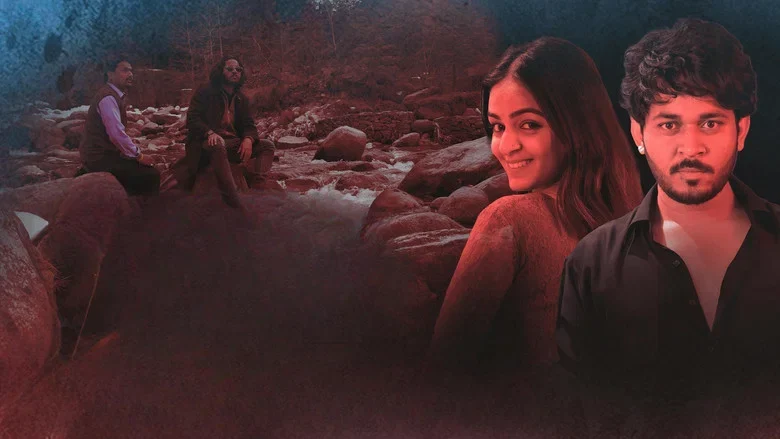
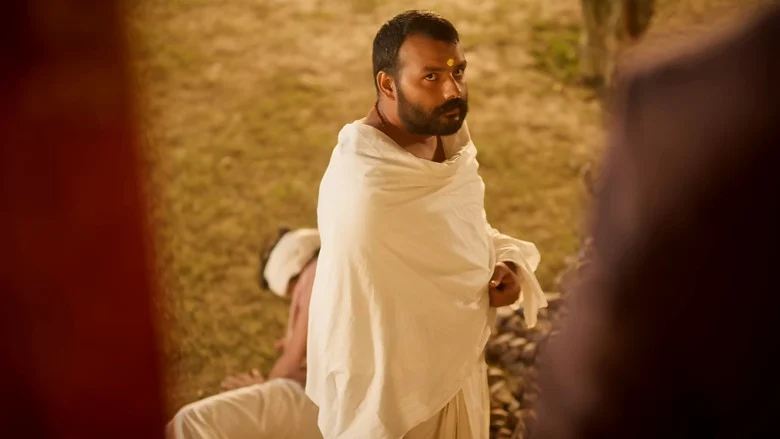
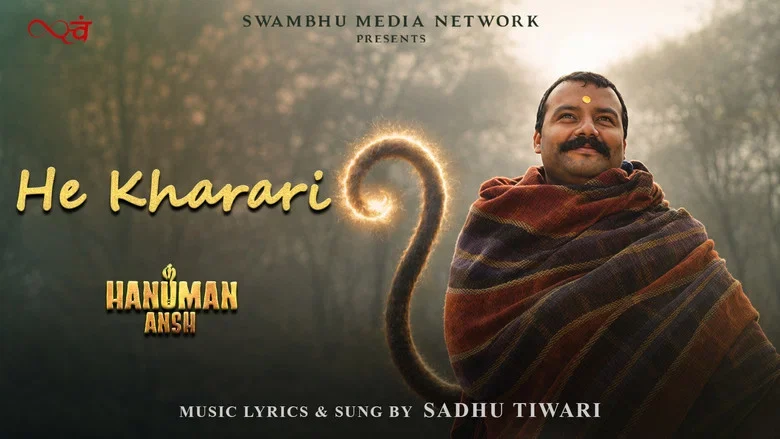
The film’s saving grace is its lead performance. Shobhinaw Satyaa, carrying the arc from bereaved youth to Neem Karoli Baba, understands that sanctity on screen is built through restraint. Watch his hands in the feeding sequences: they move with a deliberate, unhurried economy, never reaching for effect, never performing compassion for the camera.
His face does the heavy lifting. In the early grief passages, Satyaa holds his jaw tight, eyes fixed on middle distance, refusing the easy catharsis of tears. By the time the older Baba emerges, the same face has softened into something approaching transparency, not blankness, but a kind of practiced openness that suggests decades of internal discipline.
It is a performance that will frustrate viewers expecting the grand emotional gestures of a conventional saint biopic. Satyaa gives us containment instead of breakdown, and in doing so, he makes the character’s spiritual authority feel earned rather than asserted.
A Supporting Cast That Grounds Without Distracting
Chandan Anand, as the skeptical Dr. Bhosale, provides the film’s most useful counterweight. In one early scene, he stands at the edge of a gathering, arms crossed, watching the young ascetic with an expression that hovers between professional curiosity and personal doubt. It is a small gesture, but it anchors the film in the everyday world that Baba is slowly leaving behind.
Purnima Tiwari’s Rambeti occupies the domestic and emotional texture of the story with a similar economy. She does not get grand speeches. She gets glances, small offerings, the quiet work of holding a household together while its center drifts toward renunciation. The film is better for her presence.
Rajiv Mishra’s Inspector Nasir Khan suggests institutional pressure without ever becoming a true antagonist. He is a function, not a character, and the screenplay never quite gives him enough to do beyond representing the world’s suspicion of faith-based authority.
Direction That Trusts Silence, Perhaps Too Much
Chaturvedi’s visual grammar is austere by design. The camera holds on faces longer than most commercial Hindi cinema would dare. Lighting favors naturalism over high contrast, and the staging of devotional scenes, particularly the feeding sequences, is deliberately unadorned.
This restraint serves the subject matter. It also exposes the film’s central weakness: without visual or narrative escalation, the second half begins to feel like a series of variations on a single theme rather than a progression. The editing does not help. The first half, focused on grief and identity, moves with a clearer sense of purpose. The second half, broader in scope but narrower in emotional range, repeats its reverential patterns until they lose their cumulative force.
It is a structural miscalculation that a more ruthless edit might have solved. But Chaturvedi is clearly more interested in fidelity to his subject’s spirit than in conventional dramatic engineering, and that choice, whatever its costs, is coherent.
What The Film Does Better Than Its Genre Peers
Where recent spiritual spectacles like Toxic have drowned their themes in maximalist excess, Hanuman Ansh trusts that service and silence can carry a narrative. The film’s best scenes, a quiet meal shared with strangers, a blessing offered without expectation of return, demonstrate that sanctity can be visualized through everyday acts rather than supernatural display.
It is a more honest approach to the saint biopic than the genre typically allows. It is also less immediately satisfying, and the film’s commercial reception will likely reflect that tension between critical respect and popular impatience.
A Final Verdict That Respects What The Film Refuses To Do
Hanuman Ansh is a film for viewers who believe that spiritual cinema should feel like prayer rather than spectacle. It will reward patient audiences, particularly those with a personal or familial connection to Neem Karoli Baba’s legacy. It will frustrate viewers raised on the kinetic beats of commercial biopics, and it will lose others entirely in its second half, where the absence of conflict becomes not a stylistic choice but a narrative void.
Chaturvedi has made a film that refuses to raise its voice, even when the material might have benefited from a shout. That refusal is both its integrity and its limitation. For a certain kind of viewer, that will be enough.
Rating: 2.5 / 5
The film’s final image, Baba walking away from the camera, into a landscape that offers no clear horizon, captures everything Hanuman Ansh gets right and everything it leaves unresolved. He does not turn back. Neither, it seems, does the film.

Ankit Jaiswal is the Chief Author, covering Indian cinema and OTT releases with honest, no-filler criticism. An SEO strategist by background, he brings a research-driven approach to film writing, cutting through hype to tell you exactly what's worth your time.