Prahaar (2026): Rajkummar Rao’s Courtroom Drama Loses Its Pulse to Procedure
The gavel lands with a thud, but the silence that follows in Avinash Arun’s courtroom is not the hush of revelation. It is the sound of a filmmaker hoping that a man reading a document is inherently cinematic.
Rajkummar Rao plays Ujjwal Nikam as a man perpetually on the verge of a coronary, his jaw clenched so tight you can hear his molars grind from the back row. The film wants us to see the weight of a nation on his shoulders, but mostly it just looks like he needs a stiff drink and a nap.
When The Evidence Is The Only Thing Moving, The Drama Stalls
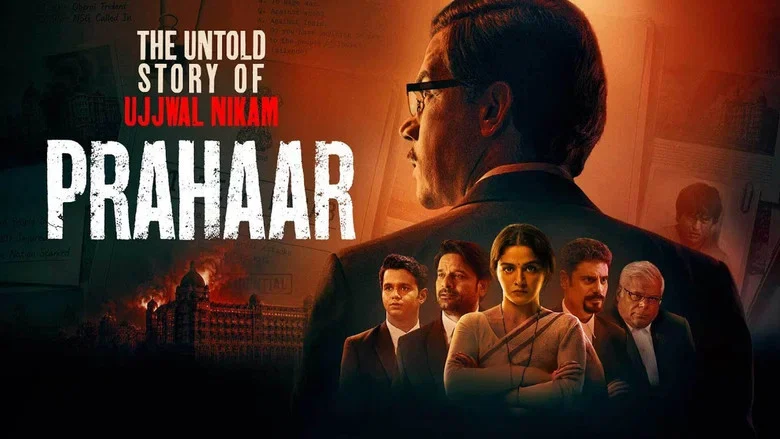
The central mechanism of Prahaar is the assembly of the prosecution’s case against Ajmal Kasab. This is a film that mistakes the act of reading a witness list for tension, and the shuffling of forensic reports for momentum.
We are told, repeatedly, that Nikam must prove guilt beyond reasonable doubt. We are shown the mechanics of this process with the enthusiasm of a clerk filing tax returns. The film operates on the assumption that because the historical outcome was significant, the depiction of the process is inherently gripping.
It is not. The screenplay, which remains unattributed but feels like it was assembled by a committee of legal consultants, treats the courtroom as a library rather than an arena. The prosecution and defence engage in a battle of procedural pedantry while the audience is left to wonder why the air conditioning is the only thing generating a chill.
Sikandar Kher’s Defence Is A Masterclass In Thankless Duty
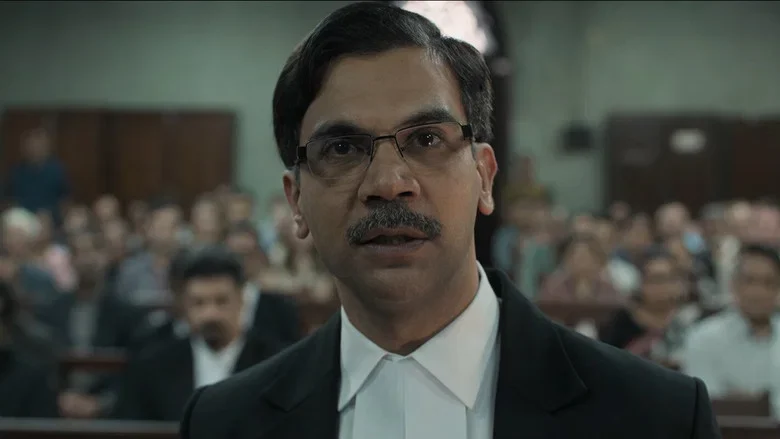
Sikandar Kher, as defence lawyer Abbas Kazmi, is the only performer who seems to understand the assignment. He plays the role with a weary, bureaucratic dignity, the kind of man who knows he is the villain in the room but has a job to do.
There is a specific moment where he adjusts his spectacles before cross-examining a witness, a tiny gesture of professional resignation that says more about the burden of legal representation than any of the film’s shouted arguments. It is a performance of quiet, necessary friction in a film that otherwise smooths every edge into a lecture.
Rao, by contrast, is given no such nuance. His Nikam is a single, sustained note of righteous fury. He stalks the corridors of the court like a man who has forgotten where he parked his car, and his interactions with his family, particularly Wamiqa Gabbi’s Jyoti, are rendered with the emotional depth of a greeting card.
Lalit Prabhakar’s Kasab Is The Only Spark In A Damp Fire
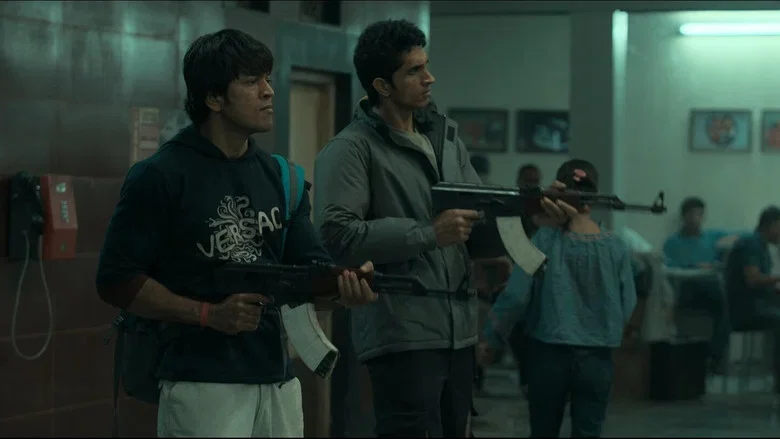
Lalit Prabhakar’s portrayal of Ajmal Kasab is the film’s sole source of genuine, unsettling energy. He does not play Kasab as a monster or a martyr, but as a hollowed-out vessel, a young man whose eyes have stopped registering the world around him.
When he is brought into the courtroom, there is a physical shift in the room’s gravity. Prabhakar sits with a stillness that is far more menacing than any of Rao’s theatrical outbursts. His Kasab is a black hole at the center of the film, and every time the narrative cuts away from him to focus on Nikam’s domestic troubles, the film loses its gravitational pull.
The screenplay fails to interrogate this stillness. It uses Kasab as a prop for Nikam’s heroism rather than as a psychological puzzle. The film’s most praised performance is also its most underutilized asset, a reminder of the complex, terrifying human being that the script reduces to a legal exhibit.
Avinash Arun’s Direction Favors The Gavel Over The Heartbeat
Avinash Arun, who demonstrated a tighter spatial discipline in Jailer 2, strips away decorative camera moves here to prioritize raw psychological friction. The problem is that the friction is all in the dialogue, and the visuals are content to simply record the proceedings.
The film’s color palette is a wash of beige and gray, a visual representation of the bureaucratic drudgery that the narrative seems to celebrate. The camera sits motionless during the courtroom scenes, as if afraid that a tracking shot might accidentally introduce a pulse. The editing, particularly in the first half, is abrupt to the point of whiplash, cutting from a family engagement to a national tragedy without allowing either moment to breathe.
There is a sequence where Nikam walks through the aftermath of the attacks, but Arun films it with a clinical detachment that feels less like a directorial choice and more like a budgetary constraint. The emotional weight of the 26/11 attacks is assumed rather than earned, and the film relies on the audience’s memory of the event to do the heavy lifting.
The Supporting Cast Exists To Fill Chairs, Not To Challenge The Lead
The film’s supporting performers, including Jaideep Ahlawat and Ashish Vidyarthi, are given so little to do that they register as little more than familiar faces in the gallery. They are not characters; they are placeholders, their dramatic function reduced to reacting to Rao’s latest outburst with varying degrees of concern.
The women in the film, particularly Gabbi’s Jyoti, are relegated to the background, their emotional arcs sacrificed on the altar of the protagonist’s professional obsession. The film’s treatment of its female characters is not malicious, just indifferent, a structural flaw that leaves the domestic scenes feeling like an obligation rather than an integral part of the story.
The courtroom, which should be a pressure cooker, instead feels like a waiting room. The prosecution’s case is built with such meticulous, unexciting detail that the eventual verdict lands with the impact of a form letter. The film’s central proposition, that justice requires proof rather than revenge, is a noble one, but it is presented with all the dramatic urgency of a legal textbook.
Maddock Films Bets On The Verdict, But The Execution Lacks The Evidence
Maddock Films, under Dinesh Vijan, has built a reputation for backing high-concept genre films, but Prahaar represents a significant financial gamble on the enduring marketability of the 26/11 trial. The studio is betting that the combination of Rao’s star power and the historical weight of the case will draw audiences to theaters.
However, the film’s reliance on procedural detail over emotional catharsis may limit its appeal beyond a specific demographic of true-crime enthusiasts. The theatrical landscape is currently dominated by kinetic, event-driven spectacles, and a film that spends two hours watching men read documents is a hard sell, even with a prestigious cast.
Rao’s box-office leverage is substantial, but it is not infinite. This is the kind of role that wins awards but does not necessarily fill seats. The film’s commercial success will depend entirely on whether audiences are willing to pay for a history lesson that they already know the ending to.
The Verdict Is Guilty Of Emotional Manslaughter
Prahaar ends with a conviction, but the film itself is guilty of a greater crime: it takes one of the most emotionally charged events in modern Indian history and reduces it to a series of legal motions. The final shot of Rao’s exhausted face is meant to convey the cost of justice, but it mostly conveys the cost of sitting through a film that mistook procedure for passion.
The film’s failure is not one of intent but of execution. It wants to be a serious, evidence-driven drama, but it forgets that evidence alone does not make a story. It needs a pulse, a point of view, and a reason to care. Prahaar has the facts, but it forgot the feeling.

Ankit Jaiswal is the Chief Author, covering Indian cinema and OTT releases with honest, no-filler criticism. An SEO strategist by background, he brings a research-driven approach to film writing, cutting through hype to tell you exactly what's worth your time.