Main Vaapas Aaunga (2026): Naseeruddin Shah Anchors Partition-Era Romance Across Generations
An elderly man sits with his grandson and speaks of a love that was never allowed to finish, a romance interrupted by Partition, carried silently through decades, waiting for someone to listen. Imtiaz Ali’s Main Vaapas Aaunga builds its entire emotional architecture on this generational handoff, using memory and music to resurrect what history buried.
The film’s central gamble is audacious but fragile: that a love story broken by Partition can gain new meaning when witnessed through the eyes of someone who did not live it. Whether that gamble succeeds depends entirely on whether you trust in the power of inherited grief and music-driven narrative to carry a nearly three-hour romance across two timelines. For viewers primed to that frequency, it will resonate deeply. For others, the indulgence may feel unearned.
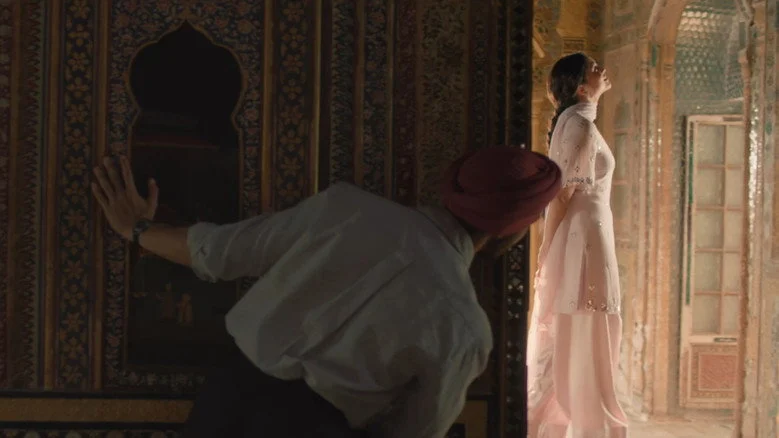
Naseeruddin Shah’s Silence Holds More Than Words Ever Could
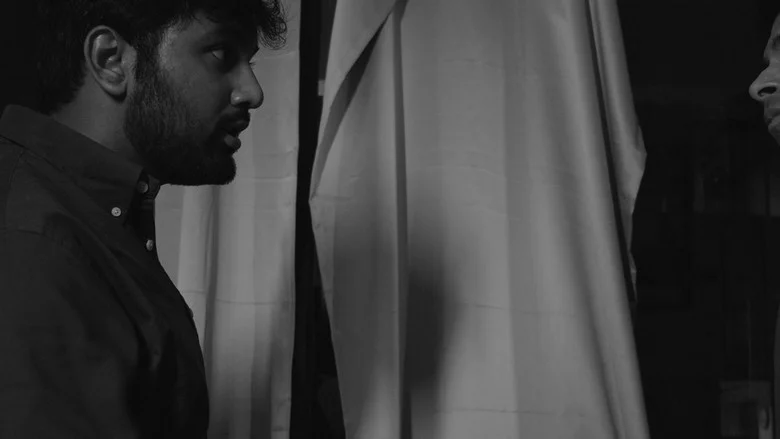
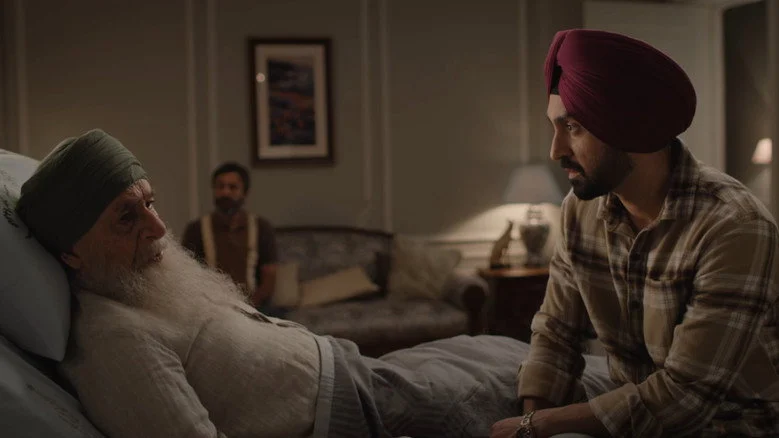
Naseeruddin Shah’s performance operates in the register of restraint, which is precisely what the film demands. He plays the elderly man not as a romantic lead reliving passion, but as a vault of unspoken longing, someone who has spent decades containing a story that demands release. The opening framing scene, where he confesses his Partition-era romance to Diljit Dosanjh’s grandson, carries the weight of the entire film on his shoulders. Shah communicates through stillness and the flicker of recognition when the past surfaces in the present.
This is not a performance that solicits applause. It asks for patience and recognition of what is deliberately withheld. That’s both its strength and its risk, viewers seeking conventional emotional display will find the restraint maddening.
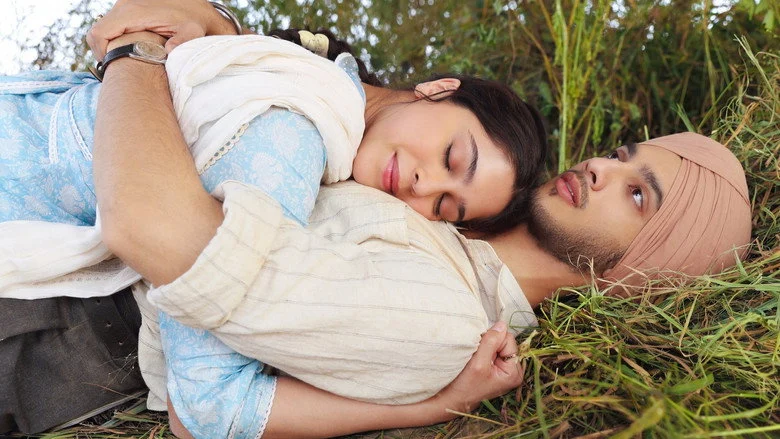
Imtiaz Ali Merges Romance and Historical Rupture Into One Narrative
Ali’s directional instinct, using generational framing to connect romance, migration, and historical memory, is sound. The structure allows him to hold two timelines in tension without forcing a false resolution. By positioning Diljit Dosanjh as the modern-day bridge rather than a romantic lead himself, Ali avoids the trap of making this about a younger generation discovering love. It’s about a younger generation discovering inheritance.
The weakness, however, lies in the film’s length and pacing commitment. At 2 hours 46 minutes, the non-linear structure risks becoming self-indulgent if the cross-cutting between timelines doesn’t earn its repetition. The screenplay, co-written with Nayanika Mahtani, anchors itself on music and memory as transitional devices, a choice that works when the songs land, and staggers when they don’t.
Romance as Historical Wound, Not Resolution
The pre-Partition romance between Vedang Raina and Sharvari Wagh functions as the film’s emotional core, but it is deliberately unresolved. This is a love story structured as absence. The young couple’s bond, played out in the earlier timeline, exists primarily to justify the elderly man’s lifelong longing, it is not a romance that resolves itself or offers closure through conventional dramatic beats. Instead, it becomes the reason for everything that follows.
Sharvari Wagh’s role as the female lead in the pre-Partition timeline is crucial because she carries the object of desire that the entire narrative circles around. She is not present in the film’s emotional present, yet her absence structures everything. The film requires her absence to function emotionally, her presence would collapse the architecture of inherited grief that the present-day timeline is built to sustain.
A.R. Rahman’s score is positioned as integral to these transitions between timelines. The music does not underscore emotion; it becomes the emotional throughline itself, bridging what dialogue and plot cannot. The effectiveness of this choice hinges on whether the songs are deployed with intention or indulgence, whether they deepen the rupture of Partition or simply extend runtime.
Diljit Dosanjh Becomes Witness Rather Than Hero
Diljit Dosanjh’s casting as the grandson signals a deliberate sidelining of the conventional lead actor. He is positioned as the listener, the connector, the person who learns the story and helps his grandfather return emotionally to his past. This is a role that requires restraint and the willingness to be secondary to an older actor’s memory work. Whether Dosanjh fully commits to this subordination or whether he instinctively pulls the narrative back toward himself determines the film’s emotional integrity.
The intergenerational return journey that forms Act 2 and 3 depends on Dosanjh’s ability to serve the grandfather’s unresolved longing rather than assert his own contemporary significance. The research indicates that he facilitates reconnection through music and memory, but the specifics of how he does this, whether through active narrative agency or quiet witnessing, remain unclear from the available sources.
Partition as Antagonist, Not Event
The film’s unusual choice is to position Partition and historical upheaval as the antagonist rather than introducing a named human villain. This is narratively ambitious but carries significant risk. Without a figure to blame, the romance must absorb the catastrophe of historical rupture as its own wound. The young couple is separated not by a rival or family opposition alone, but by the collapse of a nation, by forces larger than any human antagonist could represent.
This approach aligns the film with contemporary Partition cinema’s move toward historical reckoning rather than melodrama. However, it also demands that viewers accept a love story that cannot resolve through conventional dramatic opposition or reconciliation. The lovers do not overcome their antagonist; they are dispersed by it. The only possible reconnection is through memory and the next generation’s willingness to carry that story forward.
Fans of romance rooted in music-led emotional narrative and Partition-era storytelling will find coherence here. Audiences expecting romantic resolution or action-driven cinema should recognize immediately that this film is not built for them. The target audience is narrow but specific: viewers drawn to historical dramas where private emotion is held inside large-scale rupture, where music functions as narrative, and where inheritance of grief becomes its own form of love.
Whether Main Vaapas Aaunga achieves its ambitions depends on trust, trust in Imtiaz Ali’s non-linear structure, trust in Naseeruddin Shah’s restrained performance, and trust that a Partition-era love story told across generations can sustain nearly three hours without becoming overwrought. It is a film that demands more from its audience than most contemporary Indian cinema asks. Whether that demand is justified will become clear only for those patient enough to accept it on its own terms.
Hindi drama reviews often grapple with the question of whether historical rupture can coexist with intimate emotional storytelling, a tension that Ali explores here with deliberate intent. Browse more Hindi Romance reviews to understand how contemporary cinema is reshaping the romance-and-history equation.
Main Vaapas Aaunga is a film for viewers who understand that not all romances end in union, and that sometimes the deepest love stories are the ones that survive only in memory. Watch it if inherited grief and music-driven narrative speak to you. Skip it if you need resolution or pace. This is an ambition-first film that occasionally finds its emotional register, a 3 out of 5 for its willingness to risk form over conventional satisfaction.
The memory-and-music framework here echoes the thematic obsession found in Momacu review, where past trauma surfaces through unresolved emotional registers.
Like System verdict, this film stakes everything on lead performance while narrative discipline wavers under the weight of its own ambition.

Ankit Jaiswal is the Chief Author, covering Indian cinema and OTT releases with honest, no-filler criticism. An SEO strategist by background, he brings a research-driven approach to film writing, cutting through hype to tell you exactly what's worth your time.