Momacu (2026): Jatin Sarna’s Desperation Anchors Dark Comedy’s Atmospheric Premise
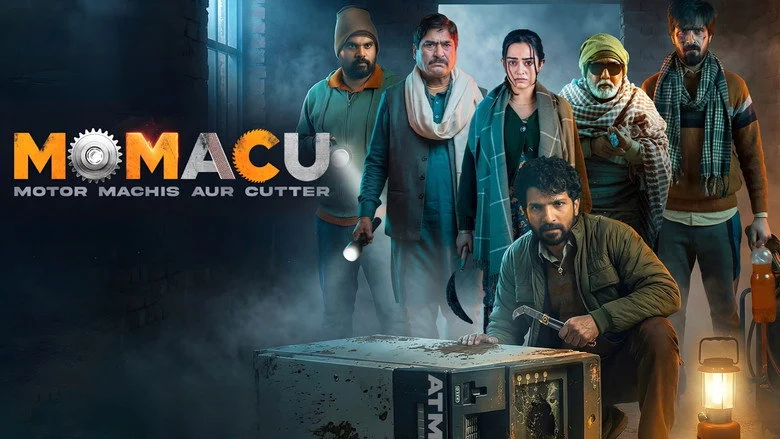
A freezing Haryana night swallows three men whole as they drag a stolen ATM into a tube well motor room, believing escape lies in breaking it open before dawn arrives. The initial theft crackles with tension, cold breath, mechanical precision, the weight of their personal desperation made tangible, but the film’s craft falters when confinement replaces momentum.
Momacu operates in a narrow register where dark comedy and suspense thriller collide, often without resolution. Director Kuldeep Kunal constructs an atmospheric opening that justifies watching, yet stumbles when the narrative must sustain what the premise promises. The film knows desperation intimately; it struggles to dramatize consequence.
Jatin Sarna Grounds the Crime in Concrete Desperation
Sarna’s antagonist becomes the film’s emotional anchor precisely because he embodies the contradiction at its core, a man fleeing personal crisis through theft, only to discover his prison moves with him into that tube well. His face during the opening theft registers calculation and panic in equal measure. The first argument inside the motor room, where mistrust fractures their alliance, showcases Sarna’s ability to convey internal collapse through gesture and tone alone, no monologue required.
Kuldeep Kunal’s Direction Nails Atmosphere, Fumbles Resolution
The opening sequence demonstrates directorial confidence: cold visual language, mounting dread, the ATM as both MacGuffin and metaphor. Kunal uses the tube well space intelligently, trapping viewers alongside his characters. Yet the climax, where their greed yields an ironic twist, arrives abruptly, underdeveloped, as though the director abandoned narrative patience precisely when the thematic payoff demanded it most.
Dark Comedy and Thriller Tension Wage War Within the Frame
The film’s primary strength lies in weaponizing dark humor against character flaws. When the men argue over the unbreakable ATM, comedy emerges not from jokes but from exposed desperation, the absurdity of their situation reflected in their mistrust and exhaustion. The dialogue, paraphrased across available sources, gestures toward this: “We stole it for escape, but now we’re trapped in our own greed.”
Pacing deteriorates sharply in the second half. The tension built through atmosphere and internal conflict requires escalation or revelation; instead, the film treads water. Supporting roles remain underdeveloped, Gourav Sharma portrays mistrust competently but lacks dimensions beyond suspicion; Apoorva Arora and Yashpal Sharma add realism without deepening the thematic inquiry.
The final confrontation, where consequences collapse the men’s alliance, should crystallize the film’s thesis about greed’s futility. Instead, it registers as truncated, rushed toward an ending the screenplay didn’t earn through character work or plot escalation. Tone inconsistency compounds this, the film toggles between comedy and genuine threat without establishing which register holds thematic weight.
Viewers seeking sophisticated dark comedy alongside suspense craft will find engagement in Momacu’s opening act and Sarna’s performance anchoring the moral unraveling. Those expecting narrative resolution or consistent genre balance should look elsewhere.
Hindi thriller reviews reward directors who balance constraint with character depth; Hindi Thriller reviews to discover how confined-space narratives succeed when pacing matches thematic ambition.
Momacu remains worth watching for its atmospheric promise and Sarna’s grounded desperation, though its abrupt climax and tonal inconsistency prevent it from achieving the dark comedy-thriller synthesis it pursues, a 2.5-star entry that proves premise alone cannot sustain feature length without earned consequences.
Sonakshi Sinha’s performance in System review similarly carries narrative weight beyond what the screenplay provides.
Both films wrestle with confined scenarios where character interaction must sustain Haunted 3D verdict‘s atmospheric ambition without the visual spectacle.

Ankit Jaiswal is the Chief Author, covering Indian cinema and OTT releases with honest, no-filler criticism. An SEO strategist by background, he brings a research-driven approach to film writing, cutting through hype to tell you exactly what's worth your time.