Four Rooms (1995): Tim Roth’s Bellhop Endurance Test Collapses Under Four Directors’ Competing Egos
Tim Roth’s Ted sprints down a corridor of the Hotel Mon Signor carrying a bucket of ice he will never successfully deliver. That image, a bellhop perpetually interrupted, forever mid-errand, is the entire architecture of Four Rooms in a single gesture. Allison Anders, Alexandre Rockwell, Robert Rodriguez, and Quentin Tarantino each wrote and directed one segment of this 98-minute anthology, released Christmas Day 1995 through Miramax, and the connective tissue holding their four short films together is Roth’s increasingly battered body and fraying vocal cords. It is a structurally elegant idea: one night, one hotel, one employee absorbing the accumulated chaos of four distinct cinematic sensibilities. The execution, however, reveals what happens when four filmmakers with incompatible instincts share a sandbox and refuse to coordinate their toys.
A Witch’s Coven, A Psychosexual Standoff, And Two Gangster Children
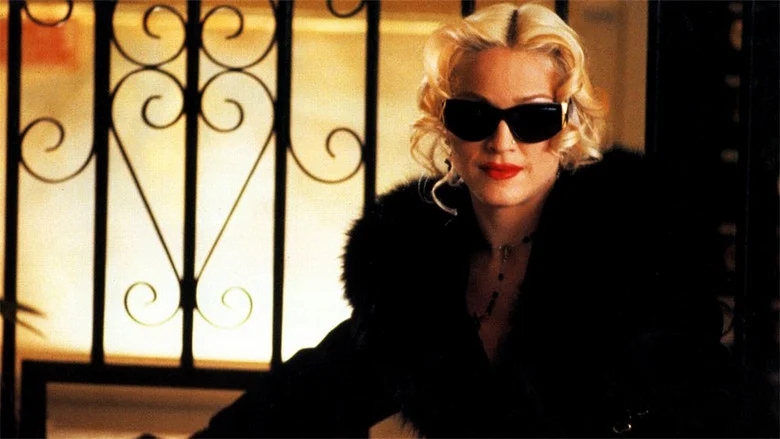
The first segment, Anders’ “The Missing Ingredient, ” drops Ted into a honeymoon suite occupied by a coven of witches, Madonna’s Elspeth, Lili Taylor’s Sasha, Alicia Witt’s Kiki, and others, who need one specific fluid to complete a ritual. The comedy here is deadpan service-work absurdity: Ted keeps trying to perform his job functions while occult demands escalate around him. The scene works because Roth plays Ted’s professionalism as a kind of stubborn dignity, a man clinging to the bellhop’s code in a room that has abolished all codes. When the missing ingredient turns out to be something Ted must physically provide, the punchline lands not because it’s clever but because Roth’s face registers the exact moment a service worker realizes his job description has become obscene.
Rockwell’s second segment pivots hard into psychosexual farce. Antonio Banderas’ Manuel and Jennifer Beals’ Jeannie are locked in a domestic dispute that Ted misreads entirely, leading to a mistaken-identity confrontation where Ted is tied to a chair and threatened with castration by a husband who believes the bellhop has violated his wife. The tonal shift from supernatural comedy to aggressive marital warfare is jarring, and not in a productive way. Rockwell stages the segment as a pressure cooker, but the pressure never releases into genuine laughter. It just builds into discomfort. Banderas is committed and physically imposing, but the segment’s comedy depends on Ted’s humiliation rather than any earned comic reversal.
Rodriguez’s Gangster Children And Tarantino’s Self-Indulgent Wager
Robert Rodriguez’s “The Misbehavers” is the anthology’s most successful segment because it understands its own mechanics. Ted is hired to babysit two children, David Proval’s Sigfried and Marisa Tomei’s Chickie are the parents, while they attend a party. The children find a syringe, a dead body, and a lighter, and the room becomes a controlled explosion of escalating disasters. Rodriguez directs with the kinetic energy he brought to Desperado, and the segment’s humor comes from Ted’s desperate attempts to maintain order while the room actively conspires against him. The physical comedy here is precise: Ted diving for a syringe, Ted extinguishing a fire, Ted realizing the television is showing something it absolutely should not be showing to children. It is farce executed with technical confidence.
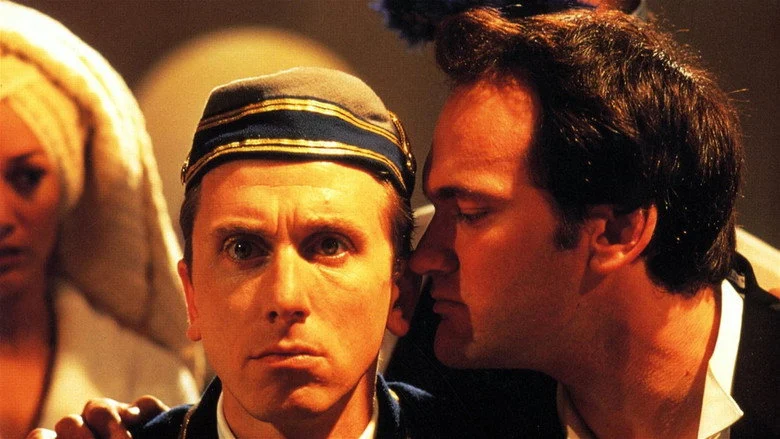
Then comes Tarantino’s “The Man From Hollywood, ” and the film collapses into self-satisfaction. The segment features Tarantino himself as Chester Rush, a Hollywood director hosting a party with Bruce Willis’ Leo and Paul Calderon’s Norman. They propose a wager: Ted must light a cigarette lighter ten times in a row. If he succeeds, he wins a car. If he fails, he loses a finger. The scene is staged as a suspense sequence, but it plays as an endurance test for the audience rather than the character. Tarantino’s dialogue, usually his greatest asset, becomes indulgent here, with the characters explaining the stakes repeatedly as if the audience cannot grasp the premise. The finger-cutting threat is meant to be darkly comic, but it lands as cruel without being funny. The segment runs too long, and its self-awareness curdles into smugness.
Tim Roth’s Body As The Only Throughline
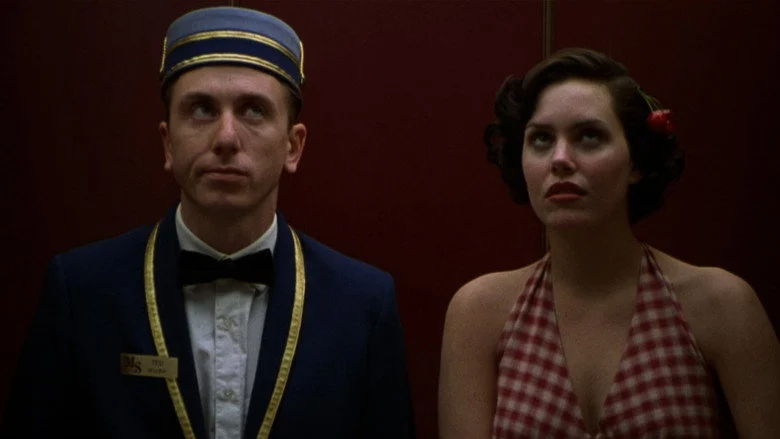
What holds this together, barely, is Roth’s performance. He plays Ted as a man being physically and psychologically eroded in real time. By the final segment, his shirt is untucked, his hair is disheveled, and his voice has climbed into a register of pure exhaustion. The role requires him to absorb slapstick violence, sexual humiliation, and existential confusion without ever breaking character. It is a performance of endurance rather than development, and Roth commits to it fully. The problem is that the film asks him to carry four incompatible tones on his back, and by the final act, the weight shows.
The supporting cast is a parade of mid-1990s star power, Madonna, Banderas, Willis, Tomei, but most appear briefly and vanish. Madonna’s witch is barely a character; Willis’ Leo is a cameo with a few lines. The ensemble functions as marketing rather than storytelling. For a more disciplined example of a single-location pressure-cooker narrative, see our analysis of Daayra review, which understands that confinement works best when the characters inside the room have clear, competing objectives. Four Rooms has competing directors instead.
What Four Filmmakers In One Hotel Actually Reveals
The anthology structure is the film’s greatest liability. Anders’ segment is whimsical, Rockwell’s is aggressive, Rodriguez’s is kinetic, and Tarantino’s is indulgent. There is no tonal bridge between them, and the frame story, Ted simply moving from room to room, does not provide enough connective tissue to make the transitions feel intentional. The film was marketed as a collaboration, but it plays as a competition. Each director seems determined to leave their mark, and the result is a film that never settles into a consistent voice. For a more successful example of a contained narrative about greed and moral compromise, see our take on Last Man verdict, which uses a single setting to build cumulative tension rather than episodic chaos.
Contemporary critics were brutal. The film holds a 13% rating on Rotten Tomatoes, with reviewers calling the humor crude and repetitive, and singling out the final segment as overlong and self-satisfied. Audiences have been kinder, IMDb sits at 6.7/10, but the praise tends to focus on Roth’s performance and the film’s cult appeal rather than its coherence. The production budget was $4 million, and the domestic gross was $4.3 million, making it a commercial disappointment. Miramax released it on Christmas Day, which now reads as either a bold counterprogramming move or a spectacular misjudgment of holiday audiences.
Verdict: A Cult Curiosity, Not A Hidden Gem
Four Rooms is best understood as a time capsule of mid-1990s independent cinema, when Miramax could assemble four hot directors and a dozen recognizable faces and release the result theatrically. It is not a good film, but it is an interesting one, a case study in how anthology structures fail when the segments lack a unifying vision beyond a single actor’s stamina. Tim Roth is genuinely committed, and Rodriguez’s segment demonstrates what the film could have been if every director had approached the material with the same discipline. But the film’s final act is a chore, and the tonal whiplash between segments is exhausting rather than exhilarating.
Who should watch it: Tarantino and Rodriguez completists, fans of 1990s indie experimentation, and viewers interested in anthology structures as a formal exercise. Who should skip it: Anyone looking for a coherent comedy, family audiences, and viewers sensitive to crude humor, sexual content, and violence. The film is rated R for good reason.
Rating: 2.5/5, A fascinating failure with one genuinely great segment and a lead performance that deserves a better movie.

Ankit Jaiswal is the Chief Author, covering Indian cinema and OTT releases with honest, no-filler criticism. An SEO strategist by background, he brings a research-driven approach to film writing, cutting through hype to tell you exactly what's worth your time.