Kissa Court Kachahari Ka (2026): Rajesh Sharma’s Tenacity Battles a Familiar Legal System
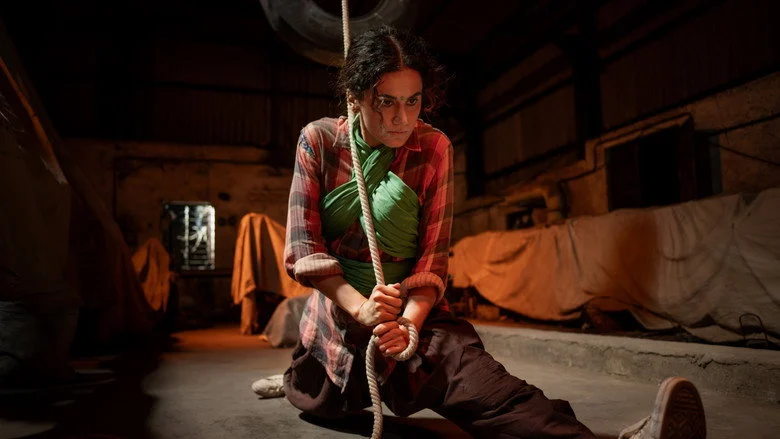
An autorickshaw driver lies dead, ruled an accident by a system designed to protect the powerful. Rajesh Sharma’s Satyendra Mishra, an honest lawyer handling marriage certificates and small claims, refuses the comfortable lie, and steps into a courthouse rigged against him. What unfolds is a battle less about justice and more about the grinding exhaustion of a man willing to lose everything to prove what everyone already knows.
Rajesh Sharma’s Quiet Defiance Against Predictability
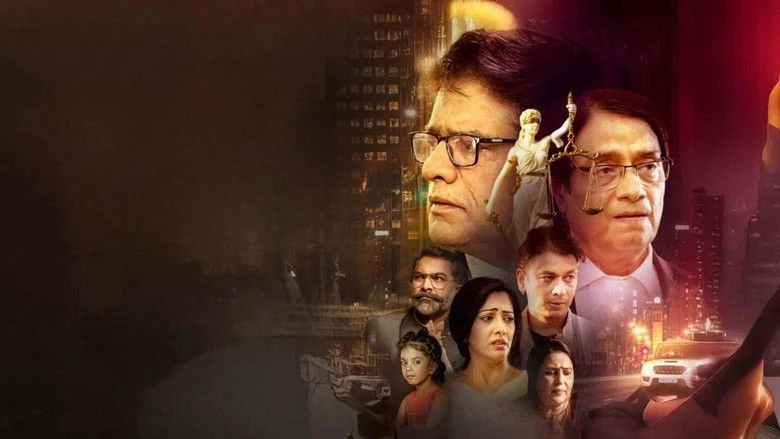
Sharma carries this film through sheer accumulated presence. He moves from handling menial legal cases to facing down Brijendra Kala’s corrupt defence lawyer Bansal with a tenacity that never tips into melodrama. His performance anchors the film’s central frustration, a man of principle forced into a rigged arena where principle alone cannot win.
Yet the screenplay refuses to elevate his struggle beyond routine. Sharma’s work deserves better material.
Jaiswal’s Authenticity Trapped in Routine Restraint
Director Rajnish Jaiswal films on location in Meerut, grounding the narrative in real judicial geography. This authenticity matters. The production bypasses melodramatic excess to capture how bureaucracy exhausts ordinary citizens seeking basic fairness. The choice to film where courts actually operate signals genuine intent.
Where Jaiswal succeeds is in restraint, the screenplay captures human cost without manufactured emotion. Deepak’s widow (Anju Jadhav) prompts Mishra to act not through tearful pleading but simple presence. An educated man forced to drive an autorickshaw (Sanjeev Jaiswal) represents systemic waste without speeches about it.
The weakness cuts deeper. Jaiswal follows the righteous-lawyer template without interrogating it. The story is linear, predictable, and hackneyed, common courtroom drama beats arranged in familiar order with no narrative novelty to disturb the formula.
Brijendra Kala’s Smirk Cannot Redeem Shallow Opposition
Brijendra Kala as corrupt lawyer Bansal and Krishna Singh Bisht as the murderer Bhupinder Chaudhary represent opposing corruption, legal and political. Kala’s performance contains the only real spark of antagonism in the film. But the screenplay never makes him a worthy opponent, merely a obstacle placed in the righteous lawyer’s path.
Supporting players (Neelu Kohli, Lokesh Tilakdhari) fill roles rather than inhabit them. The cast is competent but not commanded to do anything surprising.
A System Drama That Knows Its Subject but Not Its Soul
The courtroom drama genre demands either procedural precision or emotional breakthrough. Kissa Court Kachehari Ka achieves neither. Times of India’s rating of 2.0 reflects a consensus: the film’s unexhilarating climax and predictable unfolding waste what could have been genuine commentary on judicial indifference.
The central conflict, one honest man against a system designed to defeat him, has teeth. But the film treats it as melodrama to resolve rather than systemic horror to interrogate. Commonplace dialogues and routine structure drain urgency. What remains is good intention photographs on competent acting, never igniting into necessary cinema.
If you value Rajesh Sharma’s quiet intensity and can tolerate familiar legal drama beats, this is a Sunday afternoon film, functional, forgettable, and firmly in the second-tier courtroom category. Watch it for the veteran actors and location authenticity, but expect neither the procedural rigour of better legal films nor the emotional wallop this premise deserves. The film settles for documenting frustration rather than channelling it into something that burns.
Hindi drama reviews often tread this ground, and Hindi Drama reviews that take greater risks with their form.
Kissa Court Kachehari Ka remains a 2.0-star exercise in wasted potential, Rajesh Sharma deserves films that match his quiet power, not ones that ask him to carry routine material through sheer integrity.
Rajesh Sharma’s earlier work in character-led dramas like Pennum Porattum review shows what happens when veteran acting meets narrative ambition.
The quiet frustration Sharma conveys mirrors the restraint found in Rosie verdict, where strong performance struggles against undercooked storytelling.

Ankit Jaiswal is the Chief Author, covering Indian cinema and OTT releases with honest, no-filler criticism. An SEO strategist by background, he brings a research-driven approach to film writing, cutting through hype to tell you exactly what's worth your time.