Youth (2026): Ken Karunas’s Directorial Debut Captures Coming-of-Age Charm
A fifteen-year-old boy stumbles through the chaos of 11th-standard romance, chasing rejection after rejection while his parents weather the fallout at home. Ken Karunas’s directorial debut settles into the familiar rhythms of adolescent miscalculation, flirtation, betrayal, physical altercations, yet finds unexpected weight when family crisis forces the reckoning that adolescence demands.
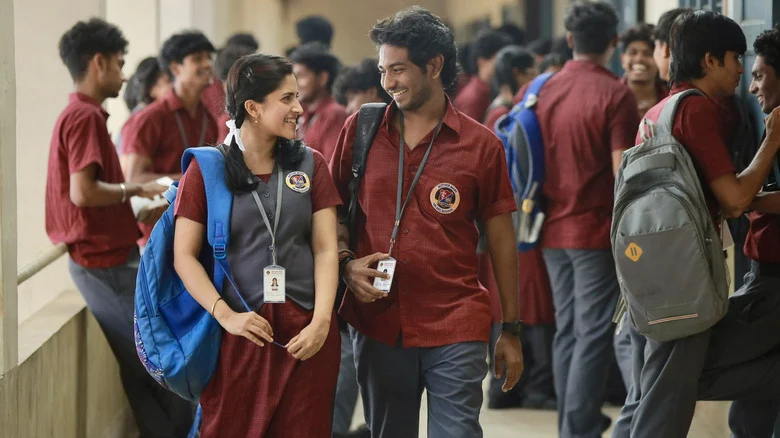
Karunas Channels Early STR Energy Into Praveen’s Physicality
Karunas carries the film on a body language vocabulary borrowed from early-era Silambarasan films, the slouch, the casual deflection, the performative confidence masking deeper uncertainty. His portrayal of Praveen shifts convincingly from carefree pursuit to studied maturity, though the character’s decision to force friends into bullying an ex-girlfriend exposes a meanness the screenplay never quite interrogates. The emotional arc works because Karunas doesn’t shy from playing Praveen’s irresponsibility seriously.
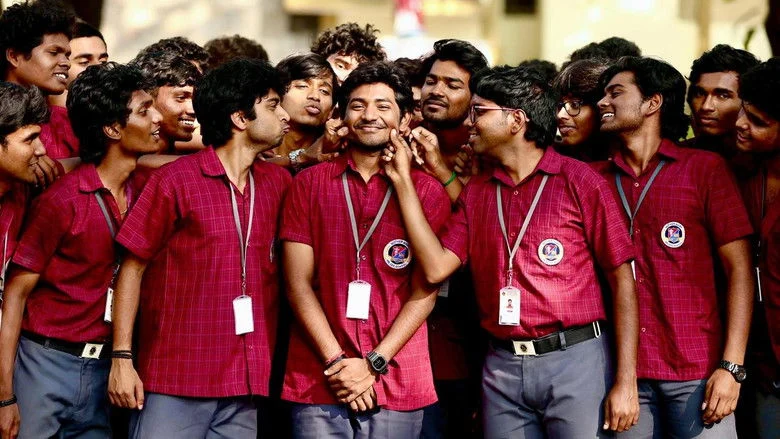
Linear Plotting Trades Risk for Accessibility
Karunas writes in straight narrative lines: rejection, cheating at the annual day dance where Preshika discovers him with Sonal, a brutal street fight with Siddarth’s gang, maternal heart attack, paternal rejection. The screenplay follows a template so familiar it becomes almost invisible. Yet within this predictability lives genuine observation about teenage pursuit and consequence.
The third act’s shift from romance-chasing distraction to genuine family crisis arrives through subtle buildup rather than melodramatic rupture. Karunas establishes how Praveen’s mother Saroja pleads desperately with the principal, the strain visibly accumulating until her heart attack arrives not as plot device but as inevitable collision. This restraint distinguishes the work from more obvious coming-of-age machinery.
Where the screenplay stumbles is in its refusal to examine darker behaviour. Praveen’s manipulation of friends into bullying a girl who rejected him sits alongside stalking, racist elements, and body shaming that the film treats as teenage colour rather than problems requiring reckoning. The script captures school awkwardness but doesn’t interrogate cruelty with equal precision.
Suraj Venjaramoodu and Devadarshini Anchor Family Fracture
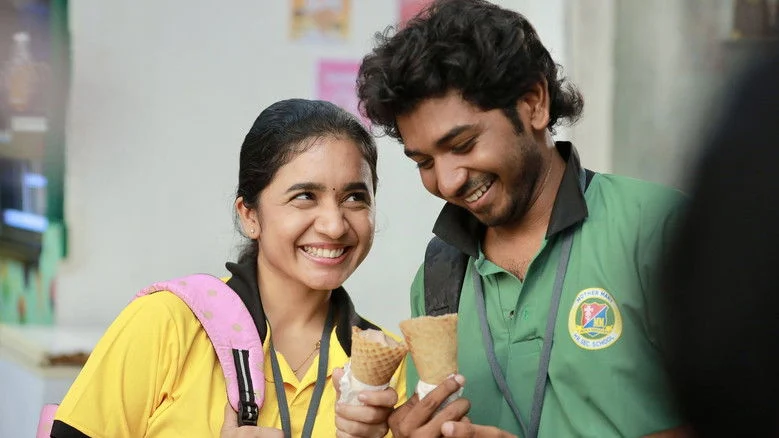
Suraj Venjaramoodu’s father character rejects and blames Praveen after his mother’s collapse, their frequent arguments creating a household where love and disappointment become indistinguishable. Devadarshini’s mother performance carries the emotional spine, her desperate pleading with the principal establishes the devotion-like obsession that makes her heart attack feel earned rather than imposed. Both actors ground the film’s most effective moments.
Audience Ambivalence Reflects Genre’s Honest Limitations
The film achieved commercial success, yet viewer response splits between those moved by its emotional final act and those exhausted by its familiar path. Audiences praise the heartfelt drama and playful charm of school life, the convincing capture of adolescent awkwardness and middle-class texture. Simultaneously, they note the predictable beats, the templated trajectory, the inclusion of behaviour, stalking, racism, body shaming, that register as casual rather than addressed.
For a craft perspective, I find myself respecting what Karunas achieves through restraint more than what the screenplay allows through excess. The third act’s quiet intensity matters precisely because it avoids announcing itself.
Where the film struggles most acutely is the over-the-top romantic tracks and the school backdrop that feels assembled from genre blueprints rather than observed from life. Too many songs interrupt momentum when the emotional payload arrives through silence and parental argument.
Tamil cinema has room for coming-of-age stories that examine teenage behaviour without romanticizing its cruelty. Tamil Drama reviews often highlight how character perspective shapes moral clarity, and Youth’s reluctance to interrogate Praveen’s bullying reveals the limit of sympathetic protagonists in stories about growth.
Kanaga’s Challenge Reframes Love as Accountability
The girl who rejects Praveen for his poor studies returns in the third act to challenge him: excel in 12th grade and her love becomes possible. This inversion, making academic achievement the condition of romantic worthiness, would feel hollow except for the family crisis that precedes it. Praveen’s eventual 9th-rank finish arrives not as triumph but as consequence of genuine consequence, and that distinction matters.
This is a film for audiences who cherish middle-class school narratives and can forgive predictability for emotional authenticity in its final stretch. The ensemble cast delivers performances that elevate templated material, and Karunas’s direction finds genuine texture in relatable teenage pursuits colliding with family pressure. However, if you approach coming-of-age cinema seeking originality or moral complexity around adolescent behaviour, Youth will feel familiar and, in moments, ethically uncertain. Watch it for the family drama and third-act recalibration, not for fresh perspectives on teenage chaos.
Youth emerges as a debut that understands coming-of-age mechanics without yet mastering the originality to make them feel lived, a competent, occasionally moving entry in Tamil cinema’s school-life catalogue that earns its emotional moments despite inhabiting a generic template, scoring 3 out of 5 for craft execution that occasionally transcends its own predictability.
Karunas shares directorial DNA with Biker review, though with less visual specificity.
Both films wrestle with Everybody Loves verdict.

Ankit Jaiswal is the Chief Author, covering Indian cinema and OTT releases with honest, no-filler criticism. An SEO strategist by background, he brings a research-driven approach to film writing, cutting through hype to tell you exactly what's worth your time.