Star Wars: The Mandalorian and Grogu (2026): Favreau’s Theatrical Gamble on Television Intimacy
Din Djarin’s helmet reflects the galaxy’s unfinished business as the New Republic taps him and Grogu for a mission that will reshape their bond. What begins as recruitment becomes something far heavier, a theatrical expansion of a relationship forged in episodic television, now weaponized for the big screen.
Jon Favreau’s directorial choice to elevate The Mandalorian from Disney+ to cinema reveals both the strengths and the seams of that transition. A character born for the small screen’s intimate close-ups and serialized pacing now faces the hard geometry of feature filmmaking, where audiences expect narrative closure and thematic payoff in a single sitting.
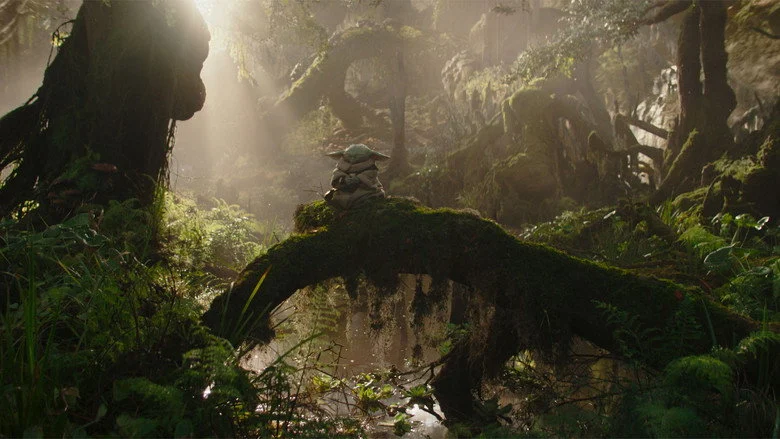
Pedro Pascal’s Masked Restraint Anchors the Entire Architecture
Pascal carries this film without showing his face for most of it, a constraint that forces characterization into posture, hand movement, and the modulation of his voice through Mandalorian vocoder. The role demands physical storytelling that most actors never master. His presence as a hired protector working alongside the New Republic establishes immediately that this is not a hero’s journey but a mercenary’s moral compromise.
The dynamic between Din and Grogu shifts subtly here from mentor-mentee to partnership-in-crisis. Favreau uses their established television chemistry as structural scaffolding, assuming audiences already understand their language. Whether that’s a strength or a weakness depends entirely on whether you’ve watched the series.
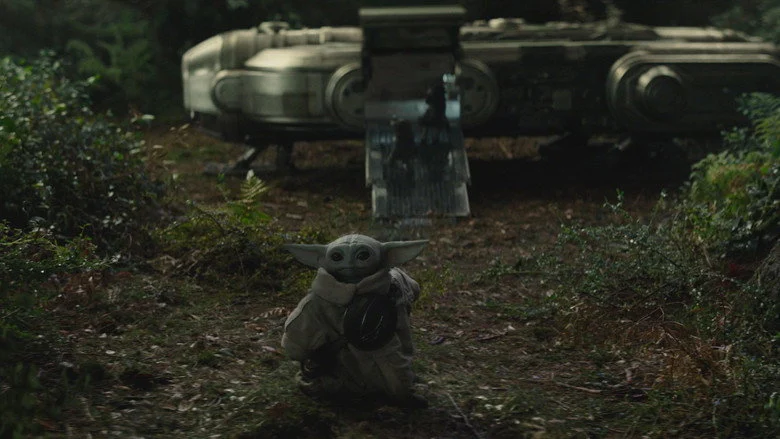
Favreau’s Direction Honors Continuity While Missing Theatrical Scale
The screenplay maintains the television series’ tone and world-building faithfully, perhaps too faithfully. A feature film needs to justify its theatrical existence through visual ambition or narrative boldness, and Favreau plays it safe by extending the serial format rather than reimagining it. The mission-driven structure works, but it doesn’t transcend.
What Favreau does execute cleanly is the bridge between streaming serialization and theatrical release. The New Republic recruitment of Din and Grogu immediately signals stakes, and the introduction of Imperial warlords alongside criminal elements like the Hutts uses recognizable franchise machinery to anchor the conflict. But recognizable is not the same as innovative.
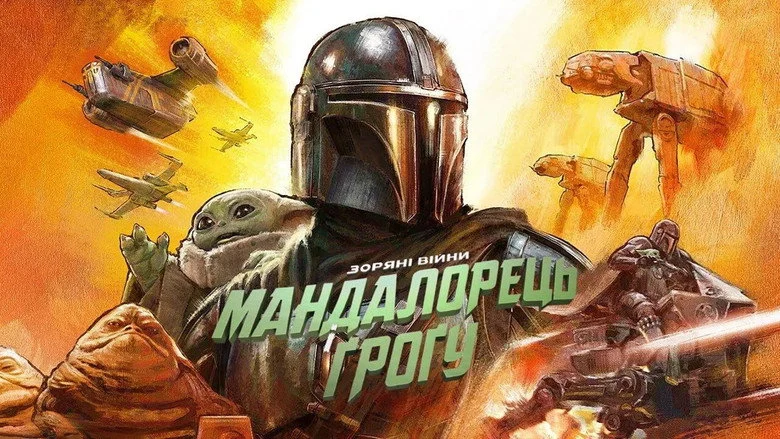
Action-Adventure Grammar Built on Franchise Shorthand Rather Than Originality
The film leans heavily on mission-oriented structure centered on a hired protective role. This is competent action-adventure filmmaking that pairs a galaxy-scale backdrop with an intimate protector-apprentice relationship. The New Republic recruitment scene and the reported involvement of Imperial warlords give the film its plot scaffolding, but neither moment generates the visceral surprise audiences expect from theatrical action.
Favreau builds action around recognizable Star Wars iconography, the Empire’s remnants, criminal underworld faction dynamics, rather than constructing a standalone world that might breathe independently. The Hutts appear not as fully realized antagonistic entities but as check-marks in a franchise continuity list. This is safe action-adventure filmmaking that refuses to take genuine risks.
The film converts a streaming-era character relationship into a theatrical event, which is its primary structural achievement. It expands scale from episodic television to feature-length mission scope. But expansion is not the same as elevation, and that distinction becomes clear in how the action sequences sit alongside the intimate moments they frame.
Sigourney Weaver’s Entrance Signals Intent, Not Character
Weaver joins a Star Wars universe already crowded with established archetypes, and the research offers no scene-specific details about her performance or the character she inhabits. Her casting is star recognition deployed as a narrative signal, this film has theatrical ambitions beyond the streaming world. Whether her character generates genuine dramatic weight or merely occupies plot real estate remains unknowable from available materials.
The appearance of Garazeb ‘Zeb’ Orrelios carries similar weight: he signals franchise continuity and universe-building, but without scene-level details, his inclusion reads more as fan service than integrated storytelling.
The Protector-Apprentice Contract Frames Post-Empire Instability
Favreau’s thematic choice to center the film on the protector-apprentice relationship while the galaxy fractures into warlord fiefdoms is conceptually sound. The line, “The old protect the young, and then the young protect the old, ” suggests a cyclical morality that should anchor the feature’s emotional arc. Yet the research provides no evidence that Favreau develops this beyond a repeating motif into something that genuinely transforms either character by film’s end.
The New Republic setting allows the film to inherit post-Empire political instability without building that instability from scratch. This is smart franchise economics, but it also means the film operates within boundaries already established by television episodes and expanded universe storytelling. Audiences seeking a self-contained drama with no franchise context should absolutely avoid this, it demands prior knowledge and fandom investment to function.
For viewers committed to Star Wars continuity and The Mandalorian’s serialized world, this theatrical expansion offers the straightforward satisfaction of seeing beloved characters enlarged on screen. Fans of the series and action-adventure science fiction will find their expectations met, if not exceeded. The film works within its constraints; it simply never strains against them. Watch this in IMAX if the spectacle appeals to you, but understand you’re watching a feature-length television episode, not a reimagining.
Star Wars: The Mandalorian and Grogu (2026) is dutiful franchise stewardship masquerading as theatrical ambition, competent, continuous, and frustratingly restrained in its willingness to take narrative or visual risks, earning a solid 3 out of 5 for craft execution without breakthrough.
Favreau’s approach here mirrors the thematic caution found in KD Devil review, where established character arcs resist genuine transformation.
Both films share a common DNA of franchise obligation outweighing creative reinvention, much like how Karuppu verdict navigates familiar genre territory with restraint rather than revolutionary force.

Ankit Jaiswal is the Chief Author, covering Indian cinema and OTT releases with honest, no-filler criticism. An SEO strategist by background, he brings a research-driven approach to film writing, cutting through hype to tell you exactly what's worth your time.