Sampradayaini Suppini Suddapusaani (2026): Sivaji’s controlled frustration anchors uneven crime-comedy drama
Sampradayini Suppini Suddapoosani, released on 6 March 2026, is written and directed by Sudheer Sriram. This Telugu film attempts to blend crime with comedy through the story of a rural family shattered by an accidental death. The premise promises a domestic twist on the crime thriller, but execution falters under tonal inconsistency.
Sivaji Anchors Domestic, Crime Tension
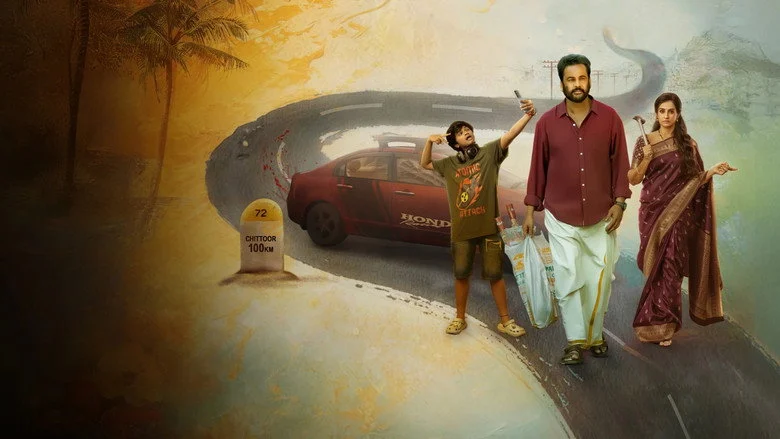
Sivaji plays Sriram, a panchayat secretary whose ordinary life spirals into suspicion after a sudden death. His performance is built around controlled frustration and defensive reactions, balancing everyday domestic behavior with the pressure of a crisis. Where the screenplay wobbles, Sivaji’s grounded presence keeps the family unit credible. Laya as Uthara provides the necessary reactive space, though her character remains largely defined by the plot’s demands rather than independent agency.
Direction and Screenplay: An Uneven Chain of Consequences
Sudheer Sriram uses a rural Andhra Pradesh backdrop to launch a crime scenario from a single inciting incident. The plot’s linear trajectory—public quarrel, police visit, accidental death, cover, up attempt—gives the narrative a clear skeleton. Yet critics have noted that the film “struggles to maintain a consistent tone, ” swinging abruptly between comic relief and crime tension. One review specifically calls out “weak story line narration structure and direction, ” pointing to a lack of control over the material. The family’s road, journey escape phase has potential but loses momentum as competing genre impulses dilute the pressure.
Genre Execution: Crime, Comedy, and Colliding Tones
The crime element begins with a sudden incident rather than a slow, burn investigation. SI Vikram’s visit to the home and his death create a sharp hook, converting the family into unwilling participants in a criminal chain. This turning point carries genuine tension, as the domestic sphere becomes a crime scene.
Comic beats are inserted into this framework—through the family’s disoriented reactions and supporting players like Ali Basha and Dhanraj—but the blend feels forced. The humor often undercuts the stakes rather than complementing them, leaving the central conflict feeling less urgent than it should.
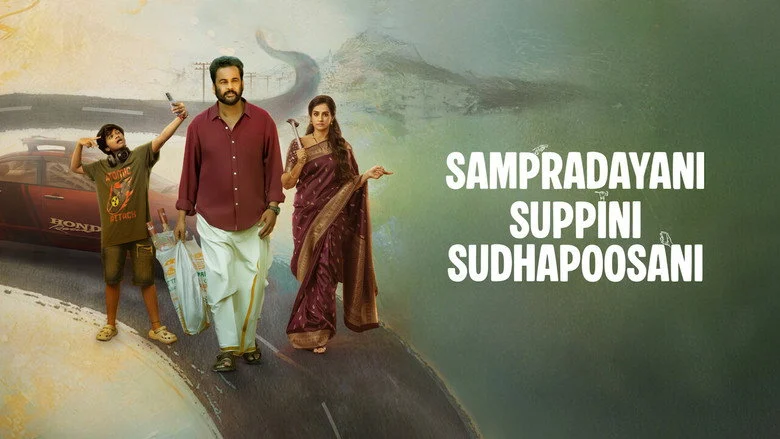
The escape phase that follows the death illustrates this collision: a road, journey segment designed for both suspense and laughs, but the tonal seesaw leaves neither fully satisfying. Reviewers have noted that the film relies on broad situational setups rather than tightly written sequences, which weakens the genre payoff.
Supporting Cast in a Reactive Framework
Prince Cecil’s SI Vikram functions primarily as the inciting pressure point, lacking a fully developed villain arc. Laya and Rohan Roy (as son Mittu) are drawn into the family’s reactive journey, their performances serviceable within a plot that prioritises confusion over character depth. Sharath Lohitashwa, Ali Basha, and Dhanraj add comic texture, but their contributions are not documented in detail by available sources. The ensemble works better as a unit than as individuals, which suits the film’s domestic, crime premise but limits standout moments.
For more reviews of recent Telugu cinema, visit the Telugu Crime reviews home page.
Audience Response and the Tone Problem
Audience sentiment mirrors critical concerns: praise for the family, based crime setup and the performances of Sivaji and Laya is tempered by complaints about inconsistent tone and weak narrative direction. The rural backdrop and comic support are appreciated, but many viewers found the second, half pacing uneven and the payoff limited. The film’s modest budget (estimated at 2, 4 crore rupees) and OTT, release profile suggest it was aimed at a niche family audience rather than a wide theatrical run. Still, the inability to lock into a single genre mode prevents the movie from achieving the tension its premise promises.
Sampradayini Suppini Suddapoosani is best suited for viewers who appreciate a family, centric crime comedy despite its structural flaws. It offers moments of effective domestic tension but falls short of being a cohesive thriller. Verdict: 2.5 out of 5.
Those interested in similar tonal experiments can check out our review of Dhurandhar review.
For a more focused biopic, see our take on Michael verdict.

Ankit Jaiswal is the Chief Author, covering Indian cinema and OTT releases with honest, no-filler criticism. An SEO strategist by background, he brings a research-driven approach to film writing, cutting through hype to tell you exactly what's worth your time.