Udta Teer (2026): Ayushmann Khurrana’s Amnesia Spy Comedy Runs on Fumes
Somewhere inside Akash A. Kaushik’s debut, a Pakistani operative wakes up convinced he is an Indian hero, and the audience laughs before the film has earned it.
What follows is a high-concept spy comedy that mistakes a clever logline for a finished screenplay.
A Blast Erases the Man but Not the Movie’s Structural Problem
The opening gambit is genuinely audacious: Bilal Ahmad crosses into India on a covert mission, an explosion scrambles his memory, and he resurfaces believing he is Vikrant, a Counter-Terrorism Squad officer.
It is dramatic irony of the purest kind, since we know what he does not, and his former handlers know what we do.
The trouble is that Kaushik treats this revelation as a destination rather than a departure point, replaying the same gag of confident misidentification until the espionage stakes flatten into background noise.
When Amnesia Becomes a Screenwriter’s Convenience Instead of a Character’s Curse
Memory loss in a spy film should be a wound, a terror, a slow bleed of selfhood, yet here it functions as a sitcom switch flipped for comic mileage.
Bilal never seems frightened by the void in his own head; he simply marches forward with patriotic conviction, and the screenplay never interrogates what that conviction costs him.
The central mechanism is dramatic irony, and it works in bursts, particularly when Indian agencies recruit the amnesiac infiltrator as an unwitting asset against his own handlers.
But repetition sets in fast, and by the second act the misunderstandings no longer advance the operational conflict so much as stall it.
Khurrana’s Comic Timing Carries Weight the Script Cannot
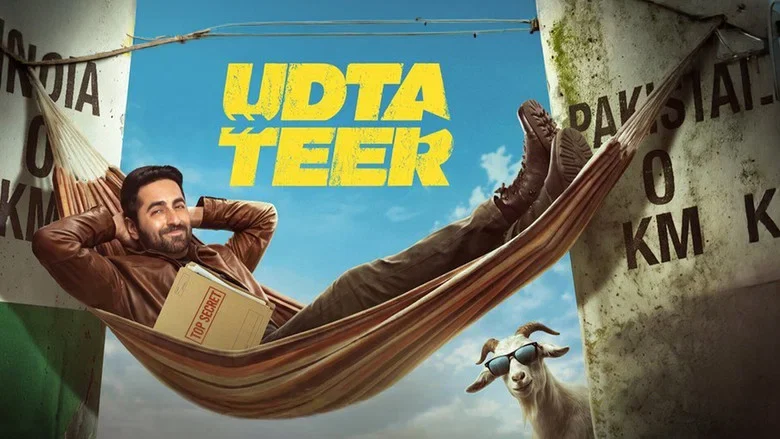
Ayushmann Khurrana is the reason this film does not collapse entirely, because his Bilal requires a visible split between trained operative and deluded patriot.
Watch his posture in the early agency scenes: shoulders squared with the certainty of a man who believes he belongs, eyes flickering with just enough uncertainty to sell the lie he is living.
His reaction timing is immaculate, the pause before a patriotic declaration landing harder than any punchline, and it recalls the comic precision he brought to Pati Patni Aur Woh Do.
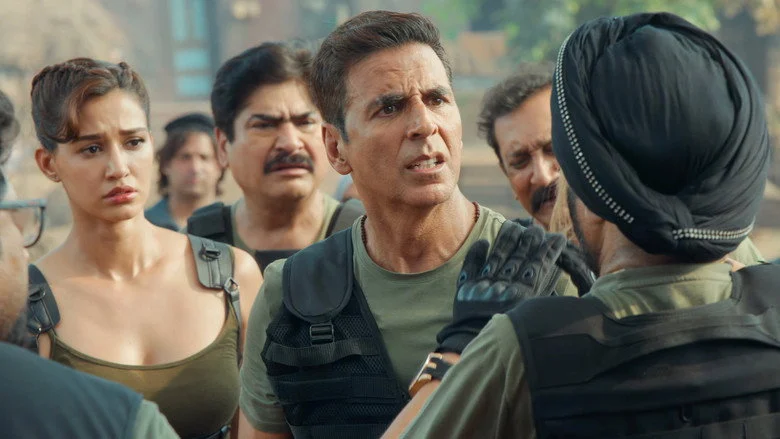
Sara Ali Khan’s Yamini is positioned as both operational participant and audience surrogate, assessing Bilal’s loyalty without the information we possess, yet the screenplay gives her little to do beyond reacting to his confusion.
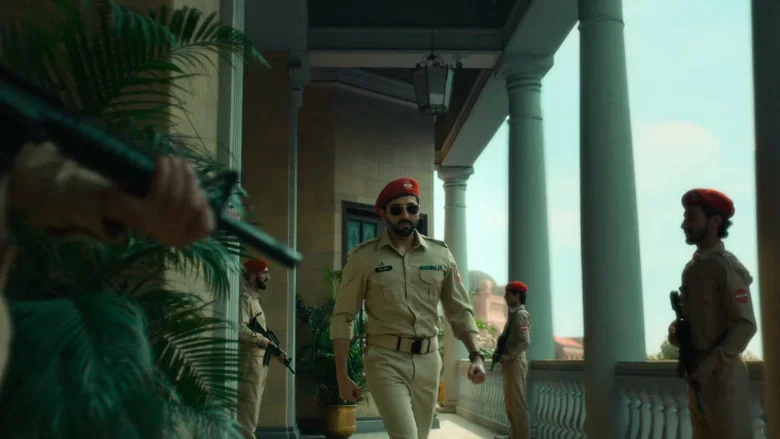
Mukul Dev’s Azhar Maqsood carries the antagonist weight with a clenched stillness, but the film keeps him at arm’s length, more institutional threat than flesh-and-blood menace.
The Tonal Tightrope Between Patriotism and Farce Never Finds Its Footing
Kaushik’s direction combines spy mechanics with broad situational comedy, and the ambition is admirable even when the execution wobbles.
The blast sequence that triggers Bilal’s amnesia demonstrates the action-to-comedy transition the premise depends on, but the film rarely sustains that balance afterward.
Patriotic conviction is deliberately unstable here, since Bilal’s sincerity is attached to a false identity, and that should be the film’s richest vein of unease.
Instead, the screenplay treats it as a punchline, and the tonal shifts between action, comedy, and nationalistic fervor feel less like controlled modulation and more like a director unsure which register to trust.
The comparison to a peer release like Chennai Vlog is instructive, because both films share a contemporary theatrical moment where high concepts outpace execution.
What the Film Gets Right About Identity and Allegiance
For all its structural stumbles, Udta Teer does something genuinely interesting with the spy genre’s conventional allegiance structure.
Making a Pakistani operative believe he is an Indian patriot reverses the expected hierarchy of loyalty, and amnesia supplies a sustained information gap between protagonist, handlers, agencies, and audience.
That gap is the film’s smartest device, and when it works, it produces a queasy comedy of errors where nobody fully understands what is happening, least of all the hero.
The supporting ensemble, including Rahul Bose and Ram Kapoor within the intelligence framework, fills out the institutional conflict without ever demanding center stage.
Yet the film resists the kinetic sensationalism that overtook a thematic sibling like Prem Keetanu, opting instead for a more controlled chaos that never quite coheres.
Dharma and Sikhya’s Bet on a Debut Director Carries Real Financial Risk
The producing muscle behind Udta Teer is formidable, with Dharma Productions and Sikhya Entertainment backing Kaushik’s first feature, and that investment deserves scrutiny.
Dharma’s slate has leaned heavily on star-driven vehicles, and pairing Khurrana with Sara Ali Khan reunites a proven on-screen duo from Pati Patni Aur Woh.
But pre-release indicators were restrained, with limited social-media buzz and lukewarm advance booking suggesting the promotional campaign never generated urgency.
In a theatrical market where spy comedies must compete with franchise spectacles, a high-concept original without a recognizable IP faces an uphill climb.
The film’s commercial sustainability depends entirely on word-of-mouth, and that is a gamble Dharma and Sikhya are taking on a first-time director’s vision.
This patient bet on original storytelling signals a welcome tonal maturity across contemporary hindi comedy, even when the execution does not fully reward the risk.
The Uncomfortable Question at the Heart of Bilal’s False Patriotism
What lingers after the credits is not the comedy but the unease, because Bilal’s patriotism is sincere and entirely manufactured by circumstance.
The film never resolves whether he recovers his memory, remains Vikrant, or reconciles the two selves, and that ambiguity could have been its greatest strength.
Instead, the ending arrives without the philosophical weight the premise demands, leaving us with a spy comedy that flirts with profundity but settles for confusion.
Udta Teer is a film built on a brilliant what-if that never quite becomes a satisfying why, and its amnesiac hero mirrors its own screenplay: confident, charismatic, and unable to remember what it was trying to say.

Ankit Jaiswal is the Chief Author, covering Indian cinema and OTT releases with honest, no-filler criticism. An SEO strategist by background, he brings a research-driven approach to film writing, cutting through hype to tell you exactly what's worth your time.