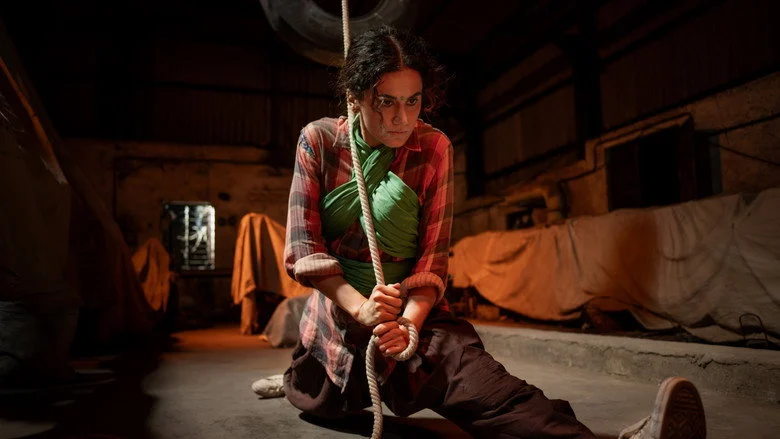
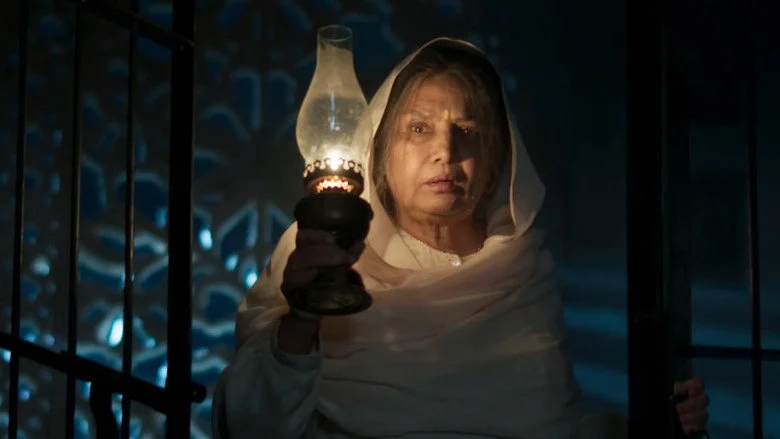
Dacoit (2026): Adivi Sesh Anchors Ambitious Crime Drama With Restraint
Adivi Sesh steps into the role of a man caught between survival and identity in Dacoit, a crime narrative that demands nuance over spectacle. His performance operates in the register of controlled intensity, the kind of acting that doesn’t announce itself but rather accumulates in the viewer’s memory long after the credits roll. Sesh’s restraint becomes the film’s anchor, preventing what could have been a melodramatic descent into standard revenge or redemption arcs.

**Shaneil Deo’s Direction Builds Atmosphere at the Cost of Momentum**
Director Shaneil Deo constructs a world of shadow and moral complexity, establishing visual and thematic coherence throughout the narrative. Yet the film stumbles when it prioritizes contemplation over narrative propulsion, certain sequences linger when they ought to accelerate, testing viewer patience in ways that feel deliberate rather than purposeful.
**Crime Drama Mechanics Struggle With Pacing and Scale**
Dacoit operates within the crime drama framework, where character psychology and ethical deterioration should drive tension. The film invests heavily in mood and internal conflict, creating scenes dense with subtext. However, the pacing becomes uneven when the narrative attempts to balance intimate character moments with larger systemic themes of crime and law.
The construction of scenes relies on dialogue-heavy exchanges and visual symbolism rather than kinetic action. This approach works when the writing cuts sharp and specific, but falters when exposition bleeds into monologue. Deo’s staging favors stillness, long takes, minimal coverage, which suits intimate confrontation but dilutes urgency when the plot demands acceleration.
What emerges is a film more interested in asking questions about its protagonist’s moral terrain than in delivering conventional narrative satisfaction. This philosophical bent marks the film’s identity, yet also its potential barrier with audiences seeking traditional dramatic momentum.
Mrunal Thakur navigates her role with intelligence, bringing texture to what could have been a supporting presence. Her scenes with Sesh carry the weight of unresolved tension, suggesting a relationship architecture that extends beyond simple exposition. The chemistry between them operates on a frequency of suppressed emotion rather than overt connection.
Anurag Kashyap’s antagonist emerges as the ideological counterpoint to Sesh’s character. Kashyap commands the screen through sheer presence, transforming what might have been a stock villain role into something more architecturally interesting, a figure representing systemic corruption rather than personal malice. His casting signals Deo’s intent to avoid cardboard opposition.
Hindi crime dramas benefit from strong ensemble dynamics, and this film recognizes that principle. Yet the supporting structure occasionally overwhelms rather than complements the central narrative thrust, crowding the frame with competing thematic interests.
Dacoit emerges as an actor’s film first, a screenplay second, and a directorial exercise third. Sesh delivers the kind of performance that rewards close attention, small gestures, calculated silences, the barely perceptible shift in posture that signals internal capitulation. This is cinema for viewers who trust performers to carry meaning beyond dialogue. Whether that trust proves justified depends entirely on your tolerance for ambiguity without resolution.
Audiences predisposed to introspective crime narratives with philosophical underpinnings will find plenty to examine here. Those expecting linear plotting, clear moral stakes, and cathartic payoff should look elsewhere. The film’s refusal to judge its protagonist openly becomes either its greatest strength or its most frustrating limitation, depending on individual temperament.
For streaming consumption, Dacoit plays better on a focused, undistracted viewing. The quieter register and reliance on subtle performance shifts demand the kind of attention that theatrical multiplexes rarely afford. A home viewing with proper sound allows the atmosphere to settle in without commercial distraction.
Hindi thriller reviews often celebrate visceral setpiece cinema, but this one operates according to different rules.
Dacoit refuses easy answers and conventional momentum, instead asking viewers to sit with moral discomfort and character contradiction. The film works precisely because Sesh understands that portraying a man without absolute clarity requires precision, not pyrotechnics. That restraint separates this from standard crime cinema, though it also explains why some will find it glacial. The film’s real achievement isn’t spectacle; it’s the slow erosion of certainty that accumulates across 110 minutes of deliberately measured storytelling.
For those patient with ambiguity and drawn to performances that operate in minor keys, Dacoit justifies the investment. It’s a film that respects your intelligence more than it entertains your impulses, which is either exactly what you want or precisely what you came to avoid. Watch it for Sesh’s interiority and Deo’s compositional control; accept that narrative momentum takes a back seat to psychological texture.
Similar restraint and moral complexity define Dhurandhar review to character over spectacle.
This quiet reckoning with corruption echoes the understated unease of Accused verdict in its refusal of conventional catharsis.
Dacoit (2026) proves that restraint in Hindi cinema can yield 3.5/5 stars when paired with an actor committed to earning every moment of screen presence.

Ankit Jaiswal is the Chief Author, covering Indian cinema and OTT releases with honest, no-filler criticism. An SEO strategist by background, he brings a research-driven approach to film writing, cutting through hype to tell you exactly what's worth your time.