Dilwali Diwali (2026): Mihir Ahuja Anchors a Muted Homecoming That Mistakes Property for Love
A son returns to Punjab with keys to a high-rise and a speech about progress. His parents look at the elevator shaft the way one might eye a hospital corridor.
When a Gift Arrives as a Verdict on the Life Already Lived
Ritesh Menon opens inside the mismatch rather than around it. Ansh Sikka, years abroad, has bought his middle-class parents a modern apartment and treats the deed as proof of duty discharged.
The trouble is structural and immediate: the gift is not a gift. It is a verdict on the old house, the old street, the old Diwali, and his parents read it correctly.
Mihir Ahuja plays the pride first, chest forward, hands presenting the keys with a magician’s flourish. What he withholds is the flicker of doubt, and Menon wisely lets the camera find it late rather than early.
A Sixty-One-Minute Film That Must Earn Three Decades of Attachment
Here is where the compression bites. The runtime is lean enough to be a virtue and short enough to be a liability, because the parents’ love for that old home needs sediment.
Ritu Mago’s screenplay keeps the argument inside one Diwali gathering, which is the right pressure cooker. But the old house is mostly described rather than inhabited, and description is a weaker advocate than a lived-in room.
Where the writing does hold is in refusing an antagonist. There is no villain, only migration, aspiration and the quiet arithmetic of what children owe parents who never asked for a high-rise.
That restraint echoes the rural despair examined in Pyre, another recent drama that trusts silence over confrontation, though Menon’s film trades that film’s bleakness for festive awkwardness.
Manoj Pahwa Sits Down, and the Room Changes Temperature
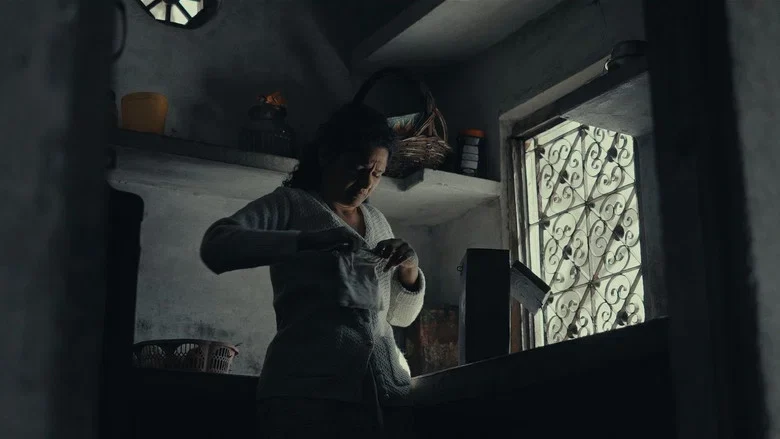
The father’s resistance is played with devastating economy. Manoj Pahwa does almost nothing, a palm flat on a packing crate, a glance at a doorway, and the new apartment visibly shrinks around him.
Neelu Kohli works the other register, all hospitality and deflection, offering sweets as a way of not answering. Her stillness during the gift presentation is the film’s most articulate objection.
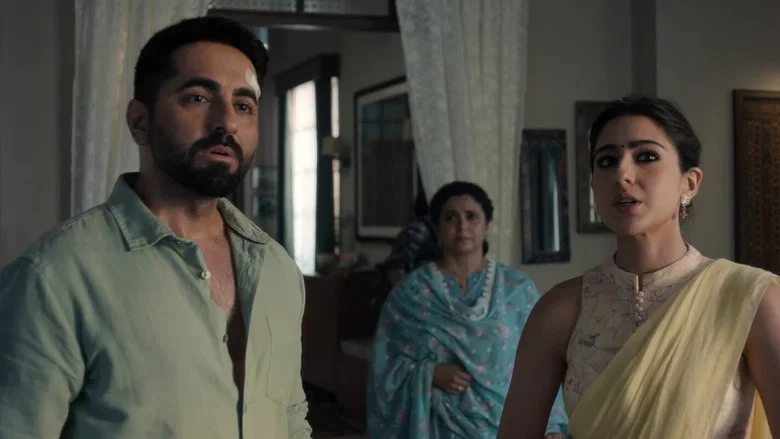
Against them, Ahuja’s Ansh must shift from salesman to son, and his best moments are the ones where he stops talking. A jaw that tightens before a sentence he decides not to finish carries more weight than any monologue here.
The performance sits in a gentler register than the single-track memory piece at the centre of Little Thomas, and the contrast flatters neither: one film over-explains its nostalgia, the other under-furnishes it.
The Camera Keeps Choosing the Elevator Over the Courtyard
Menon’s organising image is architectural, and he commits to it. Long, level frames of a corridor with identical doors push the family toward the edges of the composition, small against the finish.
It is a clean idea executed with discipline, but it flattens after a while. The old home, when it appears, gets no comparable visual grammar, no texture, no clutter, no argument.
Festive sound does the emotional labour the script sometimes declines to. The score stays low and unassertive through the gathering, then swells only once, at the moment Ansh finally looks at his mother instead of the view.
That single swell is the film’s most honest gesture, and it lands because Menon has resisted it for fifty minutes. The editing, meanwhile, rushes the reconciliation in the final stretch, resolving in minutes what the premise needed half an hour to earn.
An Ending That Refuses the Easy Applause
The resolution is not a celebration of the apartment, and credit is due for that. Ansh revises his definition of a better life rather than triumphantly relocating his parents into one.
What the film cannot quite solve is what happens next. The moral question, whose happiness was the purchase actually serving?, is raised and then gently set down, like a teacup.
That unresolved quality is deliberate, and it rhymes with the moral fallout traced in Doosra, where the central question outlives the running time rather than being tidied into a lesson.
Terribly Tiny Tales Bets on Small, and Netflix Bets on Diwali
The producing banner, Terribly Tiny Tales, built its reputation on compressed storytelling, and this is its first feature-length swing at that instinct, a sixty-one-minute family drama dropped on Netflix for the festive window.
Commercially, the calculation is legible. A Diwali release with a recognisable television-era cast and a low production footprint is a low-risk library asset rather than a tentpole, and Netflix’s regional slate needs exactly this kind of modest, star-light drama.
For Ahuja, the film is a positioning move more than a showcase. It asks him to carry a feature on warmth rather than volume, and whether that translates into theatrical leverage remains genuinely untested.
The wider trend is worth noting: a wave of intimate, festival-timed family dramas across contemporary hindi dramas is slowly replacing the loud multiplex comedy as the default holiday offering, and this film is a cautious entry in that shift.
The Verdict: A Quiet Film That Almost Says the Quiet Part
Dilwali Diwali is a sincere, well-acted, structurally undernourished drama that understands its conflict better than its characters. It knows the apartment is not the point; it never quite lets us live in the house that was.
What lingers is not the resolution but Pahwa’s hand on that packing crate, a man politely declining to be rescued. The film’s real subject is the small cruelty of love expressed as an upgrade, and it deserves a longer argument than sixty-one minutes allows.

Ankit Jaiswal is the Chief Author, covering Indian cinema and OTT releases with honest, no-filler criticism. An SEO strategist by background, he brings a research-driven approach to film writing, cutting through hype to tell you exactly what's worth your time.