Daayra (2026): Meghna Gulzar’s Cop-vs-Cop Procedural Is a Cold, Careful Autopsy of Encounter Justice
Meghna Gulzar has spent a career refusing the easy catharsis of the vigilante. Her detectives don’t win; they file reports. So it is telling that Daayra, her most structurally ambitious film since Talvar, opens not on a corpse but on a garland. Four men are dead, a 24-year-old named Ragini Pujari has been avenged by the very state sworn to protect her, and DCP Raman Kumar is being showered with marigolds by a public that has stopped waiting for the law to take its course. That phrase, “the law will take its course”, recurs throughout the film like a taunt, and Gulzar’s screenplay treats it as the punchline to a joke nobody is laughing at.
The Garland and the Glitch
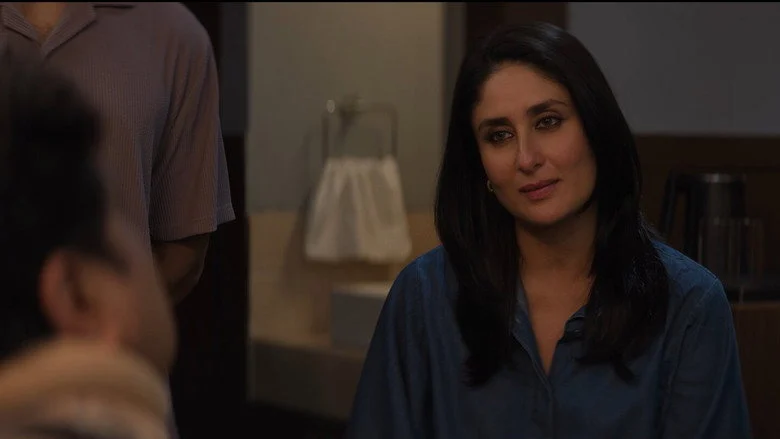
What follows is a clean two-hander of institutional inquiry. Kareena Kapoor Khan’s DCP Ajooni Kohli arrives from Internal Vigilance to audit the encounter, and the film’s first hour is a masterclass in procedural unease. Gulzar and cinematographer Saurabh Goswami shoot the SIT interrogations in flat fluorescent light, with CCTV footage reflected in rear-view mirrors, a motif that literalizes the film’s central anxiety: someone is always watching, and the record never quite matches the testimony.
The standout sequence is Ajooni’s reconstruction of the timeline. She doesn’t shout. She cross-references. A constable’s account of a firefight places a vehicle on a road it couldn’t have taken; a call-log entry contradicts an officer’s claim of radio silence. Kapoor Khan plays these beats with a deliberate absence of drama, she’s a woman reading a spreadsheet aloud, and the effect is chilling precisely because it isn’t cinematic. Gulzar understands that the most damning evidence in a cover-up is usually a clerical error.
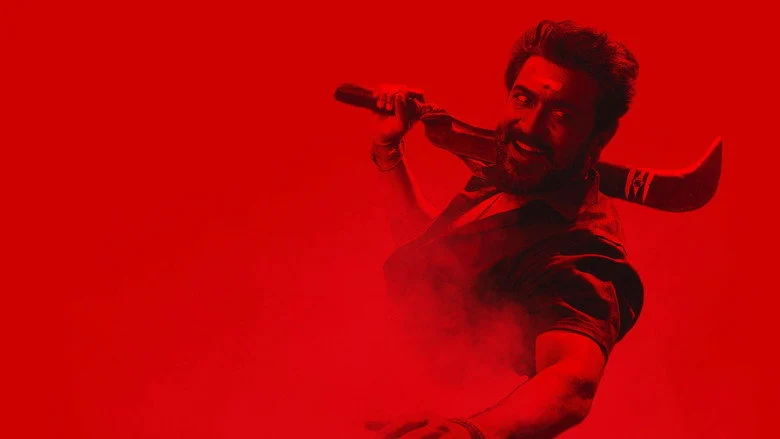
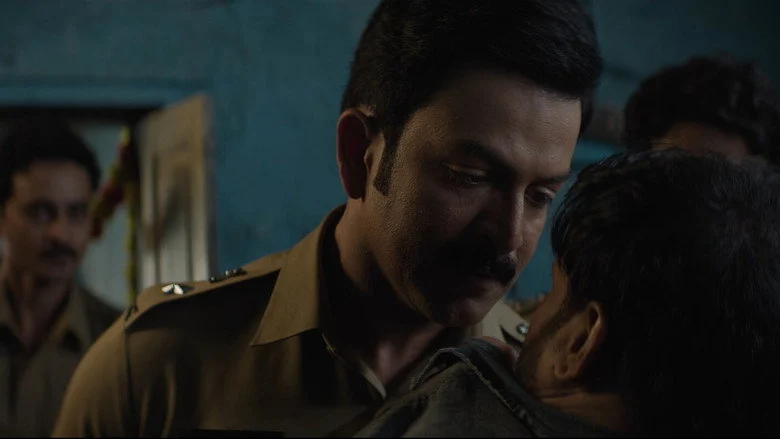
Against her, Prithviraj Sukumaran’s Raman is the film’s engine. He isn’t a villain; he’s a man who genuinely believes he did the right thing, and Sukumaran locates that conviction in the shoulders, the way he squares them when questioned, the micro-pause before he says “the law will take its course.” His best moment comes not in the confrontation scenes but in a quiet beat where he watches the news coverage of himself and allows himself a flicker of something that might be pride, might be nausea. CNBC TV18’s assessment that Prithviraj outshines Kareena isn’t quite fair to Kapoor Khan’s restraint, but it’s not baseless either: Sukumaran simply has more to play, and he plays it with a coiled, tragic dignity.
Parvati’s Reckoning
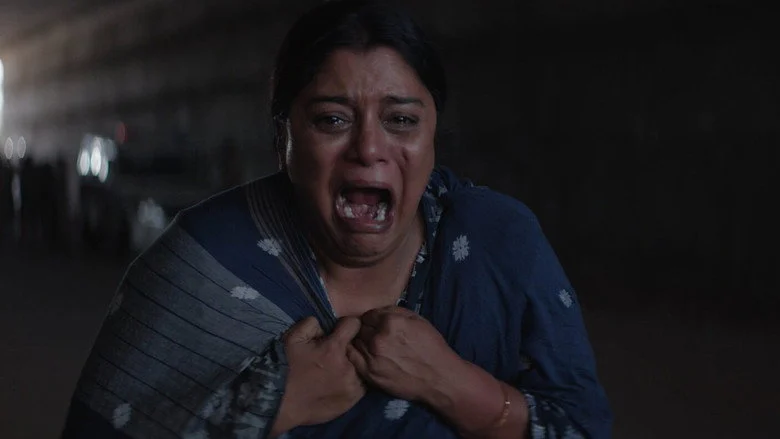
The film’s moral center, however, belongs to Kshitee Jog. As Parvati Pujari, Ragini’s mother, she gets the scene that every review has rightly singled out: a confrontation with Raman in which she asks him what, exactly, he thinks he has given her. Justice? She had a daughter. Closure? She has a grave. “Encounter” is just a word, she tells him, for the state doing what it couldn’t be bothered to do legally. Jog delivers this without a single raised voice, and the scene lands harder than any of the film’s more overtly dramatic confrontations. It’s the moment where Daayra stops being a cop thriller and becomes an argument about what a society owes its dead.
That argument is where Gulzar’s screenplay is most sophisticated, and where it ultimately falters. The film refuses to resolve whether Raman’s actions were defensible, which is honest but also evasive. Some critics have noted that it stops short of the deeper moral excavation that made Talvar so devastating, and they’re right. Where that earlier film interrogated the state’s capacity for both negligence and malice, Daayra is content to stage the debate and then step back. The climax, a face-to-face between Ajooni and Raman, is the film’s weakest sequence, talky, underblocked, and resolving nothing, as if Gulzar couldn’t decide whether ambiguity was a thesis or an alibi.
The Second-Half Drag
Pacing is the film’s structural wound. The first half moves with genuine momentum, cutting between Ajooni’s investigation and flashbacks to the crime and encounter with a rhythm that builds dread. By the second hour, the parallel tracks start to feel like a treadmill. Witnesses repeat information we already have. The non-linear structure, so effective early, begins to feel like padding rather than design. Bollywood Hungama’s verdict, “a stretched second half and weak climax dilute its impact”, is the consensus for a reason.
What survives the drag is the craft. Amit Trivedi’s songs, with lyrics by Gulzar, are used sparingly and never break the film’s register; Ketan Sodha’s background score is a model of restraint, doing emotional work through absence rather than crescendo. The editing team deserves credit for the first act’s continuity, even if the back half betrays that discipline. And the film’s refusal to sensationalize the violence against Ragini, handled almost entirely through implication and aftermath, is a choice that respects both the character and the audience.
For a different angle on how Hindi cinema handles the collision of institutional failure and vigilante impulse, our review desk’s take on Last Man review approaches the same thematic territory from a very different genre register. And if you’re tracking how recent Hindi films construct morally ambiguous antagonists, our analysis of Haiwaan verdict is worth your time. For more reviews and industry analysis, visit Hindi Thriller reviews.
Verdict
Daayra is a good film that could have been a great one. It has the performances (Sukumaran, Jog, and a quietly authoritative Kanwaljit Singh as Ajooni’s father), the craft, and the moral seriousness. What it lacks is the courage of its own convictions, the willingness to push past ambiguity into genuine discomfort. Advance bookings of Rs 58.95 lakh across India (NDTV Profit, 17 September 2026) suggest an audience hungry for this kind of adult drama, and they’re not wrong to be. But they should know they’re getting a film that asks the right questions and then declines to answer them.
Who should watch: Class audiences who value procedurals, moral dilemmas, and performances over action; fans of Gulzar’s earlier work. Who should skip: Viewers wanting fast pacing or clear resolutions. Best format: Regular theatrical, this is a film of faces and testimony, not spectacle.
Rating: 3/5

Ankit Jaiswal is the Chief Author, covering Indian cinema and OTT releases with honest, no-filler criticism. An SEO strategist by background, he brings a research-driven approach to film writing, cutting through hype to tell you exactly what's worth your time.