Pyre (2026): Padam Singh Kapri Anchors a Quiet, Devastating Study of Rural Despair
Vinod Kapri opens on a mountain edge, and the abyss is not metaphorical. An elderly shepherd leads his ailing wife toward it, proposing they end their lives together.
When a Mountain Becomes a Coffin, Love Becomes a Negotiation
The premise is brutal in its simplicity: Padam and Tulsi, an ageing couple in a remote Kumaon village, have outlived their usefulness to a world that has moved downhill without them.
Their son left for Mumbai twenty-eight years ago. The neighbours are leaving too, one household at a time, and each departure removes another set of hands that might have carried Tulsi to a hospital.
Kapri refuses to dramatise this as tragedy. He films it as logistics, goats sold for medicine, a postman’s arrival treated with the gravity of a religious visitation, the geography of care measured in kilometres of downhill walking.
A Non-Professional Actor Carries the Weight of an Entire Village
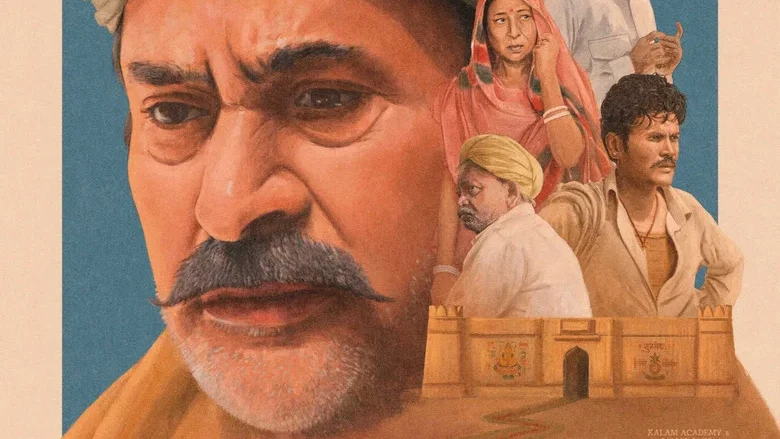
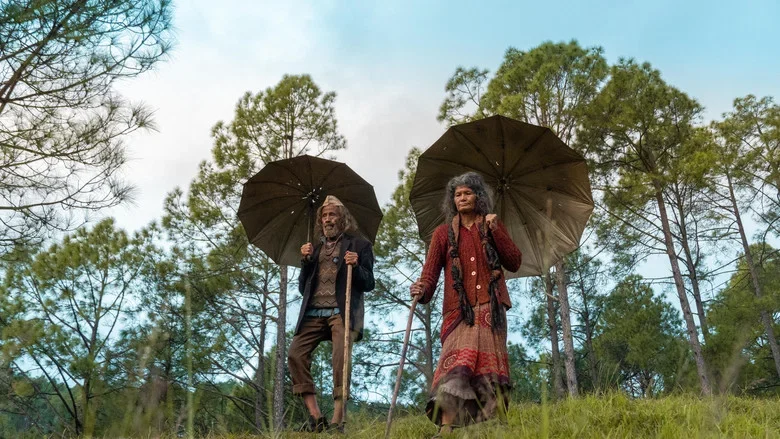
Padam Singh Kapri, the director’s own father, plays Padam with a physicality that no trained actor could manufacture. His hands know the labour of shepherding before the camera arrives.
Watch how he moves through the goat trade. There is no speech about sacrifice, no tearful close-up. He simply hands over the animal and receives the money, and his face registers the transaction as both humiliation and duty.
Hira Devi, as Tulsi, provides the film’s moral counterweight. When she refuses to jump, her resistance is not defiant, it is almost baffled, as though Padam has misunderstood something fundamental about what living means.
Their exchanges inside the home have drawn comparisons to the observational intimacy of Little Thomas, another recent film that trusted domestic routine to carry emotional weight. Kapri’s approach is starker, less nostalgic, but the commitment to behavioural truth is similar.
The Village Itself Becomes the Antagonist
There is no villain here, and the absence is deliberate. The film’s oppositional force is migration itself, the slow erosion of community that leaves the elderly stranded with failing bodies and no infrastructure.
Every departing resident is a subtraction: fewer hands to carry Tulsi, fewer vehicles to reach the hospital, fewer voices to break the silence. Kapri films the empty houses as though they were tombstones.
The supporting cast, including Subhash Chandra as Laxman, functions as texture rather than character. These are neighbours who help when they can, but the film is honest about their limits, they too are leaving, and their kindness is temporary.
This structural choice mirrors the thematic preoccupations of Sumo Didi, which similarly used a specific regional milieu to examine larger questions of abandonment and aspiration. Both films resist melodrama, but Kapri’s is the more austere.
Kapri’s Camera Finds Claustrophobia in Expansive Landscapes
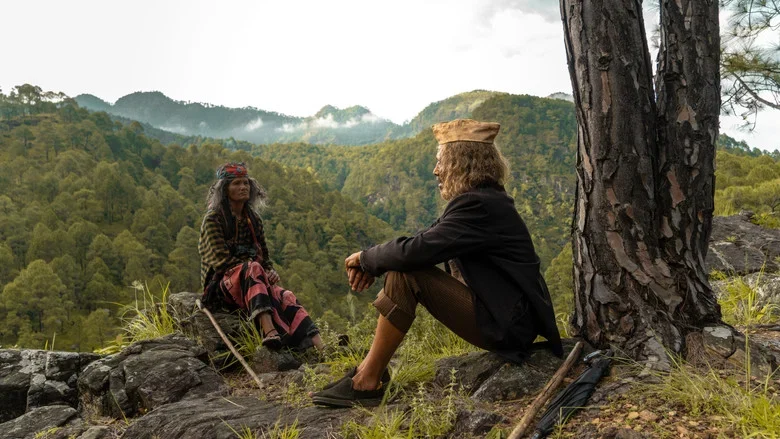
The cinematography treats the Kumaon mountains as both sanctuary and prison. Wide shots emphasise the couple’s smallness against the terrain; closer frames trap them in doorways and narrow interiors.
The downhill journey to medical care becomes a recurring visual motif, a reminder that help exists, but only at a distance that ageing bodies cannot easily traverse.
Kapri’s editing, however, is where the film falters. The middle section extends the waiting period beyond what the premise can sustain, and the accumulation of small moments begins to feel less like patience and more like inertia.
The film runs approximately two hours, and by the final third, the rhythm has become monotonous. The letter from Haria arrives as a genuine emotional shift, but the subsequent waiting lacks the escalation that might justify the extended runtime.
The Letter Arrives, and Hope Becomes Another Form of Waiting
When the postman delivers news that Haria intends to return after twenty-eight years, the couple’s register changes. Tulsi’s face opens; Padam’s remains guarded, as though hope is a luxury he can no longer afford.
This is the film’s most accomplished sequence, a bureaucratic event, the arrival of mail, producing the largest emotional shift. Kapri understands that in lives this small, a letter is an earthquake.
The resolution does not provide reunion. It provides continued waiting, and the film’s final image suggests that companionship, not the absent son, has been the couple’s true survival mechanism.
The restraint here is admirable, but it also reveals the film’s central limitation: a premise this small requires either more incident or a shorter form. The emotional payoff of the letter sequence is diluted by the waiting that follows.
Hira Devi’s performance in these final scenes recalls the quiet endurance that anchored Doosra, another recent release that asked its lead actress to convey decades of unspoken history through posture and silence.
A Modest Theatrical Proposition With Limited Commercial Ceiling
The film’s production origins remain obscure, and its box-office trajectory is difficult to assess from incomplete data. An early India net figure of ₹0.75 crore has circulated, but the number requires caution given reporting inconsistencies.
What is clear is that this is not a commercial proposition in any conventional sense. There is no star, no promotional hook, no genre framework that might attract a broad audience.
Its theatrical life will be brief. The film’s future lies in streaming, where its meditative pacing and documentary-like texture can find viewers who prefer to watch in shorter sittings.
For the actors, the film represents something different: a record of faces and bodies that commercial cinema rarely centres. Padam Singh Kapri and Hira Devi will not become stars, but their performances will endure as evidence of what non-professional casting can achieve.
This patient, observational approach signals a quiet maturation in contemporary Hindi dramas, even as it tests the limits of what theatrical audiences will tolerate.
The Abyss Remains, and the Couple Remains
Kapri ends without resolution, and the choice is both principled and frustrating. The mountains do not offer transcendence; they simply continue, as do Padam and Tulsi, as does the waiting.
What lingers is not the plot but the physicality of survival: the weight of a goat, the distance to a hospital, the sound of a postman’s footsteps. These are the materials of life at the margins, and Kapri films them without sentiment.
The film’s final image, the couple together, the son still absent, suggests that love, in this context, is not a solution but a practice. It is what remains when everything else has been sold, abandoned, or left behind.
Whether that is enough depends on what you came for. Pyre offers no catharsis, no reunion, no easy tears. It offers only the mountain, the couple, and the terrible, ordinary persistence of continuing to breathe.
For some, that will be insufficient. For others, it will be the most honest thing they see this year.

Ankit Jaiswal is the Chief Author, covering Indian cinema and OTT releases with honest, no-filler criticism. An SEO strategist by background, he brings a research-driven approach to film writing, cutting through hype to tell you exactly what's worth your time.